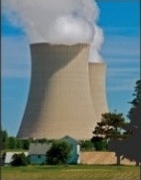
「付着線量 著しく低い」 来年配備の原子力空母RR via 東京新聞

横須賀市の米海軍横須賀基地に来年配備される原子力空母「ロナルド・レーガン」(RR)が東日本大震災で米軍の救援活動「トモダチ作戦」に参加した際、原発事故の影響で乗組員が被ばくしたと米メディアが報じているのをめぐり、吉田雄人市長は十八日の市議会一般質問で「RRに付着した放射性物質の放射能レベルは著しく低いと米側が説明した」と述べ、被ばく線量を確認する必要はないとの考えを示した。 (中沢佳子)
 山城保男市議(無会派)がただした。山城市議はRRの除染が済んでいることに触れ、「人的被害が及ぶ線量ではないというが、具体的な線量を明らかにするよう米側に求めるべきだ」と指摘した。
 吉田市長は「米側が日本政府に『RRの放射性物質は適切に除去した。付着した放射性物質の放射能レベルは著しく低く、乗組員や市民の健康、環境に懸念を生じさせるものではない』と説明した」と答弁。米側の説明そのままの政府見解を、市が受け入れていることを明らかにした。
 山城市議は国を通じて具体的な数字を確認するよう求めたが、吉田市長は「自衛隊の艦船や飛行機、警察や消防の車両も福島での活動に使われた。RRだけ線量を知りたいというのは、考え方として相いれない」と拒否。放射線監視装置(モニタリングポスト)で監視体制をとっているとした。

もっと読む。

Posted in *日本語 | Tagged , , , , | Comments Off on 「付着線量 著しく低い」 来年配備の原子力空母RR via 東京新聞

Consensus eludes nuclear dump hearings via The Star.com

The public has had its final say on whether it’s a good idea in principle to bury half a century’s worth of nuclear waste at the Bruce nuclear plant on the shores of Lake Huron.
A federal panel wrapped up one last round of public hearings Thursday on Ontario Power Generation’s proposal for the waste site near Kincardine.

[….]
The panel called the latest hearings after former OPG scientist Frank Greening said that OPG had severely understated the amount and level of radioactive material destined for the site.
[…]
But officials who appeared before the committee said that while some of OPG’s original work was incorrect, the built-in safety margins mean that the site remains safe for workers and the public.
Radiation doses in the case of accidents would still be within acceptable levels, they said.
[…]
OPG says it won’t proceed with the project over the objections of SON, on whose traditional territory the Bruce nuclear site lies.
The final word at the hearings from SON leaders was: You have not heard the last word from us.
Former chief Randall Kahgee – a lawyer who is now heading SON’s process for determining community support for the project – told the panel that the communities have formed a working group.

[…]
Thursday, Michigan Senators Carl Levin and Debbie Stabenow introduced resolution urging the U.S. administration to oppose the project. Stabenow also wrote directly to the Canadian government.
Earlier, Michigan state senator Phil Pavlov told the hearing that Canadian politicians including then-Manitoba Premier Howard Pawley and then-external affairs minister Joe Clark were publicly worried in 1986, when the U.S. considered putting a waste site near the Canadian border.
“We agree with the Canadian government of the 1980s that the permanent storage of nuclear waste has no place in the Great Lakes basin,” Pavlov said.

Read more.

Posted in *English | Tagged , , , , , , | Comments Off on Consensus eludes nuclear dump hearings via The Star.com

Concern over another WIPP drum via Albuquerque Journal

SANTA FE – A drum at the Waste Isolation Pilot Plant has been singled out as having contents – including a discarded glove containing lead – that are most similar to those in a barrel that popped open due to a chemical reaction in February, causing a radiation leak that has shut down the underground nuclear waste dump.

In a presentation to state legislators Tuesday in Carlsbad, Terry Wallace, Los Alamos National Laboratories’ official in charge of the investigation of what happened at WIPP, said it’s still not known what started the reaction. Previously, lead in the glove from a worker that processed waste has been cited as among the potential igniters.

A second LANL drum with similar contents and which is in an unsealed area of WIPP also is said to have a glove in it, Wallace disclosed at the Tuesday meeting.

“I cannot guarantee that second drum won’t go (have a chemical reaction), nor can I guarantee that all conditions are likely to make it go,” Wallace said, according to a report in the Carlsbad Current-Argus.

[…]

The report says there are 678 remediated drums that are “higher risk” because of the mixtures in the containers. Most are at WIPP, but 113 were sent to an Andrews, Texas, facility shortly after the February leak and 57 still require additional processing at Los Alamos.

Of the 678, 16 have absorbed free liquid with pH levels similar to the one that leaked, eight of those have absorbed free liquid with “organic liquid neutralizer” – an apparent reference to wheat-based kitty litter – and just two of those eight have gloves containing lead. One of these two drums is the one that leaked.

A spokesman for the New Mexico Environment Department provided this statement: “We can simply say all drums that have similar constituents to the breached drum have been isolated at LANL and/or Waste Control Specialists (in Texas) and are being monitored by DOE. The Environment Department instructed DOE to take these extra precautions several months ago and we have been informed such protective measures are in place.”

Read more at Concern over another WIPP drum

Posted in *English | Tagged , , , , , | Comments Off on Concern over another WIPP drum via Albuquerque Journal

Radio show aborted for DJ’s comments on media control after 311 via Fukushima Diary

“InterFM” decided to abort one of their major radio shows “Barakan Morning”. The DJ commented in the radio show of 9/15/2014.

The show started in September of 2009. After one year blank, it restarted in April of 2013.

Peter Barakan, the program DJ from England, is known to have criticized the government of Japan for its media control after 311.

In the Tokyo gubernatorial election of 2014, he confessed that he was requested not to mention “nuclear” by two radio stations.

[…]

His show is going to end in the end of September.

Read more at Radio show aborted for DJ’s comments on media control after 311 (available in French)


Posted in *English, Français | Tagged , , , , | Comments Off on Radio show aborted for DJ’s comments on media control after 311 via Fukushima Diary

ビキニ事件 他船乗組員も高い放射線量検出 via NHK News Web

60年前、アメリカが太平洋のビキニ環礁で行った水爆実験で、日本の漁船「第五福竜丸」の乗組員が被爆したいわゆるビキニ事件で、厚生労働省は周辺で操業していたほかの漁船の乗組員からも通常より高い放射線量が検出されていたことを示す記録を開示しました。

この記録は19日、情報公開請求をしていた高知県の研究者に対して開示されたものです。
ビキニ事件は60年前の昭和29年3月、アメリカが太平洋のビキニ環礁で行った水爆実験で、静岡県のマグロ漁船、第五福竜丸の乗組員23人がいわゆる死の灰を浴びて被爆し、半年後に1人が死亡したものです。
当時、周辺の海域では多くの日本の漁船が操業していて、このうち、第五福竜丸を含む470隻余りの漁船の乗組員について、ビキニ事件からおよそ10か月間、放射線量が測定されていました。
開 示された記録では通常、自然界で被ばくする放射線量は年間2.1ミリシーベルト程度なのに対し、第五福竜丸以外の合わせて12隻の漁船の乗組員の一部から は年間に換算して4ミリシーベルトを超える放射線量が検出され、なかには、40ミリシーベルトを超えていた乗組員もいたということです。厚生労働省はこれ まで第五福竜丸以外の乗組員の記録は見つかっていないと説明していましたが、情報公開請求を受けて調査した結果、茨城県にある倉庫に保管されていたという ことです。
厚生労働省は「一部の乗組員について通常より高い放射線量が検出されているが、あくまで1年間、被ばくし続けたと想定した場合の数値なので、健康に影響があったとは考えられない」としています。

続きはビキニ事件 他船乗組員も高い放射線量検出

Posted in *日本語 | Tagged , , , , , | Comments Off on ビキニ事件 他船乗組員も高い放射線量検出 via NHK News Web

再稼働反対の集会、23日に東京で 大江さんら呼びかけ via 朝日新聞

作家の大江健三郎さんら「『さようなら原発』1千万署名 市民の会」の呼びかけ人が19日に記者会見し、九州電力川内(せんだい)原発(鹿児島県)の再稼働に反対する集会を23日に東京都江東区の亀戸中央公園で開く、と発表した。渋谷区の代々木公園での開催を予定していたが、同園やその周辺でデング熱の感染が広がったため、会場を変更した。

(略)

集会は午前11時からで、午後2時30分からデモ行進をする予定。事務局のホームページは http://sayonara-nukes.org/で、電話は03・5289・8224(平日のみ)。

全文は再稼働反対の集会、23日に東京で 大江さんら呼びかけ

Posted in *日本語 | Tagged , , , , , , | Comments Off on 再稼働反対の集会、23日に東京で 大江さんら呼びかけ via 朝日新聞

The 47-year-old nuclear elephant in the room via The Center for Public Integrity

A growing number of U.S. experts say that feigning ignorance about Israel’s nuclear arsenal creates more trouble than it averts
[…]
The policy of never publicly confirming what a scholar once called one of the world’s “worst-kept secrets” dates from a political deal between the United States and Israel in the late 1960s. Its consequence has been to help Israel maintain a distinctive military posture in the Middle East while avoiding the scrutiny — and occasional disapprobation — directed at the world’s eight acknowledged nuclear powers.

But the U.S. policy of shielding the Israeli program has recently provoked new controversy, partly because of allegations that it played a role in the censure of a well-known national laboratory arms researcher in July, after he published an article in which he acknowledged that Israel has nuclear arms. Some scholars and experts are also complaining that the government’s lack of candor is complicating its high-profile campaign to block the development of nuclear arms in Iran, as well as U.S.-led planning for a potential treaty prohibiting nuclear arms anywhere in the region.

The U.S. silence is largely unwavering, however. “We would never say flatly that Israel has nuclear weapons,” explained a former senior State Department official who dealt with nuclear issues during the Bush administration. “We would have to couch it in other language, we would have to say ‘we assume’ or ‘we presume that Israel has nuclear weapons,’ or ‘it’s reported’ that they have them,” the former official said, requesting that his name not be used due to the political sensitivity surrounding the topic.

Read more.

Posted in *English | Tagged , , , | Comments Off on The 47-year-old nuclear elephant in the room via The Center for Public Integrity

Fukushima radiation damages rice genome via The Ecologist

A study in the American Genetic Association’s Journal of Heredity examines the detailed genetic alterations of the all-important young rice plant when exposed to low-level radiation – that emitted by the Fukushima nuclear plant a year after the disaster.

Previous experiments had provided evidence of “ultralow-level gamma radiation triggering changes at the molecular level in the multi-layered defence / stress-related biological processes in rice leaves”.

The Fukushima disaster presented an opportunity to confirm these findings outside the laboratory. This was especially important since the ultralow dose of radiation the researchers desired to study could not feasibly be replicated in a lab setting.

The result? Multiple modes of cellular response were observed, ranging from the triggering of DNA repair mechanisms, to oxidative stress, often culminating in cell death.
[…]
Crucially, there was no direct contact between the studied seedlings and the contaminated soil so as to witness only the effect of radiation still present in the atmosphere. The exposed plants received a dose of radiation eighty to one hundred times greater than background.

Read more.

Posted in *English | Tagged , , , | Comments Off on Fukushima radiation damages rice genome via The Ecologist

Photographer Risked Radiation to Shoot Soviet Testing Sites via artnet news

Israeli-born, London-based photographer Nadav Kander, takes us into the desolate world of post-Soviet missile and nuclear testing sites—secret landscapes which are still closed to outsiders—in his new photographic series, “Dust.”

Armed with his camera, Kander, who wore white overalls and a Geiger counter on his belt to measure radiation, captured the abandoned dwellings in two areas. The first, in northeastern Kazakhstan, was the town Kurchatov and the nearby former nuclear testing site Polygon. Unbeknownst to the public, Russians detonated hundreds of atomic bombs at Polygon between 1948 until the end of its program in 1989, reports the New York Times. Kander was arrested twice when he visited the area, and has thus relinquished plans to visit a third time. The second city Kander visited, Priozersk, was used as a long-distance missile testing ground during the Cold War.

Read more.

Posted in *English | Tagged , , , , | Comments Off on Photographer Risked Radiation to Shoot Soviet Testing Sites via artnet news

The BBC, Friends of the Earth and nuclear power via The Ecologist

At first it looked like a journalistic coup, writes Neil Crumpton – the BBC’s ‘scoop’ that FOE was no longer opposed to nuclear power. Except that FOE remains firmly anti-nuclear as it has been for decades. The spotlight must now be turned on the BBC itself, and its little-known but shocking links to the nuclear industry.
[…]

The analysis was way from accurate according to FOE – but the top-line message remembered by busy listeners and readers means damage will have been done – and at a critical time in terms of the impending EC nuclear state-aid and Hinkley C investment decisions, which have global implications.

What Friends of the Earth are really saying

FOE is saying, after refreshing their policy in 2013, that the high cost and long build-times of new nuclear reactors are currently more dominant concerns to them compared to nuclear accidents.

That concern reflects the vital fact that the £10s or even £100s of billions the Government is preparing to sink into nuclear power is money that will not go into the real answers – renewables and energy conservation. Worse, they will cause energy market distortions that will further undermine renewables.

[…]

It’s also important to realise that as a solution to climate change, nuclear power is currently a ‘bit player’ producing just 2.6% of global energy: 2,600 TWh/y out of a global final energy demand around 100,000 TWh/y.

Nor does it offer significant opportunities for growth. The WNA optimistically estimates a nuclear capacity of 400GW – 640 GW by 2035. Taking a figure of 540 GW, that would generate around 4,000 TWh/y in 2035 of a projected global energy demand of 140,000 TWh/y –  just 2.9%.

Nuclear would be hard pushed to ever supply beyond 5% of future energy demand unless fast reactors – the great hope of George Monbiot, Mark Lynas, Baroness Worthington and some others – were ever proven at utility scale.

And that’s highly improbable, given the wasted billions invested in the technology, and decades of failure to deliver an economically viable solution. So nuclear power is hardly a crucial or key technology, as ministers keep arguing.

The other issues remain – and they are of critical importance

The increasing concern in the core issue of climate distraction does not mean that any other issues have materially reduced, the crumbling storage ponds etc at Sellafield are still a clear and present danger, probably more so year on year.

[…]

Oddly and alarmingly such major security issues have not featured in most environmental, political or public debate. Yet, the UK is on the brink of being in the forefront of rescuing a dangerous, dodgy and discredited nuclear industry from an investment abyss and placing it centre-stage of a low-carbon energy global policy.

Hitachi is even considering moving its HQ from a contaminated Japan to a lucrative London. The Government is essentially promoting the spread of nuclear technology, materials and expertise around the world, where a few kilos of plutonium or U233 (from thorium reactors) can make a bomb that can change that world.

[…]

Is the BBC unbiased on nuclear power?

The article is replete with other outrageous twists. There is something alarming when any journalist writes an article like this. It is more alarming that the BBC environment analyst is doing this.

Perhaps it is not surprising given that two BBC Trust figureheads of this world-respected media organisation are paid advisers to EdF: acting chair Diane Coyle and ex Chair Lord Patten; moreover Coyle is married to the BBC’s technology correspondent.

Is it possible that the BBC Trust’s links to EdF have effects down the ranks of the organisation and permeate the minds of journalists without a word being spoken – a silent, almost subconscious influence?

The Trust can say all it likes about having “no control over editorial content” – but it does not need control. Trust members also adjudicate editorial complaints so one could question the time and effort in complaining about Harrabin’s article.

Regardless of any possible influence on any journalists it is remakable that BBC Trust members can receive money from such corporate interests – and even advise them on how to use the UK media to clinch one of the biggest multi-billion pound deals in British history.

Why won’t the BBC report on the real nuclear stories?

[…]

On the morning of the WNA’s conference in London the BBC should have reported relevant real issues such as AREVA’s credit-negative rating (reported on Reuters) or the month’s long safety shut-downs at EdF’s Heysham and Hartlepool nuclear reactors which could lead to capacity-crunches and Grid distortions this winter.

Drumming up stories which imply that one of the main anti-nuclear campaign organisations has made some big policy shift on the quiet is far below what the BBC and Britain was or should be about.

The BBC should refresh its policy on corporate links and the Government should re-evaluate the costs of a new-build nuclear programme. These include significant, perhaps incalcuable, national and global security risks for many future generations in the UK and globally.


 

Read the whole article at The BBC, Friends of the Earth and nuclear power

Posted in *English | Tagged , , , , , , , , | Comments Off on The BBC, Friends of the Earth and nuclear power via The Ecologist