原爆が人体に及ぼす影響の解明などを研究する実験棟が完成です。
完成した原爆放射線医科学研究所の施設には、放射線の測定や除染ができる施設を完備。
原発災害など被ばく医療にあたる人材を育成します。
また、低線量被ばくが人体に及ぼす影響などの研究や原爆関連文献のデジタル化などを進めます。
(略)
放影研の移転問題に対しては、「来ることになれば共同研究もこの中で行われる可能性が極めて高い」としています。
原爆が人体に及ぼす影響の解明などを研究する実験棟が完成です。
完成した原爆放射線医科学研究所の施設には、放射線の測定や除染ができる施設を完備。
原発災害など被ばく医療にあたる人材を育成します。
また、低線量被ばくが人体に及ぼす影響などの研究や原爆関連文献のデジタル化などを進めます。
(略)
放影研の移転問題に対しては、「来ることになれば共同研究もこの中で行われる可能性が極めて高い」としています。
中部電力浜岡原発(御前崎市佐倉)3~5号機の発電コストが、仮に今すぐ再稼働したとしても現時点で1キロワット時当たり21・0~12・1円になり、国が2015年に原発の発電コストとして示した10・1円を上回るとの試算を、15日までに県原子力経済性検証専門部会委員で龍谷大の大島堅一教授(環境経済学)がまとめた。大島教授は「既に経済性を失っている」と指摘している。
東京電力福島第1原発事故から10年に合わせ、有識者の有志らが浜岡原発に生かすべき教訓をまとめた報告書「人権の視点で考える震災」(県人権・地域改善推進会発行)の中で示した。報告書は近く公表される。
事故後、原発の運転期間は「原則40年、最長で延長20年」とのルールが定められた。試算は15年に国の発電コスト検証ワーキンググループが用いた計算方法に基づく。安全対策工事費や維持費など11年度以降に要した費用と、40年ルールを適用した際の発電電力量を比較した。その結果、3号機21・0円、4号機14・3円、5号機12・1円となった。
再稼働の時期が遅れるほど発電コストは上昇する。仮に3年後に3~5号機が再稼働した場合は53・8~13・9円に。直ちに再稼働し、さらに運転期間を20年延長しても12・7~11・1円だった。
The Spanish nuclear safety regulator, Consejo de Seguridad Nuclear (CSN) informed the International Atomic Energy Agency (IAEA) that an alert was declared at 22:40 UTC on 15 May 2021 at Unit 1 of the Trillo Nuclear Power Plant, about 80 kilometres northeast of Madrid.
CSN informed the IAEA that the alert was declared after a fire in the main electrical transformer occurred and caused the automatic shutdown of the reactor. The fire was extinguished after 15 minutes and the alert was ended at 00:42 UTC on 16 May 2021. According to CSN, no safety systems were affected and the event, rated provisionally at level 0 on the INES scale, had no impact on the workers, the public or the environment.
Continue at Spain Informs IAEA of Alert at Nuclear Power Plant, No Hazard for People or Environment
「2号機の危機」 第4回 NHKスペシャル『メルトダウン』取材班
3つの原子炉が相次いでメルトダウンし、原子炉や格納容器を納める原子炉建屋が次々に爆発するという未曾有の原発事故を描いた『福島第一原発事故の「真実」』(小社刊)が大反響を呼んでいる。
(略)
現代ビジネス、ブルーバックスWebでは、吉田所長が死を覚悟したとされる「2号機の危機」を描いた、同書の6章を全4回の連載で完全公開する。事故発生当時に考えられた事故像を覆す衝撃的な内容は、読むものを震撼せしめるはずだ。
(略)
午前9時、原発の正門付近で、事故後最も高い1時間あたり11.93ミリシーベルトの放射線量を計測した。一般の人が1年間に浴びて差しつかえないとされる1ミリシーベルトにわずか6分ほどで達する高い値だった。午前9時20分には、2号機の原子炉建屋から白い煙がもくもくと上昇し、上空へと流れているのが確認された。放射線量がさらに上昇するのではないか。しかし、心配された正門付近の放射線量は、時間を追うごとに下降していった。ここに至って、吉田は、午前6時すぎの衝撃音は、4号機の爆発によるもので、2号機の格納容器圧力が、依然高いことから、2号機の格納容器が決定的に破壊されているわけではないと判断した。
(略)
午前11時25分、2号機の格納容器の圧力を計測したところ、いつの間にか1.55気圧に下がっていた。午前7時20分の7.3気圧から6気圧近い大幅な下降だった。この間に、格納容器に何があったのか。2号機の格納容器は、決定的に壊れていないとは言え、何らかの原因で大量の放射性物質が外部に放出されたのは明らかだった。
2号機の格納容器に何が起きたのか。吉田にも本店の誰にもわからなかった。格納容器が決定的に壊れなかったのは、最終局面で何とか原子炉を減圧し、消防車による注水を夜を徹して続けたことが功を奏したのかもしれなかった。しかし、自分たちの操作が壊れ方を最小限に食い止めたとは、決して言えなかった。さらに、格納容器を減圧させるはずのベントが、2号機だけ、なぜできなかったのかも大きな謎だった。
吉田は、午後に入って、福島第二原発に退避した管理職クラスの社員を順次、免震棟に戻し、作業に復帰させた。免震棟の中は再び人が増え始め、以前のように先の見えない収束作業が再開された。
15日朝から午前中にかけて、2号機から放出された大量の放射性物質は、プルームと呼ばれる放射性物質を含む気体のかたまりとなって、15日正午すぎから夜にかけて風に乗って北西方向へと流れたとみられている。長時間、上空を浮遊していた放射性物質は夜に入って降り始めた雪や雨とともに地表に降り注ぎ、土壌に沈着し、原発から北西方向に広がる浪江町や飯舘村などの広い地域が放射能に汚染された。
By Brandon Specktor – Senior Writer
Nuclear reactions are smoldering again in an inaccessible basement of the wrecked Chernobyl nuclear power plant in Ukraine, according to news reports.
Researchers monitoring the plant — which infamously exploded in a deadly 1986 meltdown — have detected a steady spike in the number of neutrons in an underground room called 305/2. The room is full of heavy rubble, concealing a radioactive mush of uranium, zirconium, graphite and sand that oozed into the plant’s basement like lava, before hardening into formations called fuel-containing materials (FCMs).
Rising neutron levels indicate that these FCMs are undergoing new fission reactions, as neutrons strike and split the nuclei of uranium atoms, creating energy.
Tons of nuclear fuel in the wrecked plant’s basement has started to react again, and it’s showing no signs of stopping.
For now, this radioactive waste is smoldering “like the embers in a barbecue pit,” Neil Hyatt, a nuclear materials chemist at the University of Sheffield in the U.K.,told Science magazine. However, it’s possible that those embers could fully ignite if left undisturbed for too long, resulting in another explosion.
[…]
Neutron levels have been steadily rising in room 305/2 for four years, Saveliev said, and could continue rising for several more years without incident. It’s possible these nuclear nuggets will fizzle out on their own in that time. But if neutron levels keep rising, scientists will have to intervene.
Read more at Chernobyl’s nuclear fuel is ‘smoldering’ again and could explode
Related article on the Atomic Age website: ‘It’s like the embers in a barbecue pit.’ Nuclear reactions are smoldering again at Chernobyl via Science
東京電力福島第1原発事故の収束作業中の被ばくが原因でがんになったなどとして、札幌市の元作業員の男性(63)が東京電力HDや作業の元請けだった大成建設など計3社に計約6400万円の損害賠償を求めた訴訟の判決で、札幌地裁は13日、請求を棄却した。
高木勝己裁判長は判決理由で、男性が作業開始からがんの診断を受けるまでの期間は長くとも約1年10カ月で、がんの最小潜伏期間の5年を大幅に下回っていると指摘。作業と発がんに因果関係を認めることはできないと判断した。
判決によると、男性は2011年7〜10月、福島第1原発の敷地内で重機を使ってがれきの撤去作業に従事した。
[…]
In the lawsuit filed with the Sapporo District Court, the 63-year-old man sought a total of around 64 million yen ($584,000) in damages from plant operator Tokyo Electric Power Company Holdings Inc., major general constructor Taisei Corp. and its subcontractor.
The court denied any causal relationship between the debris removal work and his development of the various cancers, saying the latency period had already begun before he started working at the site.
According to the ruling, the plaintiff took part in debris clearance work with heavy machinery at the Fukushima nuclear complex from July to October 2011 following the nuclear accident in March.
The former worker from Sapporo, the capital of Japan’s northernmost main island of Hokkaido, was subsequently diagnosed with bladder, stomach and colon cancers between 2012 and 2013.
It took around 22 months for him to be diagnosed with his third cancer following the start of his work at the plant, while the minimum latency period for cancer is five years, according to Presiding Judge Katsumi Takagi.
The former worker has filed a separate lawsuit seeking labor compensation from the government, but the Sapporo court dismissed it for the same reason.
At the court, TEPCO denied any causal relationship between the debris removal work and his development of cancer and demanded his request should be dismissed.
Taisei, for its part, claimed the utility firm, rather than the clearing work provider, should bear compensation liability for the symptoms, if they had been caused by his exposure to radiation from the wrecked plant.
Read more.
By Susan D’Agostino | April 26, 2021
Historian Alex Wellerstein has thought about nuclear secrecy for a long time. He began writing his book, Restricted Data: The History of Nuclear Secrecy in the United States, when George W. Bush was president. He continued writing through the Obama and Trump administrations and released it during Biden’s first 100 days. Even so, the result seems current. US nuclear secrecy is a timeless topic, and Restricted Data informs the present as much as the past.
“Restricted data” is a legal term relating to information about nuclear weapons, fissile material, and nuclear energy in the United States. The idea: The existential threat to humanity posed by the bomb is so singular that attempts to keep it secret require a special legal construction. But nuclear secrecy is more than legalese. It is “a bundle of many different ideas, desires, fears, hopes, activities, and institutional relationships that have changed over time, at times dramatically,” Wellerstein writes.
[…]
Susan D’Agostino: Did your lack of a clearance hinder your research?
Alex Wellerstein: You get real used to looking at deleted spots when you do any kind of work around nuclear weapons. And you get really used to your Freedom of Information Act [FOIA] requests being denied. With nukes there’s always going to be stuff deleted. But I was able to get some previously classified information through FOIA. There’s so much documentation out there that the problem was never not having access. I was drowning in paperwork for most of this book.
There are two reasons things might be still secret. One is it contains information that some classification guide out there says shouldn’t be released. And it’s going to be the judgment of whoever’s redacting it not to release it, based on the guide. Occasionally the things I want to know and the things that the censor cares about are the same, and then I have to work around that edge.
The other reason that it might be still classified is because nobody has taken the time to declassify it. This is a backlog problem. Only some small fraction of classified records have been reviewed for release. When I’m filing a FOIA request, I’m not expecting them to give me anything that would still be secret by any definition, but I’m expecting them to give me some things that nobody has bothered to request before and the agencies haven’t processed before. So, I did sometimes find new things this way.
Susan D’Agostino: In the case where the information you requested remained classified, how did you work around that edge?
Alex Wellerstein: Occasionally, they screw up the redaction, which gives you a glimpse behind the curtain. In one case, they sent me two different versions of the same classification guide in response to my FOIA request. But two different people reviewed these two identical versions, and they each redacted slightly differently. And if I combined their two versions, I sometimes had the full thing.
You learn that most of what they’re redacting is really boring. It’s not that they’re redacting, “Oh, we did some terrible thing.” It’s that they’re redacting that the size of this nozzle is 0.5 millimeters, and some other guy redacts the thing that says, “the size of this nozzle could also be 0.6 millimeters.” When you combine them together, you get the full story. But it’s usually not all that interesting a story.
I tried to understand how secrecy functions from the perspective of the person within the system—as opposed to how it looks on the outside, where it can look arbitrary, capricious, and foolish. On the inside, they’re given this impossible task of interpreting guidelines and then marking things up with absolute perfection. Their task is extremely technical. You can see the logic behind that, but it’s easy to say, “I don’t think the sum total of all of these tiny redactions is going to have much of an effect on proliferation one way or the other.”
[…]
In the ’90s, when they were trying to open things up, they brought those classification officials into a much wider conversation. They didn’t just have them talk with university scientists but with people who lived around production plants that might be polluting the environment or people downwind of nuclear testing. They had them talk with historians who do research on these topics and struggle to tell certain stories. If you could widen the perspective of the people within the classification system, it wouldn’t produce radical change overnight, but there might be more options. They could give slightly more information without giving away any secrets. They could say, “we really believe this could impact our nuclear proliferation or nuclear terrorism priorities.” People on the outside of these systems might not buy that, but they might feel like it was less arbitrary. It feels incredibly arbitrary when all you can get is, “no—national security.”
[…]
Read more.
旧ソ連のチェルノブイリ原発事故のわずか1カ月後、第2の惨事を招きかねない火災があった。当時の政府の隠蔽姿勢が災いし、今でも知る人は少ない。消火の際に被ばくし、殉職した消防司令の妻から話を聞いた。(モスクワ州チェルノブイリ殉職者墓地で、小柳悠志)
[…]
【関連記事】人間が汚した地・チェルノブイリにただ一人残った老人 「なぜ?」の問いに帰ってきた言葉の衝撃
なぜチェルノブイリ事故は起き、消防士を含む多数の収束作業員が命を落とす事態になったのか。ロシア政府は、この4月に発表した報告書で、ソ連が自国の原発性能を過大評価し、米国スリーマイル島原発事故(1979年)など外国での事故に関心を払わなかったことが一因と分析している。
ウラジーミル氏が残した日誌には、チェルノブイリ出張に際し、収束作業の機材は外国から取り寄せる必要があるとの記載がみられる。ソ連で、原発事故への備えがなかったことを示す証拠の一つといえる。 当時の最高指導者ゴルバチョフ氏は自著で「たった一つの原子炉のために(過酷な)事故が起きた。多くの核兵器が解き放たれたら、人類にどのような被害が及ぶかをチェルノブイリは見せつけた」とつづった。 チェルノブイリ事故はソ連が体制変革や核政策の見直しを行う転機に。ゴルバチョフ氏はグラスノスチ(情報公開)を進め、核軍縮に向けた中距離核戦力(INF)廃棄条約を米国との間で締結した。
3つの原子炉が相次いでメルトダウンし、原子炉や格納容器を納める原子炉建屋が次々に爆発するという未曾有の原発事故を描いた『福島第一原発事故の「真実」』(小社刊)が大反響を呼んでいる。
NHKメルトダウン取材班は、10年に及ぶ徹底的な調査報道を通じて、東日本壊滅の危機を免れたのは、吉田昌郎・福島第一原発所長らによる決死の消防注水が功を奏したというよりは、消防注水の失敗や格納容器のつなぎ目の隙間から圧が抜けたりといった幾つかの偶然が重なった公算が強いことを明らかにした。
現代ビジネス、ブルーバックスWebでは、吉田所長が死を覚悟したとされる「2号機の危機」を描いた、同書の6章を全4回の連載で完全公開する。事故発生当時に考えられた事故像を覆す衝撃的な内容は、読むものを震撼せしめるはずだ。



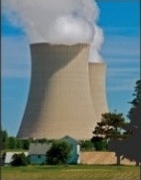
A nuclear power plant in Byron, Illinois. Taken by photographer Joseph Pobereskin (http://pobereskin.com).