(抜粋)
川内村で2万ベクレルのミミズ
その川内村について、帰村宣言を揺るがす調査結果が発表された。昨年8月~9月に同村で採取されたミミズから2万ベクレル/kgのセシウムが検出されたことが、6日にわかった。
調査を行ったのは、森林総合研究所(茨城県つくば市)の長谷川元洋主任研究員(土壌動物学)ら。
土壌の汚染度が高い地域ほど、ミミズのセシウム汚染も高濃度になることがわかった。
ミミズは鳥やイノシシなどの餌になるため、食物連鎖を通じて、セシウム汚染が蓄積する可能性があるという。
◇ 関連記事:
(抜粋)
川内村で2万ベクレルのミミズ
その川内村について、帰村宣言を揺るがす調査結果が発表された。昨年8月~9月に同村で採取されたミミズから2万ベクレル/kgのセシウムが検出されたことが、6日にわかった。
調査を行ったのは、森林総合研究所(茨城県つくば市)の長谷川元洋主任研究員(土壌動物学)ら。
土壌の汚染度が高い地域ほど、ミミズのセシウム汚染も高濃度になることがわかった。
ミミズは鳥やイノシシなどの餌になるため、食物連鎖を通じて、セシウム汚染が蓄積する可能性があるという。
◇ 関連記事:




A nuclear power plant in Byron, Illinois. Taken by photographer Joseph Pobereskin (http://pobereskin.com).
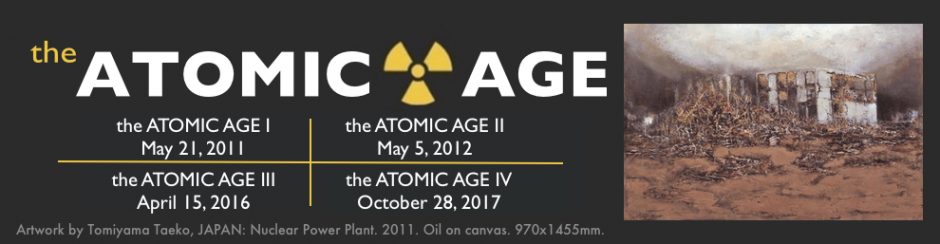
The artwork in the header, titled "JAPAN:Nuclear Power Plant," is copyright artist Tomiyama Taeko.
The photograph in the sidebar, of a nuclear power plant in Byron, Illinois, is copyright photographer Joseph Pobereskin (http://pobereskin.com/)
This website was designed by the Center for East Asian Studies, the University of Chicago, and is administered by Masaki Matsumoto, Graduate Student in the Masters of Arts Program for the Social Sciences, the University of Chicago.
If you have any questions, please contact the Center for East Asian Studies, the University of Chicago at 773-702-2715 or japanatchicago@uchicago.edu.