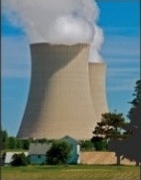
九電、2年連続黒字 川内原発再稼働で確保2016年11月01日via熊本日日新聞

 九州電力が31日発表した2016年9月中間連結決算は、純利益が前年同期比52・0%増の814億4400万円となり、2年連続で黒字を確保した。川内原発1、2号機(鹿児島県薩摩川内市)の再稼働や原油安による燃料費の低下が寄与した。

ただ中間配当は「中期的な財務体質改善の見極めが難しい」(瓜生道明社長)として、5年連続で見送った。

[…]

熊本地震で、南阿蘇村立野の黒川第1発電所の貯水槽が壊れ、近くの集落に大量の水が流出した問題については、「事業者としてできる最大限の対応をしていく」と話した。(亀井悠吾)

もっと読む。

Posted in *日本語 | Tagged , , | Comments Off on 九電、2年連続黒字 川内原発再稼働で確保2016年11月01日via熊本日日新聞

Fukushima Cover Up via CounterPunch

Robert Hunziker

It is literally impossible for the world community to get a clear understanding of, and truth about, the Fukushima nuclear disaster. This statement is based upon The Feature article in Columbia Journalism Review (“CJR”) d/d October 25, 2016 entitled: “Sinking a Bold Foray Into Watchdog Journalism in Japan” by Martin Fackler.

[…]

Yet, the Abe administration is talking to Olympic officials about conducting Olympic events, like baseball, in Fukushima for Tokyo 2020. Are they nuts, going off the deep end, gone mad, out of control? After all, TEPCO readily admits (1) the Fukushima cleanup will take decades to complete, if ever completed, and (2) nobody knows the whereabouts of the worlds most deadly radioactive blobs of sizzling hot masses of death and destruction, begging the question: Why is there a Chernobyl Exclusion Zone of 1,000 square miles after one nuclear meltdown 30 years ago, but yet Fukushima, with three meltdowns, each more severe than Chernobyl, is already being repopulated? It doesn’t compute!

The short answer is the Abe administration claims the radioactivity is being cleaned up. A much longer answer eschews the Abe administration by explaining the near impossibility of cleaning up radioactivity throughout the countryside. There are, after all, independent organizations with boots on the ground in Fukushima (documented in prior articles) that tell the truth, having measured dangerous levels of radiation throughout the region where clean up crews supposedly cleaned up.

[…]

According to USA Today, Chernobyl’s Legacy: Kids With Bodies Ravaged by Disaster, April 17, 2016: “There are 2,397,863 people registered with Ukraine’s health ministry to receive ongoing Chernobyl-related health care. Of these, 453,391 are children — none born at the time of the accident. Their parents were children in 1986. These children have a range of illnesses: respiratory, digestive, musculoskeletal, eye diseases, blood diseases, cancer, congenital malformations, genetic abnormalities, trauma.”

Read more.

Sinking a bold foray into watchdog journalism in Japan

Posted in *English | Tagged , , , | Comments Off on Fukushima Cover Up via CounterPunch

Atomic City, USA: how once-secret Los Alamos became a millionaire’s enclave via The Guardian

Home to the scientists who built the nuclear bomb, the company town of Los Alamos, New Mexico is today one of the richest in the country – even as toxic waste threatens its residents and neighbouring Española struggles with poverty

[…]

Today, Los Alamos is a secret no longer: it’s a small community with about 18,000 people living in the main town and a suburb called White Rock. But the nuclear lab remains, and the city is still an island in many ways: an extraordinary pocket of wealth and privilege, surrounded by some of the poorest counties in New Mexico, one of the poorest states in America.

The city is also partly toxic. The nuclear research lab still disposes of radioactive waste, and an underground plume of hexavalent chromium – a contaminant linked to increased risks of cancer and made famous by Erin Brockovich – has been drifting from the lab. A September 2016 report from the lab’s environmental management office said it could take more than 20 years and nearly $4bn (£3.3bn) to clean up decades-old nuclear waste in the area.

And yet Los Alamos has more millionaires per capita than almost anywhere else in the country.

[…]

Those who lived in Los Alamos were forbidden to talk about it. The town was not mentioned on drivers licenses, birth certificates, or postal mail. The whole area was surrounded by fences, gates and guards.

Constructed almost overnight, much of the land was simply appropriated from traditional Hispanic homesteaders and Native American communities, as well as an elite private boys school that counted Gore Vidal as one of its famous alumni.

To guard its secret, Los Alamos was built to be almost completely self-contained. There were schools, a hospital, and theatres that doubled as dance halls on Saturdays and churches on Sundays. Housing was allocated according to one’s rank at the lab. By the end of the war, it had a population of 6,000.

“Everything was run by the Army Corps of Engineers. There were no private businesses in Los Alamos until the 1950s. Nobody could own property. Nobody could own their home,” says Hunner. With its focus on the science behind the bomb, he describes it “like a university town that was controlled by the military”.

[…]

‘It’s a stark example of the 1% and 99%’

Today Los Alamos has become one of the richest cities in America. At least one in every nine people – a whopping 12% of the population – is thought to be a millionaire. Los Alamos also regularly tops the list in terms of the best education and lowest crime levels in the state. It has one of the country’s highest concentration of PhDs.

Just 30km from this affluent island is the town of Española. Here the median household income is $33,000 and almost 30% of the population live under the poverty line. For years it has also struggled with its reputation as the heroin overdose capital of America.

Hunner describes the disparity between Los Alamos and neighbouring towns as almost inevitable. “We’re really a poor state,” he says. “So you plop this federally supported research and development lab, where you have to pay people a lot of money to stay there, and of course there’s going to be a disparity between the people who live there and the people in Española.”

But, he adds, a lot of people who live in Española work in Los Alamos. “In that whole northern New Mexico area, there is a big commute.”

[…]

And yet references to war and nuclear weapons are everywhere. “Atomic City Transit” buses rumble down roads with names like Oppenheimer Drive and Trinity Street. “Atomic City Salsa” is on sale at a gift shop in the town centre, along with bumper stickers and playsuits for babies, including one with a mushroom cloud on the front, and the punchline (“I’ve been dropping BOMBS since Day 1”) on the reverse.

[…]

Española: ‘It’s complicated’

Española is a 25 minute drive north-east of Los Alamos. It, too, is a small town, with a population of about 10,000. But, in many respects, it feels a world away from the nuclear island on the hill.

The road into Española passes by brightly painted murals and drive-thru fast food restaurants. Other buildings bear hand-painted signs on storefronts, selling animal feed, boots and party supplies for quinceañeras. Boldly coloured low-rider cars, which have become key cultural symbols of this part of New Mexico, rumble down the town’s wide roads.

[…]

Secrecy, not safety

In Española’s Valdez Park, Beata Tsosie Peña, 38, is sitting with her young son near a freshly terraced slope where she will soon help plant trees as part of a new community garden.

Peña was born in the nearby Santa Clara pueblo, and is coordinator of the environmental justice programme at Tewa Women United (TWU), a civil society organisation led by indigenous women in the area (Tewa is the name of a native language group). Trujillo is also on the board of TWU.

Peña describes the Los Alamos lab as intertwined with issues of power and injustice from the very beginning. Much of the land for the lab was taken from Native communities in the 1940s, in what she says started with temporary agreements, and understandings that it would be returned after the war.

[…]

There are also concerns about the lab’s environmental impact on neighbouring communities. Peña’s organisation is part of the Communities for Clean Water coalition created to monitor Los Alamos’s impact on water for “drinking, agriculture, sacred ceremonies, and a sustainable future”.

The September 2016 report on nuclear waste came from the the lab’s own environmental management office. The 20-plus years and $4bn clean-up costs were criticised – for being likely underestimates.

Read more at Atomic City, USA: how once-secret Los Alamos became a millionaire’s enclave

Posted in *English | Tagged , , , , , | 3 Comments

The Navy’s Use of Depleted Uranium in Our Coastal Waters Threatens Humans, Wildlife via Truthout

Earlier this month, Truthout reported that the US Navy is knowingly introducing toxic metals and chemicals into the environment during its war game exercises.

Sheila Murray with the Navy Region Northwest’s public affairs office, when asked what the Navy was doing to mitigate environmental contamination from the large numbers of Depleted Uranium (DU) rounds it left on the seabed off the Pacific Northwest Coast claimed current research “does not suggest short- or long-term effects” from the release of DU to the environment that could result in its uptake by marine organisms.”

She also said that DU rounds “are extremely stable in sea water and pose no greater threat than any other metal.”

To see more stories like this, visit “Planet or Profit?”

In response to this, Mozhgan Savabieasfahani, an environmental toxicologist and winner of the 2015 Rachel Carson Prize environmental award for her work on DU and heavy metal contamination, told Truthout, “The US Navy representative’s views exhibit an alarming level of amnesia.”

She said this because Murray’s statement has been one that has been recycled by the Navy for years. Reuters reported in January 2003 that the Navy confirmed its use of DU shells in arms tests off the Washington State coast, at which time the Navy claimed, “The DU rounds dissolve so slowly that they would not contribute to naturally occurring (radiation) levels … and do not pose a significant risk.”

Meanwhile, ample scientific reports — including Savabieasfahani’s own research — demonstrate the deleterious health impacts caused by DU.

[…]

The Navy’s Environmental Impact Statement (EIS) on the matter claims “the survey results show no evidence of DU being present in any marine environmental sample collected in the year 2004.”

But Van Strum called their claim “incontrovertibly false” because the study itself stated it had found DU contamination in the soil in many areas where the military was operating cannons, in the soil where ordnance had been fired, and in the soil, sea water and marine life where the ordnance they had fired had landed.

[…]

She explained that the human and environmental impacts of the Navy’s use of DU in past exercises is “quite relevant,” and cited a report that showed how DU exposure has been linked to lower cognitive ability in adults.

“This leads us to expect much worse impacts on growing children, newborns and infants — to say nothing of unborn babies,” Savabieasfahani added. “Furthermore, epidemiological evidence is also consistent with an increased risk of birth defects in the children of people exposed to DU.”

She also heavily emphasized the fact that the internalization of uranium in any form will result in both chemical and radiation exposure.

“Once inside a living body, DU and uranium’s effects are virtually the same,” Savabieasfahani explained. “This is a point worth repeating.”

[…]

Other Instances of DU

Problems with DU in the Pacific Northwest are not limited to the Navy.

At Washington’s Joint Base Lewis-McChord, as well as the Yakima Training Center, there has not been any cleanup of contaminated areas or disposal of dangerous rounds, despite confirmed reports of contamination in nearby areas. It is also worth noting that, while no direct link has been proven, the lung cancer rate for Pierce County, Washington, where Lewis-McChord Base is located, is among the highest in the entire state.

Read more at The Navy’s Use of Depleted Uranium in Our Coastal Waters Threatens Humans, Wildlife

Posted in *English | Tagged , , , | Comments Off on The Navy’s Use of Depleted Uranium in Our Coastal Waters Threatens Humans, Wildlife via Truthout

淡水化装置から汚染水漏れ4.5トン 福島第一原発 via 朝日新聞

東京電力は1日、福島第一原発原子炉を冷却する水から塩分を取り除く淡水化装置で、汚染水が約3トン漏れたと発表した。漏れた汚染水は装置を囲う堰(せき)内にとどまっているという。ベータ線を出す放射性物質の濃度は1リットルあたり4万5千ベクレルだった。装置で処理した後にタンクからあふれたとみられる。

水漏れを示す警報が1日午前6時35分ごろに鳴り、東電社員が確認したところ、装置付近に長さ30メートル、幅10メートルにわたって汚染水が漏れていた。約20分後に装置を止め、汚染水は現在は漏れていないという。

続きは淡水化装置から汚染水漏れ4.5トン 福島第一原発 

Posted in *日本語 | Tagged , , , | Comments Off on 淡水化装置から汚染水漏れ4.5トン 福島第一原発 via 朝日新聞

敦賀2号で1次冷却水漏れ 1リットル、周辺に影響なし via 中日新聞

 日本原子力発電は1日、敦賀原発2号機(福井県敦賀市)の原子炉格納容器内で、1次冷却水漏れがあったと明らかにした。漏れた水は約1リットルと推定され、ごく微量の放射性物質が検出された。日本原電は「周辺への影響はない」としている。

日本原電によると、10月8日、巡視中の運転員が原子炉の水位を測定する機器の点検用の栓に、ホウ酸の固まりが付着しているのを見つけた。隙間から漏れた冷却水が蒸発したとみられ、約100ベクレルの放射性物質が検出された。

続きは敦賀2号で1次冷却水漏れ 1リットル、周辺に影響なし

Posted in *日本語 | Tagged , , | Comments Off on 敦賀2号で1次冷却水漏れ 1リットル、周辺に影響なし via 中日新聞

Documentary details citizen effort to close Vt. Yankee via Times Argus

The documentary filmmaker heard in January 2010 that a group of activists were going to walk from Brattleboro to Montpelier — in the winter — to protest the continued operation of the Vermont Yankee Nuclear Power Plant.

Leppzer, 58, of Wendell, Massachusetts, already had a film and public radio production to his credit about nuclear power, and he was intrigued about the dedication of people who would make such a 126-mile walk in the dead of winter.

[…]

Just as the group of anti-nuclear activists was halfway through its snowy trek came the news from Entergy Nuclear that Vermont Yankee was leaking high levels of radioactive tritium from an unknown source — and the tritium was showing up in monitoring wells on the banks of the Connecticut River.

Gov. Peter Shumlin, one of Yankee’s biggest critics, who was interviewed for the movie, will be on hand at the screening. Leppzer sold the television rights for “Power Struggle” to HBO and the film is slated to be broadcast sometime next year.

Leppzer hopes to raise $200,000 needed to complete the last technical work on the film — sound mix and color correction — as well as pay for a national tour promoting the film. Funding so far has come from Leppzer, HBO and NHK-Japan. Leppzer had earlier finished a shorter version of “Power Struggle” for the Japanese broadcast company.

[…]

In 2011, came the Fukushima, Japan, nuclear disaster, and Leppzer’s film about grass-roots democracy and nuclear power became of intense interest to NHK-Japan, the Japanese national public broadcasting network.

The Japanese broadcast company was fascinated by the Vermont grass-roots democracy story — that citizens could and did directly lobby their legislators about their concerns about the aging Vermont Yankee plant, Leppzer said.

Ironically, a day before the Fukushima disaster, the federal Nuclear Regulatory Commission had granted Entergy permission to operate Yankee for another 20 years.

A year later, on the day Yankee’s original 40-year license expired in 2011, thousands of people demonstrated in Brattleboro, but the plant kept operating, a major setback for the state and the thousands of activists who had worked for decades to shut down the Vernon reactor.

Despite the closely watched court decision, within weeks, Entergy itself pulled the plug on Yankee.

Read more at Documentary details citizen effort to close Vt. Yankee

Posted in *English | Tagged , , , , | Comments Off on Documentary details citizen effort to close Vt. Yankee via Times Argus

Fukushima Facility to Become Soccer Training Camp for 2020 Olympics via Bloomberg

The base for the cleanup of the Fukushima nuclear plant will be returned by March to its original use: the training camp for the Japanese national soccer team.

In a symbolic step in the struggle to contain one of the worst nuclear disasters, Tokyo Electric Power Co. Holdings Inc. will return the J-Village facility — about 20 kilometers (12 miles) from the crippled Dai-Ichi plant and just 7 kilometers from the current exclusion zone — to the prefectural government during the current fiscal year, company spokesman Tatsuhiro Yamagishi said Tuesday. It’s also a boon for soccer players who will use the complex as their training base for the 2020 Tokyo Olympics.

[…]

The hand-over is a shot in the arm for Prime Minister Shinzo Abe, who has vowed the nuclear disaster will not impede the nation’s plans to host the 2020 Games. In September, the premier said the situation at Fukushima is “under control” and that there doesn’t need to be a review of measures to prevent contamination.

“This promised handover of J-village would serve as a symbol of progress,” Daniel Aldrich, professor and director of the security and resilience studies program at Northeastern University in Boston, said by e-mail.

“Tepco clearly hopes that this will show the nation that it is on track in the Fukushima accident clean up process,” Aldrich said. “However, a number of obstacles, including expanding costs for decommissioning, a lack of physical control over the contaminated groundwater at the site, and complaints about the decontamination process nearby will no doubt hinder the process.”

Read more at Fukushima Facility to Become Soccer Training Camp for 2020 Olympics 

Posted in *English | Tagged , , , | Comments Off on Fukushima Facility to Become Soccer Training Camp for 2020 Olympics via Bloomberg

【柏崎市長選挙】市民候補「脱原発を言わない民進は要らない」via BLOGOS

東電・柏崎刈羽原発の再稼働が最大の争点となる柏崎市長選挙(13日告示 ・ 20日投開票)は、新潟県知事選挙と似た様相になってきた。

原発の再稼働反対を掲げる保健師と条件付き再稼働を認める元柏崎市議が、事実上の一騎打ちをすることになりそうだ。

東電・柏崎刈羽原発の再稼働に反対するのは、柏崎市役所の元保健師、竹内えいこ候補予定者(47歳)。

竹内氏は2014年4月から1年間、会津若松市に置かれていた大熊町役場に出向し、保健師として原発事故避難者の身体と心のケアにあたった。

「健康被害もあるが、最も気の毒なのは遠慮して自分のことが言えなくなること」「(原発事故が起きても簡単に)避難できないし、避難は何年も続く」・・・

「福島の事故を柏崎で起こしてはならない」。原発避難者の窮状に触れてきたことが、再稼働反対を掲げて立候補する原動力だ。

竹内氏と米山新知事の共通点は、原子力事故の惨禍を体験していることである。

医師でもある米山隆一知事は、1999年東海村の臨界事故の際、放医研の当直医で緊急搬送されてきた患者を診ている。患者は苦しみながら死んだ。

竹内氏の選挙を支えるのは、脱原発の市民グループだ。これもまた米山氏の選挙とよく似ている。

「米山さんの時よりもうちょっと(民進党)抜きになる。脱原発を言わないのなら要らない」。竹内氏は民進党に決然とした態度で臨む。

続きは【柏崎市長選挙】市民候補「脱原発を言わない民進は要らない」

Posted in *日本語 | Tagged , | Comments Off on 【柏崎市長選挙】市民候補「脱原発を言わない民進は要らない」via BLOGOS

原発事故被害の集団訴訟で全国初の結審 前橋地裁 via NHK

[…]

この裁判は、原発事故で福島県から群馬県内に避難してきた人など合わせて137人が、住み慣れた家や仕事を失ったり、転校を余儀なくされたりして精神的な苦痛を受けたとして、国と東京電力に1人当たり1000万円の損害賠償を求めているものです。

原告側は、避難によって子どもが学校でいじめにあったり収入が避難前の3分の1となり将来の見通しが立たなくなったりしたと訴えてきました。一方、国や東京電力は「過去の大地震と比較にならず、津波の規模は予見できなかった」と主張しました。

31日に前橋地方裁判所で開かれた裁判で、原告団の団長を務める鈴木克昌弁護士が「突然ふりかかった原発事故で、ふるさとと生活の基盤を失い、幸福な人生を送る権利を失った」と改めて主張し、原道子裁判長が31日で審理を終え、来年3月17日に判決を言い渡す方針を示しました。

弁護団によりますと、同様の集団訴訟は、全国の21の裁判所で審理が進められていますが、今回が最も早い結審となったということです。

原告の1人で、福島県南相馬市から家族4人で群馬県高崎市に移り住んだ福島秋美さん(34)は「子どもたちの命を守るため、家族で移住しました。福島には大変な思いをしている人たちがたくさんいる中で、その思いもくみ取ってほしいと思って裁判に参加してきました。判決は被災者が納得できる内容になってほしいです」と話していました。

[…]

もっと読む。

Posted in *日本語 | Tagged , , | 1 Comment