
楢葉町が独自に東京電力福島第一、第二原発を監視する「町原子力施設監視委員会」は5日、発足した。第一原発の廃炉作業が着実に行われているかなどを独自に検証し、町民の安心確保につなげる。
初会合はいわき市の町いわき出張所谷川瀬分室で開かれた。松本幸英町長が委員を代表し松本哲男東京都市大工学部教授(原子力安全工学)に委嘱状を手渡し、委員長に指名した。
松本町長が「町民の安全確保、地域防災力の強化を目指し、専門的な立場から意見を出してほしい」とあいさつした。
もっと読む。
楢葉町が独自に東京電力福島第一、第二原発を監視する「町原子力施設監視委員会」は5日、発足した。第一原発の廃炉作業が着実に行われているかなどを独自に検証し、町民の安心確保につなげる。
初会合はいわき市の町いわき出張所谷川瀬分室で開かれた。松本幸英町長が委員を代表し松本哲男東京都市大工学部教授(原子力安全工学)に委嘱状を手渡し、委員長に指名した。
松本町長が「町民の安全確保、地域防災力の強化を目指し、専門的な立場から意見を出してほしい」とあいさつした。
もっと読む。
神戸に事務所を持つ福島県会津若松市のITベンチャー企業「アイヅ・ジャパン」が、走行しながら車輪に画像を表示し、放射線量を測定できる自転車を開発した。広告などの情報発信や環境データの収集に生かせるといい、観光地でレンタサイクルとしての導入を目指す。(斉藤正志)
[…]
「開発のきっかけは東日本大震災だった」と山寺純社長(45)。震災や福島第1原発事故の影響で会津若松市への観光客が激減し、復興のためレンタサイクルを発案した。広告収入を得ながら、放射線への不安も取り除けるような自転車ができないか、と2年前から開発。出来上がった自転車は故郷への思いを込め「フクシマホイール(車輪)」と名付けた。現在は関東の企業とレンタサイクルの試験的な導入を協議しているという。
「神戸に事務所を置いたのも、震災からの復興を学びたかったから」と山寺さん。「観光客に手軽に乗れる自転車を提供できる上、費用を広告収入で賄え、環境データの活用もできる。持続可能な仕組みで、自転車を通じた地域の活性化につなげたい」と話している。
もっと読む。
2014年5月より渋谷アップリンクをはじめとして各地で上映されてきたドキュメンタリー映画『いわきノート FUKUSHIMA VOICE』が、新たな企画として「リレーボイス-目指せ47都道府県制覇」をスタートさせた。
『いわきノート FUKUSHIMA VOICE』は、大震災と原発事故から3年経った福島県いわき市で暮らす人びとを大学生11名が丹念に取材し、いわきの今と未来を描いたドキュメンタリー。今回の企画は、映画を通じた感想や声の繋がり、更にそこから人と人との繋がりを生み出していきたいという思いのもと行われる。
参加者は任意の知り合いに『いわきノート』をリレー方式でネットで観てもらい、次の人へと繋いでいく。京都を始まりとするルートA、山口を始まりとするルートB、福岡を始まりとするルートCの3つのルートにより、全都道府県制覇を目指す。
[…]
【関連記事】
半径1mにしか聞こえない小さな声を小さなまま届けることこそがドキュメンタリー映画の役割──松江哲明氏と『いわきノート』監督5名による座談会(2014-05-07)■『いわきノート FUKUSHIMA VOICE』「リレーボイス-目指せ47都道府県制覇」公式HP
■『いわきノート FUKUSHIMA VOICE』<a href="http://www.geijutsu.tsukuba.ac.jp/~cr/iwakinote/
“>公式HP
もっと読む。
東京電力福島第一原発の上空を本社ヘリ「あさづる」で飛んだ。建屋地下にたまる高濃度汚染水が地下トンネルを通じて海に漏れると、国内外に大きな問題を及ぼす。その事態を防ぐため、トンネルの接合部に大量の氷やドライアイスを投入し、凍結を促す作業が続く。
[…]
だが、計画通りに凍らないため、毎日二十トン前後の氷などを投入して水温を下げ、凍結を促すことに。作業員たちは四交代で二十四時間態勢で投入を続けている。それでも効果ははっきりせず、今度は凍結管の近くにセメントを流し込む。双眼鏡を通して見た現場は、想像していたよりずっと狭く、荒れていた。三年半前、津波で打ち上げられたがれきが所々に残り、それを避けるようにパイプとベニヤ板で足場が組まれていた。
氷が詰まった大きな袋がクレーンで運び込まれると、数人の作業員がスコップやくわのようなもので、一生懸命にかき出していた。
足元は危険な汚染水。作業員たちは、一つ間違えば大量被ばくする環境にいる。努力が実るよう、祈らずにはいられなかった。
The National Nuclear Security Administration, or NNSA, reported it is still working with Shaw AREVA MOX Services, the contractor for the Savannah River Site’s Mixed Oxide Fuel Fabrication Facility, to place the program in a cold standby at the top of the fiscal year.
The Aiken Standard asked for updates on MOX on Aug. 27. NNSA Deputy Press Secretary Derrick Robinson wrote in an email that there were no further updates at the time.
When asked whether that meant NNSA is still working to implement a cold standby, Robinson responded with a simple, “Yes.”
The information comes about a month before the end of the fiscal year, and a month after Energy Secretary Ernest Moniz took a trip to SRS, and reported that the federal government is searching for funding streams for the MOX program.
“The issue is if there will be a sustainable funding stream,” Moniz said. “We charged the contractors to look at a different track, depending on what the funding is and its adequacy. In the end, if the budgets don’t support construction, we’ll have to act accordingly.”
The MOX program is part of a nonproliferation agreement with Russia to dispose of 34 metric tons of weapons-grade plutonium.
Naysayers of the program have said it is unsustainable, citing a Department of Energy study in April that priced the entire program at more than $30 billion.
Advocates of the program, including AREVA – a partner of the MOX contractor – said the cost is closer to $17 billion.
S.C. congressmen are fighting to secure funding for construction of the program for fiscal year 2015, which begins Oct. 1.
New Mexico’s top environmental regulator lashed out at the U.S. Department of Energy this week, accusing it of impeding the state’s investigation into the circumstances that led to a radiation leak earlier this year at the Waste Isolation Pilot Plant near Carlsbad.
During his keynote speech to an audience representing federal agencies, industry, academia, national labs and all levels of government at the annual Radwaste Summit in Summerlin, Nev., New Mexico Environment Department Secretary Ryan Flynn warned that Los Alamos National Laboratory and WIPP could face steeper sanctions from the state because of what he characterized as Energy Department roadblocks that have protracted the probe.
“The problem is that Department of Energy headquarters back in Washington, D.C., is looking at this situation through a political or [public relations] lens, so they’ve put a noose around the scientific personnel who can answer our questions and move this process along,” Flynn told The New Mexican.
[…]
A Los Alamos spokesman referred questions to Energy Department officials on Friday.
In a written statement responding to Flynn’s criticisms, a department spokesperson said: “The department is fully committed to reopening WIPP, and will continue to work with the state of New Mexico to do so safely and as expeditiously as possible.”
Greg Mello, executive director of the watchdog organization Los Alamos Study Group, echoed Flynn’s angst that the Energy Department hasn’t openly shared details with regulators about the radiation leak and the waste suspected of causing it.
“Anything else is a sign of a poor safety culture and could be a danger signal for workers and the public,” Mello said. “Mislabeling drums and withholding information can be criminal. That’s one way serious accidents can happen.”
Already, regulatory penalties from the state are likely for both Los Alamos and WIPP, according to Flynn. Potential penalties range from fines to suspension of operations at the sites.
At Los Alamos, treating waste without a permit and labeling waste as less volatile than it actually is, then shipping it to WIPP are among the violations already identified, and WIPP, at a minimum, faces regulatory action for failing to verify the volatility of the waste before accepting it.
“The more we investigate, the more we’re discovering at Los Alamos,” Flynn said.
The state’s first sanctions against the permit-holders could be meted out within the next 60 days, Flynn said. Regulatory actions against LANL and WIPP are likely to be imposed in a series of steps, as each of the violations is verified.
Read more at Flynn accuses feds of blocking WIPP probe
[楢葉町(福島県) 7日 ロイター] – 小渕優子経済産業相は7日、東京電力 福島第1原発を就任後初めて視察した。視察後、記者団に対し、汚染水問題がコントロール下にあるかとの質問に対して「全体として状況はコントロールされているものと考えている」と述べた。小渕経産相は「個別の事象は発生しているが、モニタリングの結果、発電所の港湾内で放射性物質の影響は完全にブロックされている」と話した。
1年前にブエノスアイレスで行われた国際オリンピック委員会(ICO)総会での2020年東京五輪誘致スピーチで安倍晋三首相は、福島第1原発の汚染水問題について「アンダー・コントロール」と発言した経緯がある。
続きは福島第1原発の汚染水問題、コントロールされている=小渕経産相
関連記事:
3カ国「安全向上へ連携を」
東京・六本木で開かれた日中韓の情報交換会合。冒 頭のあいさつで、規制委の田中俊一委員長は「日中韓が最新の知識を共有し、安全向上へ連携することは重要だ。東京電力福島第1原発事故の教訓について可能 な限り情報提供するので、適切なフィードバックをしてほしい」と促した。
参加したのは、中国側から国家核安全局の副長官ら7人と、韓国側 は韓国原子力安全セキュリティー委員会の事務総局長ら10人。日中韓3カ国による会議は平成20年から毎年、各国持ち回りで開かれ今回で7回目となるが、 福島の事故後、日本で開かれるのは23年11月以来2回目。4日には両国関係者が福島第1原発を視察した。
(略)
中国原発は「粗製乱造」
中国の原発建設は過去に例のないスピードで進んでいる。
(略)
中国の原発事情に詳しい作家で、島根県立大名誉教授の豊田有恒氏は「中国は異常なスピードで建設を強行しており、『粗製乱造』といえる。日本は常に中国政府に危険を訴え続けることが肝要だ」と指摘してきた。
特に中国はそれぞれの電力会社が独立して営業運転しているため、部品の互換性もなければ燃料棒の製法や様式もバラバラで、運転要員の訓練も系統だったものがないという。
しかも規制当局の体制も不十分で、原発の安全規制を担う中国の国家核安全局のスタッフは70人ほど。日本の規制当局は今年倍増して約1000人、米国は 3000人以上いることからすると、中国の規制は心許ない。しかも日中科学技術交流協会によると、中国の原発1基当たりのトラブルは、日本の5倍以上の割 合で記録されている。
(略)
再処理狙う韓国
一方の韓国は、原子力産業協会の調査で、運転中の原発が23基、建設中・計画中が9基あるとされる。世界第5位の原子力国だ。
ただ1978年の運転開始からすでに36年たっており、「核のゴミ」が飽和状態で、その処理に頭を悩ませている。
日本の原子力学会関係者が「ノドから手が出るほどほしいはず」と表現するほど、韓国は核のゴミの再処理事業に狙いを付けている。再処理で出るプルトニウムは核爆弾への転換も可能となり、核不拡散の目的から、非核保有国で再処理が認められているのは日本だけだ。
2014年3月に期限を迎えた米韓原子力協定の改定交渉では、再処理事業をを実現するべく交渉を重ねてきた。原子力協定は米国が原発の技術や設備を韓国に 輸出する代わりに、韓国は米国の許しがなければ核燃料の再処理ができない。結局、朝鮮半島での核開発競争を懸念する米国の同意を得られず、現状のまま2年 間、協定は延長することになった。
ただ米国はベトナムとの原子力協定には前向きで、韓国紙・中央日報は2月27日付で、「韓国には禁止しているのにベトナムには核処理を黙認している。公 平性をめぐる論争が予想される」と報じた。米国がベトナムに譲歩したのは、急成長する原発市場を狙って、ロシアが目を付けて投資を拡大しているため、ライ バルが先に進出することを防ぐ戦略眼がある。
ソフトバンクの関連企業のSBエナジーは、創造的な未来のエネルギーを考える「体験型環境教育プログラム」を、北海道安平小学校で2日間行った。このプログラムは、環境、エネルギー問題などを主体的に、創造的に考える機会を提供することが目的。ソフトバンクが全国のソーラーパークの建設地を対象に実施してきた。
今回、8番目となる安平小学校は6年生25人が5グループに分かれ参加。初日は1人1台のiPadで、学校周辺の野山で自然のエネルギーを撮影するフィールドワークを行い、終了後に教室で各自が撮影した自然エネルギーについて意見交換した。
[…]
この「未来×エネルギープロジェクト」は、ソフトバンクがソーラーパークを建設する地域で自然エネルギーを考え、地域密着の環境教育への取り組みを2012年秋に群馬県棒東小学校で実施した。昨年は経産省からキャリア教育アワードで奨励賞を受賞した。
もっと読む。
by William Boardman
obody in the world knows how to dispose of radioactive waste safely and permanently. That’s a given. The Japanese central government is presumably aware that anything it does with still the unmeasured but vast amount of radioactive waste from Fukushima’s six nuclear power generators will be temporary. Leaving it in place is not an option. So Tokyo announced on August 29 that the Fukushima waste would be stored for 30 years in Fukushima prefect, in an “interim facility” to be built probably in nearby Okuma or Futaba (now evacuated)
[…]
.Plutonium levels from Fukushima may be relatively low in the Pacific
The same day the plan to store Fukushima’s radioactive waste next door to the Fukushima nuclear complex was announced, the MarineChemist blog on Daily Kos reported on measurements of plutonium in the Pacific Ocean made in April 2014. The conclusion from those measurements, made within about 90 miles (150 km) of the Fukushima plant, was that the triple meltdown at Fukushima had not added measurable amounts of plutonium to the ocean near the site. As the study put it: “Our results suggested that there was no significant variation of the Pu [plutonium] distribution in seawater in the investigated areas compared to the distribution before the accident.”
That sounds like good news. But all it really means is that the added plutonium from Fukushima, so far, may be relatively trivial in comparison to the already-elevated level of plutonium contamination from nuclear weapons testing more than fifty years ago. The isotopes most relevant, Plutonium-240 and Plutonium-239, have half-lives of 6,500 years and 24,100 years respectively. The half-life is the time it takes for half the amount of a radioactive element to become benign.
And plutonium is but one part of the radiation load. There are thousands of nuclides and isotopes. Some have a half-life of almost no time at all. Many others, including those released by Fukushima – cesium, strontium, tritium, iodine, tellurium – have half-lives measured in years, decades, and centuries, during which time they remain dangerous, albeit decreasingly. (According to a report in the journal Environmental Science and Technology in 2013, the amount of radioactive cesium from Fukushima measured in central Europe in 2011 was under-reported by orders of magnitude.)
The Pacific study apparently ignored everything but plutonium in its study of ocean radioactivity. It also ignored all radioactivity in the rest of the Pacific Ocean, all the areas more than 90 miles from Fukushima.
The worse news is that there is little or no reliable, systematic, continuous measurement of radiation levels anywhere, not just related to Fukushima. Nor is there any honest, comprehensive, serious study of the effects of the radiation that’s not being measured. Independent scientists have sharply criticized this failure to gather reliable data in what amounts to a pattern of global denial. The Nobel Prize-winning organization International Physicians for the Prevention of Nuclear War issued a report in June sharply criticizing the United Nations’ work on Fukushima. The physicists said that the UN’s optimistic assumptions had no credible basis in current research. Even stronger criticism was reported in the August 22 London Times:
The United Nations is deliberately ignoring evidence of genetic damage caused by the Fukushima nuclear disaster, according to international scientists who point to signs of mutations in animals, birds and plants. Members of the US-based Chernobyl and Fukushima research initiative have denounced a recent UN report on the 2011 disaster in Japan which, they say, fails to take proper account of symptoms as diverse as spotty cows, infertile butterflies, and monkeys with low blood cell counts.
[…]
Fukushima Effects More Lingering than Hiroshima or Nagasaki?Now it turns out that the multiple meltdowns at the Fukushima Daiichi nuclear power plant were worse than originally reported after the March 11, 2011, shutdown of the six-reactor complex (one of the 15 largest in the world). Even after viewing underwater robot video footage of the collapsed reactor interior in May 2011, according to Japanese officials, “Experts believe that the fuel rods, not visible in the clip, were left largely undamaged despite the disaster.”
That was not true.
By November 2011, the official story changed: Fukushima Unit 3 suffered “only” a partial meltdown, involving about 63% of the reactor’s core, according to TEPCO. Unit 3 contains mixed oxide (MOX) fuel that is about 6% plutonium. The core of 548-566 fuel assemblies with 63 fuel rods each (more than 35,000 rods) is estimated to weigh about 89 tons. Radiation levels inside the reactor have remained lethal since March 2011.
On August 6, 2014, more than three years after the accident, on the 69th anniversary of the atomic bombing of Hiroshima, TEPCO announced that its revised assessment was that 100% of the reactor core had melted down and pooled at the bottom of the concrete containment vessel. There, TEPCO now believes, the molten fuel rods have penetrated about 68 cm (about 27 inches) into the concrete bottom of the vessel, but the mass remains contained.
[…]
Radioactive water buildup; rice paddies and monkeys contaminatedAmerican media (perhaps world media) continue to under-report news about Fukushima, providing almost no reliable, continuous coverage for assessing a critical event that has potentially global consequences, even though it’s unfolding minute-to-minute. The failure of governments to address the spread of radiation, and its intensity, creates an information vacuum. Rather than doing their own reporting, most mainstream media report only anecdotally, or not at all. This allows scare-mongers to take a serious, ongoing crisis and make it apocalyptic (for example, “How the Entire Pacific Is Polluted and Can Kill All Sealife”).
In a limited effort to provide some perspective, here are a few summaries of recent reports of some of the ongoing difficulties at Fukushima:
[…]
Rice paddies outside the Fukushima evacuation zone have been contaminated with radioactive material, according to a July report from Japan’s agriculture ministry. The ministry suspects that the contamination (especially Cesium) came, at least in part, from the removal of radioactive wreckage around Fukushima’s Unit 3, When the debris was moved, apparently, radioactive dust trapped beneath it was exposed and blew away. TEPCO did not immediately inform the public of the ministry’s findings.Since at least 2013, the Japanese government has allowed farmers to grow rice in evacuation zones in Fukushima prefect, as close as 6 miles from the nuclear complex. The rice is sold commercially. Farmers use potassium fertilizer in an effort to reduce the amount of cesium absorbed into the rice. The government has said it would test all Fukushima rice for radioactivity before allowing it to go to market.
Wild monkeys living 43 miles away from Fukushima have detectable levels of radioactive cesium, while wild monkeys living farther away had no detectable levels of cesium, according to Scientific Reports on July 24. The contaminated monkeys also have lowered counts for both white and red blood cells, counts that indicate a damaged immune system. Professor Shinichi Hayama, at the Nippon Veterinary and Life Science University in Tokyo, told the Guardian that:
… during Japan’s snowy winters the monkeys feed on tree buds and bark, where Cesium has been shown to accumulate at high concentrations.
“This first data from non-human primates – the closest taxonomic relatives of humans – should make a notable contribution to future research on the health effects of radiation exposure in humans,” he said….
“Abnormalities such as a decreased blood cell count in people living in contaminated areas have been reported from Chernobyl as a long-term effect of low-dose radiation exposure.”
Read more.



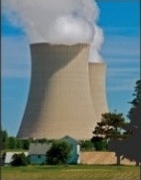
A nuclear power plant in Byron, Illinois. Taken by photographer Joseph Pobereskin (http://pobereskin.com).