【福島原発かながわ訴訟】「もっと注意喚起してくれたら…」「子どもたちを被曝させてしまったかもしれない」女性原告が意見陳述~横浜地裁で第2陣の第3回口頭弁論 via 民の声新聞

2011年3月の福島第一原発事故で福島県から神奈川県に避難した人々が、事故の原因と責任の所在を明らかにし完全賠償を求めて起こした「福島原発かながわ訴訟」。2021年9月3日に提訴した第2陣(5世帯16人)の第3回口頭弁論が12日午前、横浜地裁101号法廷(高取真理子裁判長)で行われた。幼い息子とともに福島県福島市から避難した50代女性が意見陳述。国や自治体からの注意喚起がほとんどなく「子どもたちに被曝をさせてしまったかもしれない。申し訳なさを持ち続けています」などと述べた。次回期日は4月20日14時。原告の意見陳述が予定されている。

【初期被曝への後悔】
 「家族それぞれ、充実した毎日を送っていましたが、その生活は原発事故で一変してしまいました」
 女性は生まれ育った福島市で、夫と高校生の娘、幼稚園に通う息子と4人暮らし。娘は高校のダンス部に所属し、息子は幼稚園に隣接する山で伸び伸びと遊んでいた。女性はいずれ店を引き継ぐことを視野に入れながら、実家の美容室で働いていた。2011年3月の震災・原発事故が起きるまでは…。そこに降り注いだのが、大量の放射性物質だった。
 「放射線に関する知識はなかったので何をしたら危険なのかが分からず、事故後の行動について後悔することとなりました」
 被曝リスクに関する情報は乏しく、福島県も福島市も注意喚起をするどころか〝安全〟を強調するばかり。女性は当時の行動で子どもたちに無用な被曝をさせてしまったのではないかと悔やんでいるという。
 「事故後も幼稚園に通常通り通園していました。しかし、4月に入ってから、幼稚園も、幼稚園の隣の山も線量が高いことが分かり、山の中は立入禁止となりました。山は竹林なので除染もできないということでした。また、娘の通っていた高校も周囲の施設も、線量が高いことが分かりました」
 生活用水を汲んでいた場所はホットスポットだった。放射性物質を室内に入れないため換気扇を回さない、洗濯物を汚染させないよう外干ししない、など被曝リスクを避けるための情報が届いたときには、既に初期被曝をしてしまっていた。福島第一原発で爆発事故が起きた直後になぜ、注意喚起をしてくれなかったのか。「特に子どもたちには、事故直後に危険なことをさせてしまったと、今でも申し訳なさと不安な気持ちでいっぱいです」。
 夏でも長袖にマスクをして生活するような場所に住み続けていいのだろうか、という想いが日増しに強くなった。そして原発事故発生から半年後の2011年9月、女性は決断した。

【「誰にも相談できなかった」】
  女性は幼い息子を連れて福島市を離れた。娘は受験を控えていることもあり、2人だけで関東に向かった。「しかし、母と息子2人だけでの避難生活は本当に辛いものでした」。
 内気な息子は、知らない土地での新しい生活になじめず、精神的に不安定な日々が続いた。進学した小学校で〝避難者いじめ〟に遭わなかったのはせめてもの救いだった。
 女性も、徐々に不安定になった。
 「頼れる人が1人もいない、息子を守れるのは私1人。張り詰めた気持ちでいるうちに、涙が止まらないなど不安定な日々が続きました。福島県外に避難したことで、実家の美容室を継ぐことも叶わなくなってしまいましたし、父が亡くなった際には最後のお別れもできませんでした」
 娘は進学先の大学で「放射能が移る」、「近寄るな」などの心ない言葉を浴びたことがあったという。なぜ、こんな想いをさせられなければならないのか。

[…]

【「区域外避難者への賠償低すぎ」】
 法廷では、山﨑健一弁護士も「原発事故により原告らが被った精神的損害」について意見陳述した。
 「原子力損害賠償審査会(原賠審)の中間指針等においては、政府による避難指示等対象区域内からの避難者に対しては、原則として1人当たり月額10万円、区域外からの避難者に対しては、子ども及び妊婦について1人当たり40万円、その他の者は1人8万円を目安として賠償基準を提示している。しかし、そもそも、政府による避難指示等は科学的な根拠に基づくものではなく、避難による社会的混乱等を考慮した政策的な判断に過ぎなかったのであり、その対象区域によって賠償に水準に大きな格差を認めることに合理性は認められない。とりわけ、対象区域外からの避難者に対する賠償額は、その被害実態に照らして余りに低額に過ぎ、著しく不合理というほかない」
 昨年12月に公表された原賠審の「第五次追補」については「約9年振りの指針の見直しであり、本件原発事故の被害救済の必要性からすれば、遅きに失したものと言わざるを得ないが、同種集団訴訟で認められた『避難を余儀なくされた慰謝料』、『ふるさと喪失・変容慰謝料』等を新たに中間指針等に取り込むものであり、被害の救済範囲を拡げた点において大きな前進」と評価。一方で問題点も指摘した。
 「目安として定められた賠償額は、本件原発による被害の深刻さに照らせばいまだ不十分。また、政府による避難指示等対象区域間において不当に大きな賠償格差が残されたままであることも問題。特に、自主的避難等対象区域に関する賠償額については、現時点で十分な判決例の集積がないこともあってか今回の見直しではほとんど踏み込んだ検討がされておらず、今後の大きな課題だ」
 そのうえで、裁判所には次のように求めた。
 「中間指針等には多くの課題が残されており、その適正な見直しがなされるためにも、本件原発事故の深刻な被害について個別具体的に検討した上での適正な司法判断が必要」
 「本件訴訟においても、個別具体的な事情を踏まえて原告らの被害実態に見合った適正な賠償額を評価する必要がある。他方で『第五次追補』で示された対象区域には該当しない各原告に対しても、居住区域だけを理由に各賠償の対象とならないとすることは許されず、やはり個別具体的な事情を十分に考慮して被害実態に見合った適正な賠償を認めるべき」

全文

Posted in *日本語 | Tagged , | Comments Off on 【福島原発かながわ訴訟】「もっと注意喚起してくれたら…」「子どもたちを被曝させてしまったかもしれない」女性原告が意見陳述~横浜地裁で第2陣の第3回口頭弁論 via 民の声新聞

【原発避難者から住まいを奪うな】裁判官忌避申立も国際人権法もぜーんぶ無視して「国家公務員宿舎から出て行け」 怒号飛ぶ法廷で福島地裁が2世帯に判決言い渡し via 民の声新聞

  • 2023/01/14
  • 11:50

福島県が2020年3月、区域外避難者4世帯を相手取り国家公務員宿舎「東雲住宅」(東京都江東区)の明け渡しと未納家賃の支払いを求めて提訴した問題で、福島地裁の小川理佳裁判長は13日午前、審理が併合された2世帯に対し、福島県の主張を全面的に認める判決を言い渡した。小川裁判長を巡っては、避難者側が「訴訟指揮が不公平」などとして忌避申立。最高裁の結論が出ていないにもかかわらず判決言い渡しを強行した。判決内容も「避難者側が主張した国際人権法や知事の裁量権逸脱などをまったく検討していない」(柳原敏夫弁護士)。避難者側は仙台高裁に控訴する意向を示した。

福島県の主張を全面採用】
 小川裁判長は小さな声で判決文を言い渡した。早口でメモもままならない。途中、傍聴席から「声が小さくて聞こえない」と声が飛んだが、小川裁判長は気にも留めずに主文を読み続けた。
 退去済みの避難者には未払い家賃(131万8647円)の支払いを、退去できていない避難者には明け渡しと未払い家賃(147万5268円)と明け渡しまでの家賃(月額6万4863円)の支払いを命じる判決。傍聴席が騒然とするなか、小川裁判長は逃げるように法廷を後にした。その間、わずか40秒だった。

[…]

「一時使用許可の期間が満了した場合において、社会権規約によって、期間経過後も本件各建物での居住を継続する具体的権利が保障されるものではない」などとして、避難者たちの居住権を否定した。
 だとすれば、国内避難民の人権に関する国連特別報告者セシリア・ヒメネス・ダマリーさんはなぜ、訪日調査後の「予備的所見」(6月に最終報告書が提出される予定)で、次のように指摘しているのだろうか。
 「援助や支援を受けるという点での『強制避難者』と『自主避難者』という分類は、実際にはやめるべき。人道的な保護と支援は権利とニーズに基づくべきであり、国際人権法に根拠のない地位に基づく分類に基づいて行われるべきではない」
 「ある種の公営住宅に今も居住しているIDPs(国内避難民)は、現在、彼ら/彼女らを相手取って提訴された立ち退き訴訟に直面している。IDPsがどこにいようとも、政府は、特に脆弱な状態にあるIDPsに対して住宅支援の提供を再開すべきであると勧告する」
 避難者の代理人を務める柳原敏夫弁護士は閉廷後「一番大事な『国際人権法』と『裁量権の逸脱・濫用』に触れた部分は1ページほど。ここに裁判所の姿勢が端的に現われている。私たちはこの点こそ、きちんと審理して十分に説明して欲しかった。5秒もあれば書ける判決だ」と批判した。

[…]

全文

Posted in *日本語 | Tagged , , , | Comments Off on 【原発避難者から住まいを奪うな】裁判官忌避申立も国際人権法もぜーんぶ無視して「国家公務員宿舎から出て行け」 怒号飛ぶ法廷で福島地裁が2世帯に判決言い渡し via 民の声新聞

福島医大と仏政府機関、原発事故の健康への影響を共同研究へ via 福島民友新聞

福島医大は、放射線防護を専門とするフランスの政府機関と、東京電力福島第1原発事故に伴う県民の健康影響などを評価する新たな共同研究に取り組む。原発事故後の医大による研究で得られた知見と政府機関の国際的な知識を踏まえ、被ばくに伴う健康影響を科学的に明らかにするとともに、復興へと歩む本県の正しい現状を世界に発信する。

(略)

医大と共同研究に当たる政府機関は、国際放射線防護委員会(ICRP)などに人材を輩出しているフランス放射線防護・原子力安全研究所(IRSN)。

 医大とIRSNは2021年3月に研究促進を図るための覚書を結んでおり、IRSNのジャン・クリストファー・ニエル所長が昨年12月に医大を訪れ、竹之下誠一理事長と今後の研究テーマについて合意した。

 研究テーマは〈1〉災害後の二次的な健康影響〈2〉災害直後の避難に伴う影響〈3〉甲状腺への影響―の三つで、主な内容は【表】の通り。原発事故に伴う生活習慣病の長期的な変化や検診の状況、原発事故直後の安全な避難方法、放射線被ばくと甲状腺発がんなどの研究を想定している。IRSNが持つ放射線防護に関する知識を日本国内での防災対策に生かすことも検討する。

 福島医大放射線健康管理学講座とIRSNは震災以降、交流を続けてきた経緯があり、共同研究の具体的な内容や期間などを調整している。同講座の坪倉正治主任教授は「さまざまな研究を通して国際機関に本県の現状を正しく理解してもらう機会となる。県民に対する偏見や差別を払拭する意味合いもある」と述べた。

 被ばくを巡っては、原爆が投下された広島、長崎両県のデータなどから遺伝的な影響が確認されていないにもかかわらず、環境省の全国意識調査で「遺伝的な影響が出る可能性がある」と4割が回答するなど正しい理解が進んでいないのが現状で、放射線についての知識をどのように普及させるかが課題となっている。

全文は福島医大と仏政府機関、原発事故の健康への影響を共同研究へ via 福島民友新聞

Posted in *日本語 | Tagged , , , | Comments Off on 福島医大と仏政府機関、原発事故の健康への影響を共同研究へ via 福島民友新聞

Hot Water: Radioactive Contaminants are Seeping Into Drinking Water Around the US via CounterPunch

January 4, 2023
BY LYNNE PEEPLES

When Jeni Knack moved to Simi Valley, California, in 2018, she had no idea that her family’s new home was within 5 miles of a former nuclear and rocket testing laboratory, perched atop a plateau and rife with contamination. Radioactive cesium-137, strontium-90, plutonium-239 and tritium, along with a mix of other toxic chemicals and heavy metals, are known to have been released at the industrial site through various spills, leaks, the use of open-air burn pits and a partial nuclear meltdown.

Once Knack learned about the Santa Susana Field Laboratory and the unusual number of childhood cancer cases in the surrounding community, she couldn’t ignore it. Her family now only drinks water from a 5-gallon (19-liter) jug delivered by Sparkletts water service. In August of 2021, she began sending her then 6-year-old daughter to kindergarten with two bottles of the water and instructions to not refill them at school, which is connected to the same Golden State Water Company that serves her home.

A federal report in 2007 acknowledged that two wells sourced by the water company were at risk of contamination from the site. “The EPA has said we’re at risk,” says Knack. And Golden State, she says, has at times used “possibly a very hefty portion of that well water.” To date, radioactivity above the natural level has not been detected in Golden State’s water.

Concerns across the country

All water contains some level of radiation; the amount and type can vary significantly. Production of nuclear weapons and energy from fissionable material is one potential source. Mining for uranium is another. Radioactive elements can be introduced into water via medical treatments, including radioactive iodine used to treat thyroid disorders. And it can be unearthed during oil and gas drilling, or any industrial activities that involve cracking into bedrock where radioactive elements naturally exist. What’s more, because of their natural presence, these elements can occasionally seep into aquifers even without being provoked.

The nonprofit Environmental Working Group (EWG, a partner in this reporting project) estimates that drinking water for more than 170 million Americans in all 50 states “contains radioactive elements at levels that may increase the risk of cancer.” In their analysis of public water system data collected between 2010 and 2015, EWG focused on six radioactive contaminants, including radium, radon and uranium. They found that California has more residents affected by radiation in their drinking water than anywhere else in the U.S. Yet the state is far from alone. About 80% of Texans are served by water utilities reporting detectable levels of radium. And concerns have echoed across the country — from abandoned uranium mines on Navajo Nation lands, to lingering nuclear waste from the Manhattan Project in Missouri, to contaminants leaching from phosphate mines in Florida.

While ingesting radioactive elements through drinking contaminated water is not the only route of human exposure, it is a major risk pathway, says Daniel Hirsch, a retired University of California, Santa Cruz, professor who has studied the Santa Susana Field Laboratory contamination. “One thing you don’t want to do is to mix radioactivity with water. It’s an easy mechanism to get it inside people,” he says. “When you drink water, you think you excrete it. But the body is made to extract things from what you ingest.”

[…]

Scientists believe that no amount of radiation is safe. At high levels, the radiation produced by radioactive elements can trigger birth defects, impair development and cause cancer in almost any part of the body. And early life exposure means a long period of time for damage to develop.

[…]

The Santa Susana Field Laboratory was rural when it was first put to use about 70 years ago. Today, more than 700,000 people live within 10 miles (16 kilometers). Recent wildfires have exacerbated these residents’ concerns. The 2018 Woolsey fire started on the property and burned 80% of its 2,850 acres (1,153 hectares). Over the following three months, the levels of chemical and radioactive contamination running off the site exceeded state safety standards 57 times.

[…]

In general, radiation can be very difficult to remove from water. Reverse osmosis can be effective for uranium. Activated carbon can cut concentrations of radon and strontium. Yet standard home or water treatment plant filters are not necessarily going to remove all radioactive contaminants. Scientists and advocates underscore the need for further prevention strategies in the form of greater monitoring and stronger regulations. The push continues across the country, as the issue plagues nearly everywhere — an unfortunate truth that Knack now knows.

Why doesn’t her family simply move? “I’m not saying we won’t. I’m not saying we shouldn’t,” she says. “But I don’t even know where we’d go. It really looks like contaminated sites are not few, but all over the country.”

Read more at Hot Water: Radioactive Contaminants are Seeping Into Drinking Water Around the US via CounterPunch

Posted in *English | Tagged , , | Comments Off on Hot Water: Radioactive Contaminants are Seeping Into Drinking Water Around the US via CounterPunch

「福島国際研究教育機構」 「先導役」4月、準備本格化 via 福島民友新聞

復興の新たな先導役として期待される福島国際研究教育機構を巡っては、政府が4月1日に浪江町に新法人を設立し、研究内容や施設整備など具体化に向けた動きが本格化する。政府は施設基本計画を策定中で、研究機器などを備えた施設の整備は2024年度以降となる見通しだ。

 政府は福島・国際研究産業都市(イノベーション・コースト)構想の司令塔として機構を発足させる。4月には浪江町に仮事務所を構え、理事長に就く金沢大前学長の山崎光悦氏ら役員5人をはじめ、各省庁から派遣された職員の計58人で当面の間は運営に当たる。

 機構は自前の研究施設が完成するまで、県内の大学や既存の研究機関などに研究開発を委託する。重点分野に〈1〉ロボット〈2〉農林水産業〈3〉エネルギー(カーボンニュートラル)〈4〉放射線科学・創薬医療〈5〉原子力災害に関するデータや知見の集積・発信―の5分野を掲げており、委託先や研究開発について地域のニーズ調査も進めていく計画だ。政府は復興庁が存続する30年度までに施設を順次開設するとともに、可能な限り前倒しに努める方針を示し、29年度までの事業規模を1千億円程度と見込む。

 機構には将来的に約50の研究グループに国内外から数百人が参画する計画

続きは「福島国際研究教育機構」 「先導役」4月、準備本格化 via 福島民友新聞

Posted in *日本語 | Tagged , | Comments Off on 「福島国際研究教育機構」 「先導役」4月、準備本格化 via 福島民友新聞

Hot water via Beyond Nuclear International

Radioactive contamination is creeping into drinking water around the U.S.

By Lynne Peeples, Ensia

When Jeni Knack moved to Simi Valley, California, in 2018, she had no idea that her family’s new home was within 5 miles of a former nuclear and rocket testing laboratory, perched atop a plateau and rife with contamination. Radioactive cesium-137, strontium-90, plutonium-239 and tritium, along with a mix of other toxic chemicals and heavy metals, are known to have been released at the industrial site through various spills, leaks, the use of open-air burn pits and a partial nuclear meltdown.

[…]

Concerns across the country

All water contains some level of radiation; the amount and type can vary significantly. Production of nuclear weapons and energy from fissionable material is one potential source. Mining for uranium is another. Radioactive elements can be introduced into water via medical treatments, including radioactive iodine used to treat thyroid disorders. And it can be unearthed during oil and gas drilling, or any industrial activities that involve cracking into bedrock where radioactive elements naturally exist. What’s more, because of their natural presence, these elements can occasionally seep into aquifers even without being provoked.

[…]

The nonprofit Environmental Working Group (EWG, a partner in this reporting project) estimates that drinking water for more than 170 million Americans in all 50 states “contains radioactive elements at levels that may increase the risk of cancer.” In their analysis of public water system data collected between 2010 and 2015, EWG focused on six radioactive contaminants, including radium, radon and uranium. They found that California has more residents affected by radiation in their drinking water than anywhere else in the U.S. Yet the state is far from alone. About 80% of Texans are served by water utilities reporting detectable levels of radium. And concerns have echoed across the country — from abandoned uranium mines on Navajo Nation lands, to lingering nuclear waste from the Manhattan Project in Missouri, to contaminants leaching from phosphate mines in Florida.

While ingesting radioactive elements through drinking contaminated water is not the only route of human exposure, it is a major risk pathway, says Daniel Hirsch, a retired University of California, Santa Cruz, professor who has studied the Santa Susana Field Laboratory contamination. “One thing you don’t want to do is to mix radioactivity with water. It’s an easy mechanism to get it inside people,” he says. “When you drink water, you think you excrete it. But the body is made to extract things from what you ingest.”

[…]

Read more.

Posted in *English | Tagged , | Comments Off on Hot water via Beyond Nuclear International

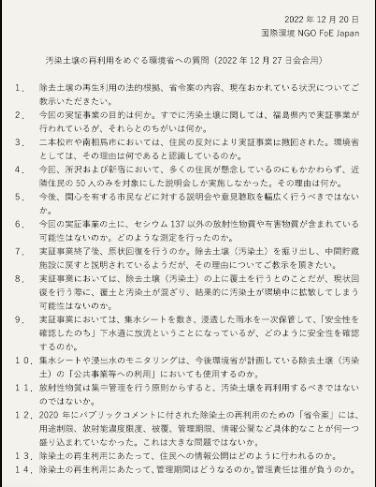
【汚染土壌の再利用】所沢や新宿での実証事業計画巡り市民らが環境省と意見交換 「福島県外での最終処分・再生利用の第一歩」繰り返す官僚に怒り噴出 via 民の声新聞

  • 2022/12/29

福島第一原発事故後の除染で生じた8000Bq/kg以下の汚染土壌を福島県の中間貯蔵施設から埼玉県所沢市(環境調査研修所)と東京都新宿区(新宿御苑)に運び込み、覆土して安全性をアピールする実証事業計画を巡り、市民と環境省官僚との意見交換が27日午後、東京・永田町の参議院議員会館で行われた。環境再生事業担当参事官室から2人の官僚が参加。90分超に及んだが、「福島県外最終処分に向けた第一歩」、「安全性は確認できている。ご理解を」などと繰り返すばかりで、会場からは怒りの声が噴出した。国際環境NGO「FoE Japan」の主催。

[…]

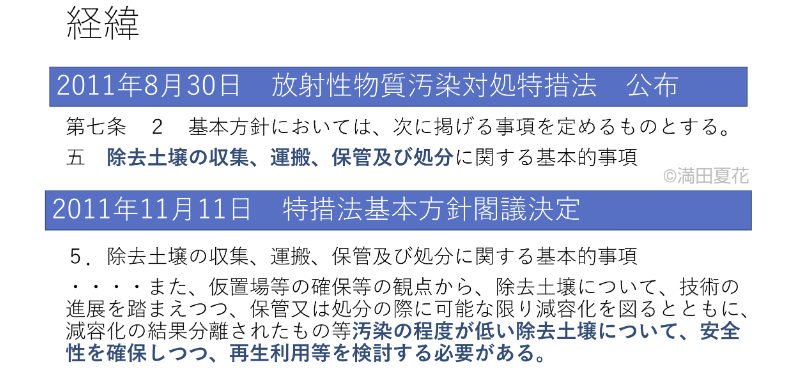
「福島県内の除去土壌を中間貯蔵施設に搬入してから30年以内に県外で最終処分をすると法律で義務付けられている。そこに向け、再生利用・最終処分を進める一歩として福島県外において実証事業をするということが重要。除去土壌の安全性や、30年以内に福島県外で最終処分をすることに関してご理解いただく」
 「工事が終わった後などに見学していただき、理解醸成につなげたいとも考えている。県外最終処分が義務付けられているので、そこに向けてご理解いただく」
 切川参事官補佐はまた、「地元のみなさんのご理解のためにも情報公開をしっかりとやっていきたい」とも述べた。しかし、環境省内で作成中という「住民説明会議事録」の公開については、「持ち帰って検討したい」と述べるにとどまった。住民説明会のオンライン開催についても「オンラインで誰でも視聴可能な状況にすると話しにくいと感じる方もいらっしゃるのではないかと考えた」と消極的。挙げ句の果てには、地域住民の同意は不要なのだという。
 「住民説明会の質疑応答のなかで、(新井田浩)参事官が『同意ではなく理解を得たいんだ』という説明をしたのは事実。まずは理解を得たいということで取り組んでいるが、同意がいらない理由は答えられないので持ち帰りたい」

[…]

[…]

国際環境NGO「FoE Japan」理事で事務局長の満田夏花さんは、意見交換に先立って開かれた集会で「放射性物質は集中管理が原則。当たり前のことだ」と環境省の姿勢を批判した

【「所沢や新宿だけの問題じゃない」】
 意見交換に先立って開かれた集会には、埼玉県所沢市から宇野知佐子さんも参加。環境調査研修所で計画されている実証事業を知ったのは6日の報道だという。
 「私自身はそのニュースを観ていなかったのですが、福島の武藤類子さんから『大変!福島の汚染土が所沢に!』という短いメールが届き、驚きました」
 13日夜に急きょ、市民が集まって話し合い、チラシを作るなど対応に追われた。16日夜に行われた住民説明会では約50人が会場前に集まり、プラカードを掲げるなどして抗議の声をあげた。「テレビカメラのライトがないと真っ暗ななかで声をあげました」。 
 住民説明会に参加した町内会長は、参加できない住民から事前に意見を聴き取ったという。それを元に当日は質問をぶつけたが「環境省からはまともな返事はなかった」。今後、反対署名を集める一方、市長リコールも辞さないと話しているという。
 「実証事業が計画されている地域だけの問題ではない。全国の皆さんと手をつないでがんばっていきたい」
 福島からは、二本松市から「みんなでつくる二本松・市政の会」事務局の鈴木久之さんがリモート参加した。
 「環境省は『汚染された土壌を分別して、資源として管理できる場所で使う』と説明した。しかし、汚染された土壌であることには変わりない。すり替えだ」
 二本松市内では、道路の路床材に汚染土壌を再利用する計画が浮上。住民から「道路に埋め込んで安全なのか」、「放射性物質が流れ出す危険性はないのか」など反対の声があがり、計画が白紙撤回された経緯がある。反対署名は8000筆を超えた。
 鈴木さんは「二本松は避難指示区域外。避難指示が出なかった地域でやったから全国でやっても大丈夫、という〝悪いたたき台〟にされては困るという想いが私たちにはあった。市議会にも知らされず、まさに寝耳に水だった。環境省は『地域住民の了承を得られた』と言っていたが、対象となる21世帯のうちわずか9世帯が出席した説明会で異論が出なかったから了承されたというのが実態。怒りにしかならない決め方だった」と改めて怒りを口にした。「環境省が環境破壊省ではいけないんだ」。
 鈴木さんはある意味、汚染土壌を県外に送り出す側。しかし、県外再利用は容認できないという。
 「やむを得ないという立場には決してならない。まずは計画を撤回し、国民的英知を結集して最終処分に向けた合意形成をするべきだ所沢や新宿だけの問題ではない。一緒に力を合わせたい」

(了)

全文

Posted in *日本語 | Tagged , , , , | Comments Off on 【汚染土壌の再利用】所沢や新宿での実証事業計画巡り市民らが環境省と意見交換 「福島県外での最終処分・再生利用の第一歩」繰り返す官僚に怒り噴出 via 民の声新聞

帰還かなわぬ現状、忘れ去られぬよう 原発事故後の福島を撮り続ける飛田晋秀さん via 東京新聞

[…]

「全国で写真を見せながら講演をやって、終了後に会場にいた人たちから『福島の原発事故はもう終わったことだと思っていたが、違うんですね』と言われる。事故から十一年半が経過し、自宅への帰還をあきらめ県外に住む県民が多くいることも忘れ去られている気がします。だから、記録するのです」

 「ずいぶんすっきりしましたね」と記者が言うと、「駅近くは線量が下がったけど、局所的に現在でも高い場所があります」と飛田さん。ところで、飛田さんのこうした活動を快く思わない県民もいるという。

 「復興イメージを損なう。風評被害のもと、とか言う人もいます。現実は、今日一緒に見た通りです。JR双葉駅前にピカピカの役場庁舎ができ、駅西口で住民の居住も始まりました。しかし、駅前の商店街は屋根が倒壊しそうな家と更地が目につき、歩いているのは作業員と警察官。これが現状なんです」

 地元の人はどう思っているのだろう。駅近くに元の自宅があり、現在、茨城県の家から時々様子を見に戻ってくる自営業の男性(46)は「住民が死亡したり、家主が解体の判断をしなかったりして、この状況なんです。夜は真っ暗でキツネがでます。普通に生活するには、まだ時間がかかりますね」と話す。

[…]

 一方、双葉町東部の沿岸部は、津波被害に遭ったとは思えないほどきれいに整備されていた。近代的な工場やおしゃれなビジネスホテルまで建っている。かさ上げされた堤防を遠くに見ながら飛田さんに尋ねた。

[…]

<ひだ・しんしゅう> 1947年福島県三春町生まれのプロの写真家。日本の職人を主な被写体とし、96年ごろから三春町をテーマに個展を開催。東日本大震災・東京電力福島第一原発事故後は、福島県内の被災地の撮影を続け、これまでに国内外で開催した写真展・講演会は360回にのぼる。

<福島県双葉町の居住再開> 福島第一原発5、6号機が立地し、原発事故による放射能汚染で、全町民の避難が唯一続いていた双葉町は今年8月30日、帰還困難区域の一部で避難指示が解除された。事故から11年5カ月ぶりに町内に住むことが可能となった。しかし、昨年度の住民への意向調査では「戻らないと決めている」と回答したのは60.5%にのぼった。理由は、「避難先で自宅を購入または建築した」などを挙げている。

全文

Posted in *日本語 | Tagged , , , | Comments Off on 帰還かなわぬ現状、忘れ去られぬよう 原発事故後の福島を撮り続ける飛田晋秀さん via 東京新聞

China, Russia, and the Bomb via Beyond Nuclear International

Alliance ruffled by dispute over nuclear weapons

By Lawrence S. Wittner

Even international alliances can unravel when nations confront the insanity of a nuclear holocaust.

An illustration of this point occurred last September when Vladimir Putin once again threatened Ukraine and other nations with nuclear war. 

“To defend Russia and our people, we doubtlessly will use all weapons resources at our disposal,” the Russian president said.  “This is not a bluff.” 

In response to this statement and to sharp UN condemnation of Russian nuclear threats, Chinese president Xi Jinping issued a public statement in November, assailing “the use of, or threats to use nuclear weapons.”  To “prevent a nuclear crisis” in Europe or Asia, he insisted, the world should “advocate that nuclear weapons cannot be used” and “a nuclear war cannot be waged.”

Aren’t these two nuclear-armed nations currently aligned in their resistance to U.S. foreign policy?  Yes, they are, and when it came to Putin’s war upon Ukraine, Xi refrained from suggesting a Russian withdrawal.  But nuclear war, as the Chinese leader made clear, was simply not acceptable.

This was not the first time a Russian-Chinese alliance was ruffled by a dispute over the use of nuclear weapons.  An even deeper conflict occurred during the late 1950s and early 1960s when, ironically, the roles of the two nations were exactly the reverse.

At that time, the Chinese government, led by Mao Zedong, was embarked on a crash program to develop nuclear weapons.  In October 1957, China’s weapons program secured a major gain when the Russian and Chinese governments signed the New Defense Technical Accord, in which the Russians agreed to supplementing the nuclear assistance they had already provided to the Chinese by supplying them with a prototype atomic bomb, missiles, and useful technical data.

But Russian officials soon had reason to doubt the wisdom of assisting China’s nuclear weapons development program.  As Soviet premier Nikita Khrushchev recalled, the following month, at a Moscow conclave of Communist party leaders from around the world, Mao gave a speech on nuclear war that startled those in attendance.  

According to the Soviet leader, the “gist” of Mao’s speech was:  “We shouldn’t fear war.  We shouldn’t be afraid of atomic bombs and missiles.  No matter what kind of war breaks out―conventional or thermonuclear―we’ll win.”  

When it came to China, Mao reportedly said, “we may lose more than three hundred million people.  So what?  War is war.  The years will pass, and we’ll get to work producing more babies than ever before.”

Khrushchev found Mao’s remarks “deeply disturbing,” and recalled with irritation:  “Everybody except Mao was thinking about how to avoid war.  Our principal slogan was ‘On with the Struggle for Peace and Peaceful Coexistence.’ Yet here came Mao . . . saying we shouldn’t be afraid of war.’  In early 1958, as Soviet doubts increased about the reliability of China’s leadership in dealing with nuclear weapons, Khrushchev decided to postpone shipment of the prototype atomic bomb to China.

Eventually, the Soviet government not only withdrew its assistance to the Chinese nuclear weapons program in 1960, but took steps that placed the Soviet Union at loggerheads with the Chinese leadership.  Key among these steps was working out an agreement on a nuclear test ban treaty with the governments of the United States and Britain—an agreement that, in part, was designed to block the ability of China to become a nuclear power.  

This Soviet shift toward a nuclear arms control and disarmament treaty with the West was bitterly opposed by China’s rulers, who were determined to develop nuclear weapons and, by 1964, succeeded in doing so.  Meanwhile, the Sino-Soviet rift grew ever more heated, with the Chinese pulling out of the Soviet-dominated World Peace Council and ferociously competing with the Russians for leadership of the world Communist movement.

There are some lessons that can be learned from these incidents, in which major powers displayed signs of veering toward nuclear war.  The obvious one is that even military allies might balk, at times, when they see an international confrontation slipping toward a nuclear disaster.  

Another, less evident, is that nations with access to nuclear weapons are not necessarily restrained from threatening or waging nuclear war by the prospect of nuclear retaliation from other nuclear powers.  Or, to put it another way, nuclear deterrence is unreliable.  Above all, these events and others underscore the fact that, while nuclear weapons exist, the world remains in peril.

[…]

Read more.

Posted in *English | Tagged , , , | Comments Off on China, Russia, and the Bomb via Beyond Nuclear International

規制庁と経産省が「事前調整」 原発運転延長で、市民団体が批判 via 河北新報

 NPO法人・原子力資料情報室は21日、原発の運転期間を延長する制度改正を巡り、原子力規制委員会が正式な検討を開始する前に、事務局の原子力規制庁と経済産業省が事前調整していたことを示す内部文書を入手したと発表した。松久保肇事務局長は「規制と推進を分離するという福島第1原発事故後の原則に反し、非常に由々しき事態だ」と批判している。

 情報室によると、内部通報者から資料を入手。8月時点で作成されたとされる文書に、経産省が検討を進めていた最長60年の運転期間の上限廃止など制度見直しの内容や、改正法案の国会への提出方法が具体的に記されていた。

原文

2022年12月21日 緊急記者会見  原子力規制庁の運転期間延長事前検討問題と関連情

Posted in *日本語 | Tagged , , , | Comments Off on 規制庁と経産省が「事前調整」 原発運転延長で、市民団体が批判 via 河北新報