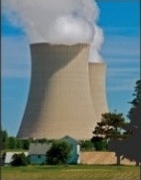
TVA nominees agree to recuse themselves on Bellefonte Nuclear Plant vote via timesfreepress.com

wo nominees for the Tennessee Valley Authority are expected to be confirmed by the U.S. Senate today, but only after the pair made an unusual commitment Monday not to vote or involve themselves with any matter involving developer Franklin L. Haney and his effort to finance TVA’s unfinished Bellefonte Nuclear Plant.

Virginia Lodge, a former commissioner for Tennessee’s Department of Human Services, and Ronald Walter, a Memphis television executive, are both Democrats nominated by the White House to fill two vacant seats on TVA’s 9-member governing board. Prior to the formal nomination announcement from the White House in late August, both Lodge and Walter acknowledge they talked with Haney or his representatives, who are urging TVA to finish Bellefonte through a private funding plan.

Haney, a real estate developer who ran unsuccessfully for U.S. Congress in 1966 and for governor in Tennessee in 1974, was one of the top donors to the 2012 re-election of President Obama and is a personal friend of Senate Majority Leader Harry Reid. In the past four years, Haney also has spent nearly $1.5 million on lobbyists, including former Alabama Congressman Bud Cramer who is pushing Haney’s plan to privately finance the Bellefonte nuclear plant.

TVA has delayed any decision on the future of the twin-reactor Bellefonte plant in Hollywwood, Ala., even though Haney continues to urge the agency to finish the nuclear facility using a private financing scheme he claims would save TVA money and keep the utility under its debt ceiling.

Read more.

Posted in *English | Tagged , , , | Comments Off on TVA nominees agree to recuse themselves on Bellefonte Nuclear Plant vote via timesfreepress.com

国道6号線・通行制限解除区域を放射線量を測りながら走行(富岡→浪江) via ニコニコ動画

ビデオを観る (アカウント必要・無料)

Posted in *日本語 | Tagged , , | Comments Off on 国道6号線・通行制限解除区域を放射線量を測りながら走行(富岡→浪江) via ニコニコ動画

茨城県議選 村上元東海村長 「原発議論ない」 候補者応援で非難 via 東京新聞

元東海村長で脱原発をめざす首長会議世話人の村上達也氏が八日、県議選の候補者を応援するため水戸市内で演説し、「日本原子力発電東海第二原発の今後について自民も民主も口をつぐみ、まったく議論されていない」と、争点にしようとしない政党の姿勢を非難した。

 村上氏は、原発による発電事業を「事故を起こせば想像を絶する賠償が生じる。保険会社が引き受けない異常な産業」と痛烈に批判。再稼働に向けた動きを「莫大(ばくだい)な安全対策費を電気料金に上乗せし、法定寿命の四十年を超えて動かそうとしている」とけん制した。

続きは茨城県議選 村上元東海村長 「原発議論ない」 候補者応援で非難

Posted in *日本語 | Tagged , , , , | 1 Comment

Demystifying the Official Discourse on Childhood Thyroid Cancer in Fukushima via The Asia-Pacific Journal: Japan Focus

By Piers Williamson

[…]Between them, Yamashita and Suzuki give four ‘facts’ to support their denials of a link with radiation exposure. First, Suzuki holds that the unprecedented scale of the testing explains the cancers being found. This is the so-called ‘screening effect’. I have not found any public statements by Yamashita taking that line, but he presumably supports it because Suzuki has been speaking as a representative of a programme overseen by Yamashita.8 Second, Suzuki and Yamashita state that it is too early to judge because thyroid cancer did not appear until at least four years after Chernobyl.9 This is actually the reason why Fukushima Prefecture did not originally plan to start tests until three years later.10 Third, they claim that the radiation levels in Fukushima are lower than those in Chernobyl. Fourth, the main cause of thyroid cancer after Chernobyl was ingestion of contaminated food products, especially milk. By contrast, Japan had prompt and effective food restrictions.11
Furthermore, both have commented that the main aim of the Health Survey is to reassure people,12 apparently advocating an a priori conclusion that there is no problem. For Yamashita and Suzuki, therefore, the real risk from radiation is psychological. This attitude provoked criticism from Fukushima residents that the survey was being run on the presupposition that there was no problem.13 It was openly challenged by Professor Shimizu Shuji, an economist at Fukushima University, at the Investigative Commission on 19 May 2014. He noted that because the Health Survey was proceeding on the assumption that there would be no health effects if exposed to under 100 milli Sieverts [the result of immediate radiation release], and that no one in Fukushima was exposed to 100 milli Sieverts or more, then logically that meant that the conclusion had already been reached and so there was no need to run the Health Survey in the first place.14
The question is thus: are the ‘facts’ that Yamashita and Suzuki assert strong enough to support their outright denial of a link between radiation exposure and the thyroid cancers being found in Fukushima? I argue that they are not, and attempt to show that each of the four ‘facts’ should be viewed skeptically. I point to other ‘facts’ from ‘alternative discourses’, and hold that greater circumspection amongst experts is necessary.
[…]
Despite Suzuki and Yamashita’s insistence on a four-year incubation period, the latest knowledge on thyroid cancer from the US National Academy of Sciences is that thyroid cancer can appear in minors after one year of exposure to ionizing radiation, and in adults after two and a half years. Thyroid cancers resulting from exposure to ionizing radiation are also particularly aggressive, as discovered after Chernobyl and reconfirmed in a recent study published in the journal Cancer. In fact, there is evidence that thirteen thyroid cancers appeared in Belarus under four years after Chernobyl and Yamashita himself recorded these cases. Additionally, eleven of the thirteen cases were in children over five years old. This weakens another assertion that Suzuki sometimes makes, namely that thyroid cancers after Chernobyl were concentrated in children under five, and so because the cases being found in Fukushima are in children over five they cannot be related to radiation exposure. More recently, in 2011, the Ukrainian government also reported almost immediate cases of thyroid cancer after Chernobyl.
It also appears that adults can be affected at half the exposure level previously said by the IAEA to only affect people under forty. Due to the latest data from Chernobyl, in 2011 the IAEA reduced the exposure level for potassium iodide tablets from 100 milli Sieverts to 50 milli Sieverts and the Japanese government followed suit, allowing people over 40 to receive tablets, although it rejects pre-distribution in violation of WHO guidelines. Furthermore, the WHO has, since 1999, set the limit at 10 milli Sieverts for infants, pregnant women, and women who are breastfeeding. These exposure levels may or may not be underestimates, but the point is that an important ‘fact’, on which government policy was based, has recently changed into a falsehood.
Another false argument is that because contaminated milk was the cause of thyroid cancers at Chernobyl, children in Fukushima are safe because Japan had strict food regulations. In reality, UNSCEAR found that Japanese food regulations were inadequate at best, and the WHO recognized inhalation as a ‘pathway’ for children in Fukushima. The related argument that radiation levels in Fukushima were low is also dubious. Yamashita admitted that he was wrong to advise against the dispensation of potassium iodide tablets. When he saw the SPEEDI data he realized he had made a mistake. In contrast, the staff of FMU received iodide tablets when high radiation levels were detected near the university. Furthermore, the Diet’s Fukushima Nuclear Accident Independent Investigation Commission found that the NSA had advised issuing iodide tablets but the fax it sent vanished and its advice was not followed in most localities. Eiichiro Ochiai notes that the latest research indicates that the exposure levels in Fukushima may be as high or higher than after Chernobyl.
Graves doubts over exposure levels only remain because individual exposure levels were not recorded at the time when they should have been. When Tokonami Shinji attempted to take measurements shortly after the explosions the prefectural authorities stopped him. Data that he did manage to garner about a month later show exposure levels over the 50 milli Sievert threshold currently held by the IAEA. Additionally, UNSCEAR estimates thyroid exposure levels of up to 83 milli Sieverts. IPPNW notes that normal annual thyroid exposure is 1 milli Sievert and, using UNSCEAR’s 2013 figures, calculates 1016 thyroid cancers, mostly in children, with around 70 deaths.
Denialists like Suzuki and Yamashita have not only been promoting false arguments, they have also been taking aggressive political action through involvement in ‘secret meetings’, in failing to disclose knowledge about Chernobyl, and in failing to disclose data on symptomatic cases in Fukushima that may undermine the ‘screening effect’ hypothesis. Unfortunately, this kind of political behavior is also present in authoritative international bodies such as the ICRP (taking bribes), the IAEA (an openly pro-nuclear organization), the WHO (delaying an ultimately inadequate investigation of depleted uranium in Iraq; subservience to the IAEA), and UNSCEAR (staffed largely by representatives from pro-nuclear states who are not required to declare qualifications or possible conflicts of interest). Their unfailingly optimistic pronouncements are open to criticism in light of other independent research.
One frequent oversight is that, as the US National Academy of Sciences shows, females are more vulnerable than males, and children more than adults. Steven Starr notes that these differences are often left out of risk models. Thyroid cancer may be an exception, however, with Shimizu Kazuo noting elevated rates amongst male children in Fukushima, as found after Chernobyl. Another frequent oversight, as Tsuda and IPPNW highlight, is to assert that there will be ‘no observable increases’ (WHO) or ‘no discernible changes’ (IAEA). These conclusions inevitably dominate the media headlines conveying the impression that there is no problem. In actuality, this does not mean there will be no increases, but serves to hide those that do occur under the concept of ‘statistical significance’. Neither do these observations take account of accelerated disease, which is a real concern for people affected because they die earlier than they otherwise would have. Indeed, official and independent estimates of general excess cancers vary from a couple of thousand to hundreds of thousands. While the differences are huge, and one can point to a pronuclear/antinuclear divide, the point is that none actually predict an absence of health effects, the UNSCEAR and WHO headlines notwithstanding. This contradicts the official FMU position that is only concerned with an increase in ‘anxiety’.

Read more.

Posted in *English | Tagged , , , , , , , , , , , , , , , , | Comments Off on Demystifying the Official Discourse on Childhood Thyroid Cancer in Fukushima via The Asia-Pacific Journal: Japan Focus

玄海原発:10月の火災 ケーブルコネクターの過負荷原因 via 毎日新聞

九州電力は8日、定期検査中の玄海原発3、 4号機(佐賀県玄海町)の原子炉補助建屋で10月に発生した火災について、室内の有害物質を取り除く「局所排気装置」の施工不良が原因とみられると発表し た。電気ケーブル同士を接続するコネクターの電流容量が小さく、過負荷で通電を繰り返したために発熱、発火したという。

1994年の3号機建設時に外部業者に製作を委託しており、20年にわたって過負荷の状態で運転していた。

(略)

九電が施工不良と判断した装置を製作した実験装置メーカー、ダルトン(東京)によると、九電以外の6原発にも類似した製品を納入しているという。ダルトンは今後、改修などを実施する方針。【寺田剛】

全文は玄海原発:10月の火災 ケーブルコネクターの過負荷原因 

当サイト既出関連記事:

Posted in *日本語 | Tagged , , , , | Comments Off on 玄海原発:10月の火災 ケーブルコネクターの過負荷原因 via 毎日新聞

<社説>衆院選 脱原発と再稼働 福島の教訓忘れた政策問え via 琉球新報

 原子力発電に頼らないエネルギー政策を国民の多くが望んでいる。各種世論調査で共通した傾向だ。にもかかわらず、安倍政権の2年間で止まっていた原発が再稼働し、「原発回帰」が強まっている。

(略)

福島第1原発事故は、巨大地震や津波への脆弱(ぜいじゃく)性、放射性物質の拡散を制御できない原発の危険性を突き付けた。日本のエネルギー政策の一大転換点となり、エネルギー政策の根本に「脱原発」が据えられたはずであった。

当時の民主党政権、そして、2012年12月に政権を奪取した安倍晋三首相も当初は原発を全て停止してでも、事故の危険性を減らす政策を優先してきた。

しかし、2年足らずで、安倍首相は原発の再稼働推進、原発回帰に前のめりになっている。ことし4月に打ち出された「エネルギー基本計画」は、原発を「重要なベースロード電源」と位置付けた上で、電源の構成比は先送りした。

2年前の衆院選で、自民党は「原子力に依存しない経済・社会構造の確立を目指す」と「脱原発」を力説していた。13年7月の参院選から「脱原発」の姿勢を薄め、「エネルギー政策をゼロベースで見直す」と方針を変えた。
今衆院選では原発依存度を「可能な限り低減させる」とし、原発存続を前提としている。これまでの公約に明白に反するものだ。
対する野党側も、民主党は「責任ある避難計画がなければ、再稼働すべきでない」とするが、「脱原発」を薄めた。与党の公明、野党の維新も再稼働を容認する。

明確な反対は共産、社民、生活、新党改革の4党だけである。安倍首相は「再稼働も争点」と言うが、将来の原発比率、再稼働させる原発数の目標値を示さないため、論戦は深まらないままだ。

防災対策が少しずつ厚みを増したとはいえ、原発の危険性は変わっていない。福島の過酷事故の教訓をないがしろにしてはならない。

全文は<社説>衆院選 脱原発と再稼働 福島の教訓忘れた政策問え

Posted in *日本語 | Tagged , , , , | Comments Off on <社説>衆院選 脱原発と再稼働 福島の教訓忘れた政策問え via 琉球新報

California consumers, shareholders to foot bill to shut down nuclear power plant via fayobserver

LOS ANGELES – Consumers will pay about $3.3 billion and shareholders will pay about $1.4billion under a settlement approved Thursday on costs stemming from the premature closure of the San Onofre nuclear power plant.

The vote by the California Public Utilities Commission was 5-0.

At issue has been who should take the financial hit for the early demise of the plant located between Los Angeles and San Diego – company shareholders or customers.

The settlement of who should pay the $4.7 billion cost from the closure stems from negotiations among operator Southern California Edison, minority owner San Diego Gas & Electric Co. and consumer advocates. Critics argued that the deal shortchanged ratepayers.

Consumers will pay the estimated $3.3 billion in costs over 10 years, including for power purchased after the plant shut down.

[…]

San Onofre shut down for good last year after a long fight over whether it was safe to restart. It had been idle since January 2012, after a small radiation leak led to the discovery of unusual damage to hundreds of tubes inside virtually new steam generators.

A federal investigation after the 2012 leak concluded that a botched computer analysis resulted in generator design flaws that were largely to blame for the unprecedented wear in the tubing that carried radioactive water.

Posted in *English | Tagged , , | Comments Off on California consumers, shareholders to foot bill to shut down nuclear power plant via fayobserver

U.S., UK face nuclear disarmament pressure at Vienna meeting via Reuters

(Reuters) – The United States and Britain took part for the first time on Monday in an international conference on the humanitarian impact of nuclear weapons and were expected to face pressure to do more to eliminate their atomic arsenals.

The three other officially recognized nuclear weapon states — Russia, France and China — shunned the Dec. 8-9 meeting. Many of the 157 states taking part are critical of what they see as too slow headway on nuclear disarmament.

The conference, the third in a series which began in 2013, comes amid talk of a new Cold War between the West and Russia over the Ukraine crisis, during which President Vladimir Putin has pointedly stressed Moscow’s nuclear arsenal.

Explaining its decision to come to Vienna, the United States said last month it had decided “there were real prospects for constructive engagement with conference participants”, but added it would not engage in disarmament negotiations at the meeting.

[…]

“STILL TOO MANY”

The U.S. atomic arsenal has been cut by 85 percent from its Cold War heights to 4,800 weapons, a U.S. official said last week. But, “that is still too many and we know it”, said Rose Gottemoeller, under-secretary of state for arms control.

U.N. disarmament chief Angela Kane said countries without nuclear bombs were “becoming increasingly exasperated” that disarmament negotiations were not happening. It seems the weapon states “don’t really see that the NPT is an obligation to disarm”, she told Reuters.

Pakistan and India, which both have nuclear weapons, have not signed the NPT. They attended the Vienna talks, as did Iran, which rejects Western accusations it too wants to build a bomb.

Israel, which is believed to have the Middle East’s only nuclear arsenal and is also outside the NPT, did not attend.

Read more at  U.S., UK face nuclear disarmament pressure at Vienna meeting


Posted in *English | Tagged , , , | Comments Off on U.S., UK face nuclear disarmament pressure at Vienna meeting via Reuters

マンハッタン計画の施設の公園化法案、近く成立か via 朝日新聞

日本への原爆投下につながったマンハッタン計画に関係する場所を、米国が国立公園に指定する可能性が高まってきた。

[…]

国立公園指定に関する条項は、国防予算の大枠を決める2015会計年度(14年10月~15年9月)の国防権限法案に含まれている。同じ条項を含む法案は下院が5月に1度可決していたが、今月に入って上院と調整した法案が完成。4日に賛成多数で改めて可決された。上院も11日にも可決する可能性があり、その場合、オバマ大統領の署名で成立する見通しだ。

法案は成立から1年以内に、国立公園局の中で「マンハッタン計画歴史公園」を設立させると規定。公園には、マンハッタン計画の中枢施設があったニューメキシコ州ロスアラモス、ウラン濃縮施設があったテネシー州オークリッジ、プルトニウムを製造したワシントン州ハンフォードの施設が含まれる。

国立公園化の目的は、マンハッタン計画の 関連施設を保存し、「一般の理解を促進する」こととされている。公園指定を推進してきたNPOのアトミック・ヘリテージ・ファンデーション(AHF)は下 院の可決を歓迎する声明を発表。「論議を招く難しい問題について、異なる経験や価値観を尊重する方法で伝えることを目標にする」という国立公園局幹部の言 葉を紹介している。

米国では原爆投下が第2次世界大戦の終結につながったとして、支持する世論が強い。反核団体は以前から「国立公園が実現した場合、(原爆投下に関する)一方的な見方のみを伝えることになる」と懸念している。

全文は マンハッタン計画の施設の公園化法案、近く成立か

Posted in *日本語 | Tagged , , , , , , , , , | Comments Off on マンハッタン計画の施設の公園化法案、近く成立か via 朝日新聞

福島原発事故:中間貯蔵用地、無償借用を要請 環境省via 毎日新聞

東京電力福島第1原発事故に伴う除染廃棄物を保管する中間貯蔵施設をめぐり、環境省が予定地(福島県大熊、双葉両町)の地権者らに、売買契約前に廃棄物の保管場として土地の無償借用を要請していることが6日、分かった。用地取得交渉が難航する中、国が搬入開始の目標とする来年1月に間に合わせるための苦肉の策とみられる。
[…]
一方、両町は用地交渉に関して国が地権者に十分説明するよう求めており、売買前の搬入に反発の声が上がる恐れもある。

全文を読む。

Posted in *日本語 | Tagged , , , , , | Comments Off on 福島原発事故:中間貯蔵用地、無償借用を要請 環境省via 毎日新聞