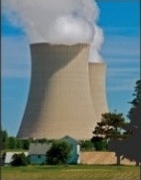
U.S. nuclear regulator approves fuel for next-generation reactors via Reuters

WASHINGTON, June 14 (Reuters) – The U.S. nuclear power regulator has approved production of uranium fuel that is far more enriched than fuel for conventional nuclear power plants, the company aiming to make the material said on Monday.

The fuel is known as high-assay, low-enriched uranium, or HALEU. Nonproliferation experts are concerned about the fuel as it is easier to convert into fissile material, the key component of nuclear weapons, than conventional reactor fuel.

[…]

The fuel will be allowed to be enriched to 5% to 20% uranium-235. That is less than the enrichment level of about 90% used in a nuclear weapon, but is far higher than fuel used in conventional nuclear reactors, which is about 3% to 5% enriched.

Nonproliferation experts voiced concern about the signal the approval sends to other countries, especially because Washington is trying to stop Iran from enriching 20% uranium.

[…]

A Centrus spokesperson said the United States “has always required adherence to the highest standards for safety, security and nonproliferation for any nation that buys our fuel, which is why it is so important that America does not cede this market to others.”

Read more at U.S. nuclear regulator approves fuel for next-generation reactors

Posted in *English | Tagged , | 16 Comments

China nuclear reactor: French partner calls meeting over leak via Al Jazeera

A Chinese nuclear power plant is raising concerns on Monday after the facility’s minority French owner said it had been informed of a leak in one of the power station’s reactors and has called a meeting with its Chinese partner to discuss it.

French energy giant EDF owns 30 percent of the joint venture that owns and operates Taishan nuclear power plant in Guangdong province north of Hong Kong. State-owned China General Nuclear Power Corp owns the other 70 percent.

“EDF has been informed of the increase in the concentration of certain noble gases in the primary circuit of reactor n°1 [number one] of the Taishan nuclear power plant,” the company said in a statement on its website. “The presence of certain noble gases in the primary circuit is a known phenomenon, studied and provided for in the reactor operating procedures.”

[…]

United States news outlet CNN on Monday, citing US officials and documents it had reviewed, reported that the US government has spent the past week assessing a report of a leak at Taishan nuclear power plant after EDF subsidiary Framatome warned of an “imminent radiological threat”.

[…]

But CNN reported that a letter it had seen to the US Department of Energy from Framatome – which designed the reactors at Taishan and continues to help operate them – included allegations that China was raising the acceptable limit for radiation detection outside the nuclear facility in order to avoid shutting it down.

Framatome said in a public statement on its website on Monday: “According to the data available, the plant is operating within safety parameters. Our team is working with relevant experts to assess the situation and propose solutions to address any potential issues.”

[…]

The reactor builds on previous designs with the aim of using less uranium and operating more safely.

EPR reactors are also under construction in France, Finland and the United Kingdom.

Guangdong province is China’s main manufacturing hub and has been beset by power shortages in recent weeks that have led to energy rationing.

Read more.

Posted in *English | Tagged , , , | 16 Comments

仏電力「中国原発で放射性希ガス放出」 事故は否定via 朝日新聞

 フランス電力公社(EDF)は14日、同社が建設に携わった中国・広東省の台山原子力発電所で、原子炉内の放射性希ガス濃度が上昇し、大気放出したことを明らかにした。AFP通信などが報じた。

 同社は放出は中国の安全基準に沿って行われたといい、「炉心溶融などの事故は起きていない」としているという。仏メディアは燃料棒の一部が破損している可能性を伝えている。

 仏紙フィガロなどによると、汚染濃度は5月末の時点で、フランスの基準で48時間以内の運転停止が必要とされる値の2倍に達していた。EDFは今月12日、中国の原発運営会社から関連データを受け取り、緊急会議を招集するよう中国側に要求。EDFは原発の運転を停止するかについて明言していないという。

 国際原子力機関(IAEA)は「現時点では、放射能事故が起きたと示す兆候はない」との見解を示しているという。

 米CNNは14日、燃料棒を製造したEDFの子会社が今月8日、中国当局が原発の運転停止を避けるため、原発周辺の放射線量の許容値を引き上げたとする文書を米エネルギー省に送ったと報じていた。(パリ=疋田多揚)

原文

Posted in *日本語 | Tagged , , | 10 Comments

World has more than enough renewables to move from fossil fuels, scientists say via The National

By Greg Russell

THE world has more than enough renewable energy potential to comfortably transition away from fossil fuels and achieve the 1.5C global warming target, while expanding energy access for all, according to scientists.

In their Fossil Fuel Exit Strategy, Dr Sven Teske and Dr Sarah Niklas show through detailed modelling that, even if no new fossil fuel projects were built from today, carbon emissions from existing projects are still far too high to stay on course towards meeting the goals of the Paris Agreement on climate change. Their modelling shows the world would produce significantly more fossil fuels than it can afford under the 1.5C goal by 2030, leading to 66% more emissions than is compatible with the target.

They say the world must actively wind down existing coal mines and oil and gas wells while increasing renewable energy.

The pair, from the Institute for Sustainable Futures, at the University of Technology, Sydney, say this transition is not only required but is feasible, with all regions having enough renewable energy to provide energy access to all using existing technologies.

Their strategy suggests the twin challenges of phasing out fossil fuels and increasing electricity access at the speed required can be achieved through the scaling up of renewable energy and an orderly wind down of coal, oil and gas.

The report comes after the International Energy Agency’s (IEA) Net Zero by 2050 Roadmap, which said the world needs to stop investing in and expanding fossil fuels.

Teske and Niklas’s Fossil Fuel Exit Strategy goes further by finding it is also necessary to begin phasing down existing coal mines and oil and gas wells to have a chance of preventing catastrophic climate change.

[…]

Read more.

Posted in *English | Tagged , | Comments Off on World has more than enough renewables to move from fossil fuels, scientists say via The National

日本製鉄工場で社員2人被ばくか 年間限度量の数十倍の可能性も via NHK News Web

兵庫県にある日本製鉄の工場で先月、エックス線を使う測定装置の点検中に事故が起き、男性社員が年間の限度量の数倍から数十倍に及ぶ大量の被ばくをした可能性があることが関係者への取材でわかりました。事故を重く見た厚生労働省は通知を出して同様の測定装置を使っているほかの企業に被ばく防止の徹底を求めるとともに労働基準監督署などが事故の状況を調べています。

日本製鉄や警察などによりますと先月29日、兵庫県姫路市にある日本製鉄の瀬戸内製鉄所の工場でエックス線を照射する測定装置の点検をしていた30代と50代の男性社員2人が翌日の30日になって体調不良を訴え、病院を受診しました。現在、2人は高度な被ばく医療を提供する広島大学の医療施設で検査や治療を受けています。

関係者によりますと、2人は29日の作業でエックス線を一定時間、浴びた可能性があり法令で定められている1年間の被ばく限度の50ミリシーベルトを大幅に超えたとみられています。最終的な被ばく量はわかっていませんが、関係者によりますと年間の限度量の数倍から数十倍に及ぶ可能性もあるということです。

2人の容体について日本製鉄は明らかにしていません。

日本製鉄によりますとこの工場は自動車で使う鉄板などを造っていて、事故当時、2人はエックス線を鉄板に当てて表面のメッキの厚みを測る装置の点検をしていたということで、労働基準監督署と警察が安全管理に問題がなかったか事故の状況について調べています。

(略)

そして治療を受けている2人については、詳しい被ばく量などがわからないので現時点ではっきりとしたことは言えないとしたうえで「染色体の検査や症状を詳細に観察することによって、被ばく量を推定せざるをえないと思う。広島大学の医師たちが注意深くみていると思うが、どのくらいの線量を受けたかが、被ばくした作業者の予後に関係していくだろう」と話し、今後の容体を慎重に見ていく必要があるとしています。

(略)

「年間積算50ミリシーベルト」など被ばく量限度は国の規則で規定

厚生労働省によりますと、今回の事故は放射線を扱う場合の労働安全に関わる事案であり、電離放射線障害防止規則、通称 電離則という法令の対象になるということです。

電離則では、放射線業務に携わる作業員は、全身への被ばく影響を表す「実効線量」という値で、被ばく量の限度が5年間の積算で100ミリシーベルト、かつ1年間の積算で50ミリシーベルトとなり、これらを超えないようにしなければならないとしています。

また、電離則では、放射線を扱う区域では、被ばく量を測定する線量計を装着することが義務づけられています。

(略)

広島大学「高度被ばく医療支援センター」に指定

2人が治療を受けている広島大学は、原子力災害時に重症の被ばく患者を治療する「高度被ばく医療支援センター」として、原子力規制委員会から指定を受けています。

福島第一原子力発電所の事故が起きる前、千葉市にある放医研=放射線医学総合研究所が東日本を、広島大学が西日本を担当し、高度の被ばく医療に関わる機関とされてきましたが、原発事故のあとは、重篤な被ばくの長期治療に加え、周辺の拠点病院などを対象に専門的な研修の実施を行い、原子力災害時には専門チームを派遣するなどの役割も担うことになっていました。

現在「高度被ばく医療支援センター」として指定されているのは、広島大学と放医研が入る量子科学技術研究開発機構のほか、青森県にある弘前大学、福島県立医科大学、それに長崎大学の全国5か所です。

今回の事故は原子力災害に当たらないとされていますが、関係者によりますと、高度な被ばく医療が提供できるため広島大学で治療が行われているということです。

全文は日本製鉄工場で社員2人被ばくか 年間限度量の数十倍の可能性も

Posted in *日本語 | Tagged , | Comments Off on 日本製鉄工場で社員2人被ばくか 年間限度量の数十倍の可能性も via NHK News Web

A nuclear plant in a volcano zone? What could possibly go wrong, Mr Gates? via The Conservative Woman

By Kate Dunlop

NOT content with being the biggest private landowner in the US, blotting out the sun and jabbing the world, Bill Gates is getting over his divorce by building a ‘next-generation’ nuclear power plant in Wyoming.  

The Republican state’s governor Mark Gordon announced the deal between Gates’s TerraPower Company, PacifiCorp owned by Warren Buffett’s Berkshire Hathaway, and the US government on June 2.

He said the multi-billion-dollar project, called ‘Natrium’, is to be constructed on the site of a ‘soon-to-be-retired coal-fired plant over the next several years’. TerraPower President Chris Levesque said costs would be split evenly between government and the two billionaires.

No information has been published about the contractual elements of the deal or the likely rate of return to Messrs Gates and Buffett but this is a ‘commercial not a charitable’ effort.

According to the press release, the nuclear plant will feature a 345-megawatt sodium-cooled fast reactor with a molten salt-based energy storage system, which will produce enough power for 250,000 homes. New storage technology will be able to boost output to 500 megawatts of power for about five and a half hours, equivalent to the energy needed to power 400,000 homes.

Wyoming is both a leading coal mining and uranium mining state, and Governor Gordon promised that the development did not signal any lack of commitment to fossil fuels or to making the state ‘carbon negative’.

He said, ‘I am not going to abandon any of our fossil fuel industry – it is absolutely essential to our state and one of the things that we believe very strongly is our fastest and clearest course to being carbon negative. Nuclear power is clearly a part of my all-of-the-above strategy for energy.’

Last month Gates’s TerraPower signed a ‘memorandum of understanding’ with the China National Nuclear Corporation (CNNC) which they called ‘the next step towards developing a prototype’.

Wyoming is a glorious, sparsely populated state of 97,000 square miles and 580,000 people. It is also home to a ‘hyperactive volcanic region’, the 3,472-square-mile Yellowstone National Park.

At the park’s centre lies a bubbling caldera that is the scar of a supervolcano eruption 640,000 years ago. The Norris Geyser Basin to the northwest of the caldera has more than 500 hydrothermal features, with dynamic geysers and pools that often change from day to day, but a much larger transformation has been taking place as well. For more than two decades, an area larger than Chicago centred near the basin has been inflating and deflating by several inches in erratic bursts.

Daniel Dzurisin, a research geologist at the U.S. Geological Survey’s Cascades Volcano Observatory, and a co-author of new research published in the Journal of Geophysical Research: Solid Earth, explains why the land is so unstable.

[…]

Read more.

Posted in *English | Tagged , , | Comments Off on A nuclear plant in a volcano zone? What could possibly go wrong, Mr Gates? via The Conservative Woman

U.S. Led 2020 Nuclear Weapons Spending; Now Biden Going “Full Steam Ahead” on Trump’s Nuclear Plans via Democracy Now!

As President Biden prepares for the G7 and NATO summits and a meeting with Vladimir Putin, we look at how the United States, Russia and other nuclear-armed nations continue to spend billions on nuclear weapons during the COVID-19 pandemic. Despite President Biden’s criticisms of the Trump administration’s nuclear policies during his candidacy, his administration is continuing initiatives to expand the U.S. nuclear arsenal and is seeking $43 billion for nuclear weapons in his new budget. This comes as a new report from the Nobel Prize-winning International Campaign to Abolish Nuclear Weapons reveals global spending on nuclear weapons increased during the pandemic, and found the world’s nine nuclear-armed countries spent $72.6 billion on nuclear weapons in 2020, with the United States alone spending $37 billion. “We’ve been seeing, from year to year, the spending on nuclear weapons has been increasing,” says Alicia Sanders-Zakre, ICAN’s policy and research coordinator. “Despite Biden’s campaign promises of wanting to work for arms control, wanting to work for disarmament, we’re seeing that in reality he’s going full steam ahead with Trump’s legacy nuclear weapons programs and continuing to spend more money on these weapons of mass destruction.”

[…]

Read more.

Posted in *English | Tagged , | 18 Comments

原発は即時停止、石炭火力発電は50年までに廃止を 市民団体が27万人の署名提出 via 東京新聞

先進7カ国首脳会議(G7サミット)が11日から始まるのを前に、脱原発と脱石炭を求める約27万人の署名を、市民団体が政府に提出した。G7では地球温暖化阻止に向けた各国の行動計画も大きなテーマになる見通しで、持続可能な社会への転換に向け市民の声を伝える狙いだ。

署名集めを展開したのは生活クラブ生協のほか、温暖化阻止を訴える若者の運動「フライデーズ・フォー・フューチャー」、「あと4年、未来を守れるのは今キャンペーン」に賛同する団体など。

(略)

市民らは署名で「再エネは30年度に60%以上、50年時点では100%」を目標にするよう要望。原発は即時停止し、石炭火力発電は50年までに廃止することを求めている。 衆院議員会館で開かれた集会では高校3年生の山本大貴さん(17)が「ぼくたちが働き盛りになる2050年ごろには生態系が崩壊し住める場所が住めなくなっているかもしれない。スピード感をもって行動しなければならない」と訴えた。

全文は原発は即時停止、石炭火力発電は50年までに廃止を 市民団体が27万人の署名提出

Posted in *日本語 | Tagged , , | 26 Comments

Support for a global pact banning nuclear weapons is growing within NATO, an advocacy group says via The New York Times

By Rick Gladstone

As President Biden and his NATO counterparts focus on nuclear-armed Russia at their summit meeting on Monday, they may also face a different sort of challenge: growing support, or at least openness, within their own constituencies for the global treaty that bans nuclear weapons.

[…]

The accord outlaws the use, testing, development, production, possession and transfer of nuclear weapons and stationing them in a different country. It also outlines procedures for destroying stockpiles and enforcing its provisions.

The negotiations were boycotted by the United States and the world’s eight other nuclear-armed states — Britain, China, France, India, Israel, North Korea, Pakistan and Russia — which have all said they will not join the treaty, describing it as misguided and naïve. And no NATO member has joined the treaty.

Nonetheless, an American-led effort begun under the Trump administration to dissuade other countries from joining has not reversed the treaty’s increased acceptance.

[…]

Timed a few days before the NATO meeting in Brussels, the report enumerated what it described as important signals of support or sympathy for the treaty among members in the past few years.

In Belgium, the government formed a committee to explore how the treaty could “give new impetus” to disarmament. In France, a parliamentary committee asked the government to “mitigate its criticism” of the treaty. In Italy, Parliament asked the government “to explore the possibility” of signing the treaty. And in Spain, the government made a political pledge to sign the treaty at some point.

[…]

There is nothing to prevent a NATO country from signing the treaty. But the bloc’s solidarity in opposing the accord appears to have weakened, emboldening disarmament advocates.

Promoters of the treaty have repeatedly said they do not expect to see nuclear-armed countries join anytime soon. Rather, they have said the treaty’s increased acceptance by other countries will create a shaming effect, similar to how treaties that banned chemical weapons, land mines and cluster munitions have drastically cut their use and stigmatized violators.

Read more at Support for a global pact banning nuclear weapons is growing within NATO, an advocacy group says

Posted in *English | Tagged , | 14 Comments

City to spend $31 million on radioactive waste remediation within Michael Reese site via Hyde Park Herald

By Jennifer Bamberg

Representatives of the 4th Ward, city officials, and contractors led a virtual meeting on June 1 to discuss the remediation of the former Carnotite Reduction Company site located at 434 E. 26th St. The three-acre plot of land inside the northern part of the former Michael Reese Hospital site is covered in grass, pavement and buried radioactive waste. The site has been contaminated with uranium, radium, and carnotite for over a century, but is finally undergoing remediation with redevelopment imminent

The excavation of radiologically contaminated soil at the United States Environmental Protection Agency (USEPA)–designated superfund site will cost approximately $31,000,000. The city will draw funding for the project from general obligation bonds and funds from the Bronzeville TIF. On-site remediation is set to start July 2021, with earthwork projected for August 2021. 

From 1916 to 1921, the Carnotite Reduction Company and its president, University of Chicago chemistry professor Herbert N. McCoy, brought in tons of radioactive ore by railroad from mines it owned and operated in Utah. Its refining operations separated radium — in-demand due to new cancer treatments — from carnotite-rich sandstone in Chicago using a chemical process, and it is believed that the hazardous tailings were dumped into nearby sewers, ditches, wells, or sand on the site. 

[…]

The city of Chicago has owned the land since 2009 when it was preparing for a failed Olympic bid. In 2017, the city chose a team of real estate firms to redevelop the land through a consortium dubbed the Global Research Innovation & Tourism district (GRIT). 

Zoning plans for the $3.8 billion development passed through City Council earlier this year. The first phase includes a medical research center, the Bronzeville Welcoming Center, and 300 units of senior housing, with a plan to create 6.7 million square feet of retail, residential and mixed-use development in a future second phase. 

Surveys conducted in 1979, 2009, and 2011 by the USEPA and the Illinois Department of Public Health (IDPH) Division of Radiological Health concluded that the contamination did not pose an immediate health threat, but removal of the contaminated soil presents the need to establish institutional controls to monitor radiation.  

[…]

Kimberly Worthington, Deputy Commissioner of Environmental Health and Safety Management at the city’s Assets, Information, and Services (AIS) Department, detailed the scope of the work. Contaminated soil from six to 14 feet below surface area will be excavated and transported in sealed bags via truck and rail car to a radiological waste landfill in Texas. The excavated area will then be filled with stone and/or soil and remain fenced off until redevelopment occurs. 

Kris Schnoes, an environmental scientist at Tetra Tech Inc, the contractor chosen as the remediation oversight consultant, detailed the air monitoring plan. Instruments to monitor radiological dust will be installed along the perimeter of the site and within the site to monitor the air for the workers. If dust is observed, work will cease.Water misting will be the primary control to mitigate dust, and a dewatering system will be used to capture and properly dispose of contaminated water runoff. Eight foot high fences with windscreens will surround the site as well. 

[…]

Schnoes says, “You can call 311 if you see dust or something and want an inspector to come out.” The Carnotite Co. Chicago website will have live updates on air quality and information for local residents.

There are no plans for active cover placed on the excavation, “but as excavation progresses, we believe the excavation hole is going to get smaller and smaller because the contractor is going to be backfilling,” said Ram Ramasamy with AIS. “What the contractor was telling me is essentially the dust issue from wind can arise only from about zero to about three feet. Anything deeper, it’s going to be hard for the wind to kick up the dust.”

[…]

The former city agency responsible for conducting oversight of the Carnotite Co. site and interfacing with state and federal bodies, the Department of Environment, was dissolved on January 1, 2012 by Mayor Rahm Emanuel. Members of its staff were reassigned to several different departments. At the time, the USEPA expressed concern over how the move would affect future interactions between USEPA and the City, as well as any City oversight of radiation monitoring at the site.

report from the Better Government Association in 2019 revealed that environmental inspections and enforcement actions declined since the elimination of the department along with a dedicated hotline for resident complaints about pollution. Instead, residents are told to direct environmental concerns to 311, which was suggested at last week’s meeting. 

[…]

Read more.
Posted in *English | Tagged , , | 22 Comments