鹿児島・川内原発 停止棄却 原発廃止、核廃絶訴え 被爆者らが街頭活動 天神 /福岡 via 毎日新聞

九州電力川内(せんだい)原発1、2号機(鹿児島県薩摩川内市)の運転差し止めの仮処分申請を福岡高裁宮崎支部が棄却した6日、被爆者や原水爆禁止福岡市協議会のメンバーらが中央区天神の街頭で、原発の廃止などを訴えた。

(略)

約20人が核兵器廃絶や安全保障関連法の廃止とともに、原発廃止を訴えた。

 長崎の三菱重工長崎造船所で被爆した漫画家の西山進さん(88)=南区=は「核の恐ろしさを身を持って知っているだけに仮処分申請が棄却されたのは残 念。自然災害などに伴って原発が事故を起こすリスクから目を背けるべきではない」と厳しい口調で語った。【樋口岳大】

全文は鹿児島・川内原発 停止棄却 原発廃止、核廃絶訴え 被爆者らが街頭活動 天神 /福岡

Posted in *日本語 | Tagged , , , , | Comments Off on 鹿児島・川内原発 停止棄却 原発廃止、核廃絶訴え 被爆者らが街頭活動 天神 /福岡 via 毎日新聞

Future of former Spanish nuclear site remains unclear via EurActive

Spain may be committed to phasing out nuclear power, but there are concerns about its older reactors and the alleged lack of transparency when it comes to addressing safety issues. EurActiv Spain reports.

European Commissioner for Climate Action and Energy, Miguel Arias Cañete, confirmed on Tuesday (5 April) that the executive has not yet received any information about the possible installation of a nuclear-waste storage facility at a site in northern Spain.

“The Commission expects to receive this information under Article 41 of the Euratom treaty, which governs investment projects in this field,” said Arias Cañete, adding that “to date, we haven’t received any communication referring to the possibility of installing a nuclear waste storage facility at the plant”.

Cañete was responding to a written question posed by Basque Nationalist Party (PNV) MEP Izaskun Bilbao.

Bilbao also asked the Commission to provide an update about progress made in implementing the Garoña nuclear site’s action plan, which was established by the Spanish Nuclear Safety Council’s (CSN) Complementary Technical Instructions, including measures that were formulated in the wake of the Fukushima disaster. The Commission has a supervisory role in the implementation of the plan.

[…]

The Garoña nuclear power plant, near Burgos in northern Spain, ceased power production in December 2012, as its licence was due to expire in July 2013. The CSN had initially found that it could keep operating until 2019, if the plant’s operator carried out certain technical upgrades, but this was downgraded in a compromise made by the Ministry of Industry.

Spain established a moratorium on the construction of new nuclear plants in 1983, as it pursues a policy of phasing it out as an energy source in favour of renewables. In 2011, the government lifted the 40-year-limit on reactors and allowed their operators to apply for licence renewals.

Garoña has come in for criticism because of its advanced age and alleged inability to withstand natural disasters, a fact that became evident in the wake of the Fukushima disaster, which led many national governments to perform stress tests on its nuclear facilities.

Read more at Future of former Spanish nuclear site remains unclear

Posted in *English | Tagged , , , | Comments Off on Future of former Spanish nuclear site remains unclear via EurActive

再稼動の動き川柳で批判 福島からの風第3弾 via 河北新報

 東京電力福島第1原発事故をテーマにした川柳句集「福島からの風」の第3弾が完成した。原発事故を受けて停止した後、再稼働の動きがある各地の原発なども題材に、風刺を交えて思いをつづっている。
「原発事故の川柳235 放浪編 脱原発『福島からの風』」と題する第3弾の句集を出したのは、本宮市の元福島県職員伊東功さん(65)。2012年の第1集、14年の第2集に続き、ことし1月下旬に1万部を自費出版した。
放浪編としたのは、福島にとどまらず、原発再稼働に向けた動きなども題材にしたため。福島第1原発と同様の悲劇が起きないようにとの願いを込めた。235句を収めている。
<ハイウエー視界の隅に線量計>という句は、空間放射線量が高い区間を抱えたまま昨年3月に全線開通した常磐自動車道の現実を嘆いている。
九州電力川内原発(鹿児島県薩摩川内市)は昨年、1、2号機が再稼働した。<川内をさせてはならぬセンダイに>は再稼働に対する思いを詠んだ句。ヒロシマやフクシマなど片仮名表記が原子力の災禍の代名詞になっていると捉え、∧センダイに∨という表現に思いを託した。

(略)

非売品で希望者には無料で提供する。300円の返信用切手を同封し郵送で申し込む。東日本大震災の被災者と原発事故の避難者は返信用切手は不要。送付先は〒969-1166本宮市本宮近江内56の3、伊東功さん。

全文は再稼動の動き川柳で批判 福島からの風第3弾


Posted in *日本語 | Tagged , , | Comments Off on 再稼動の動き川柳で批判 福島からの風第3弾 via 河北新報

EnBW loses damages case over nuclear moratorium via DW

A German court has dismissed a claim for damages by utility EnBW after it sued the German government over its surprise move to shut down nuclear reactors in the wake of the Fukushima nuclear disaster in 2011.A regional court in Bonn, Germany, ruled on Wednesday that EnBW’s claim for compensation was unsubstantiated because the power utility had not immediately sought a court injunction against the government’s nuclear moratorium.
In the wake of the Fukushima nuclear accident in March 2011, Berlin reacted to widespread anti-nuclear protests ordering a three-month shutdown of the country’s oldest reactors, including EnBW’s Neckarwestheim 1 and Phillipsburg 1 reactors situated in the state of Baden-Würrtemberg.
Explaining the verdict, Judge Stefan Bellin said the utility had failed to immediately use “all legal means available to avert any damage” resulting from the closures. The judge also noted that EnBW had expressed doubt about the legality of the moratorium in a press release in April 2011, but it had declared in the same statement that it didn’t seek to contest the policy in the courts.
[…]Moreover, all of Germany’s four biggest utilities, which include the Swedish power company Vattenfall, have filed complaints with the country’s constitutional court over nuclear policy after Berlin decided in summer 2011 to turn the three-month moratorium into a permanent shutdown for reactors.

Read more.

Posted in *English | Tagged , , , | 4 Comments

【復興の道標・不信の連鎖】除染基準「1ミリ」の誤解 建設的な議論できずvia福島民友

 「何が何でも『1ミリシーベルト以下』『0.23マイクロシーベルト以下』にこだわる風潮ができてしまった」。放射線安全フォーラムの理事を務める放射線の専門家、多田順一郎(65)は、除染の目標を巡り、疑問を投げ掛ける。

 長年、理化学研究所(理研)などで放射線管理の仕事に従事した多田は2011(平成23)年の原発事故発生を受け、とっさに「除染が必要だ」との思いがよぎった。事故直後から県内に入り、除染などの放射線対策にアドバイザーとして関与している。

 多田は専門家として「原発事故前より線量が高くなったのは確かだが、そのことが必ずしも健康に影響があることを意味しない」ということを理解してほしいと、ずっと考えてきたが、県民にうまく伝える方法が見つからない。

 本県復興の前提となる除染は、現在も県内で大規模に進められている。政府は、年間追加被ばく線量を1ミリシーベルト(1000マイクロシーベルト)以下に下げることを「長期的な目標」に掲げている。この「年間1ミリシーベルト」から、生活パターンを想定して算出した1時間ごとの空間放射線量の推計値である「毎時0.23マイクロシーベルト」を、各自治体が除染を行うかどうかの基準に据えた。

 放射線医学総合研究所(放医研)によると、原発事故の発生にかかわらず、自然から浴びる放射線による被ばく量は、日本国内で生活する人の平均で年間約2.1ミリシーベルトある。その一方で、政府が示した数値を被ばくについての「安全と危険の境目」と考える誤解が広がった。
[…]
来年3月の避難指示解除を目指している飯舘村。村から避難し、福島市にある仮設住宅の自治会長を務める木幡一郎(79)は、除染で出た汚染土壌などを入れた黒い袋「フレコンバッグ」が、村の至る所で膨大に積み上げられていることを問題視する。「見ているだけで気が滅入(めい)ってしまう。村民が戻る前に、政府には全て片付けてほしい」

 村内の線量については、冷静に受け止めている。「放射線をなくすことはできず、『放射線は少しでも害だ』と言っているだけでは何も進まない。正しく理解することが必要になる」(文中敬称略)

もっと読む。

Posted in *日本語 | Tagged , , , , , | 1 Comment

Japan’s Nuclear Weapons Conundrum via The Diplomat

ince 1967, when then-Japanese Prime Minister Eisaku Sato introduced the “three non-nuclear principles,” Japan has existed in a state of contradiction when it comes to the question of nuclear weapons’ place in the world: while Japanese leaders call for the global abolition of nuclear weapons, they simultaneously acknowledge the importance of nuclear deterrence and Japan’s reliance on the U.S. nuclear umbrella.

Consider this strikingly vivid example: In 1974, when Sato was preparing to accept the Nobel Peace Prize for his non-nuclear principles, which is Japan’s policy to not manufacture, possess, or introduce nuclear weapons, he asked then-U.S. secretary of state Henry Kissinger whether the five nuclear powers would consider renouncing the pre-emptive use of nuclear weapons.

Kissinger rejected the proposal, saying, “If we were to renounce the first use of nuclear weapons, there would be a great danger for Japan,” specifically vis-à-vis the Soviet Union and China. Sato apparently acquiesced to this view, as he did not float the idea in his acceptance speech. The next year, in 1975, the United States officially announced it would extend the “nuclear umbrella” to Japan.

[…]
When the Group of Seven’s (G7) foreign ministers gather in Japan later this week, it will be the first time that a U.S. secretary of state will visit the Hiroshima Peace Memorial Park, dedicated to the victims of the 1945 atomic bombing. Explaining the significance of this event, Japan’s Foreign Minister Fumio Kishida remarked to journalists, “For the purpose of building momentum for realizing a world free of nuclear weapons, it is very important for world leaders to visit an A-bomb site and see firsthand the realities of atomic bombing.”

Kishida, a Hiroshima native who will chair the upcoming G7 foreign ministers meeting, has also expressed his desire to announce a “Hiroshima declaration,” which would promote nuclear disarmament and non-proliferation efforts. Items that could be worked into such a declaration include a call for visits to cities hit by atomic bombs and greater transparency for nuclear forces.

However, among Japan’s political elites, there remains a hard-nosed realism that begrudgingly accepts the utility of nuclear weapons. This realism has surfaced in the recent debate over their constitutionality.

On March 18, Yusuke Yokobatake, director-general of the Cabinet Legislation Bureau, told the Upper House Budget Committee that, even though domestic and international laws limit the use of nuclear weapons, Japan’s Constitution does not necessarily ban nuclear weapons.

Shinzo Abe’s Cabinet further clarified its position in a written statement provided on April 1. Even though the government continues to uphold the three non-nuclear principles, the statement argued that Article 9 does not prohibit the country from possessing the minimum armed forces needed for self-defense, and there is no distinction between nuclear and conventional weapons when it comes to this minimum requirement.

“Even if it involves nuclear weapons, the Constitution does not necessarily ban the possession of them as long as they are restricted to such a minimum necessary level,” the statement said. In this, Abe’s Cabinet is not necessarily breaking new ground, as it conforms to then-Prime Minsiter Takeo Fukuda’s position, articulated as far back as 1978.
[…]

Read more.

Posted in *English | Tagged , , , , , , , , | Comments Off on Japan’s Nuclear Weapons Conundrum via The Diplomat

聖火リレー「国道6号で」 首相に双葉、双葉翔陽高生が要望 via 福島民友

来年3月末で休校となる双葉高と双葉翔陽高の3年生計18人は4日、首相官邸で安倍晋三首相に対し、2020年東京五輪・パラリンピックの聖火リレーを県内の国道6号で実施してほしいと要望した。安倍首相は「世界に向かって復興を示すことができる。実現できるように頑張りたい」と前向きに応じた。

 官邸では、双葉高を代表して菊池歩実(あゆみ)さん(17)が「聖火リレーの実施で福島県のイメージ改善につながる。実施が決まれば除染を進める方針も出てくると思う」と提案。双葉翔陽高を代表して山田勇樹さん(17)が「復興のお手伝いの一つとして国道6号で植樹などに取り組んでいる。私たちも聖火ランナーとして走りたい」と述べた。
[…]
両校の生徒はNPO法人ハッピーロードネットと連携、国道6号の植樹や清掃に取り組んでいる。このほか馳浩文部科学相と遠藤利明五輪担当相に要望した。

全文を読む。

Posted in *日本語 | Tagged , , | Comments Off on 聖火リレー「国道6号で」 首相に双葉、双葉翔陽高生が要望 via 福島民友

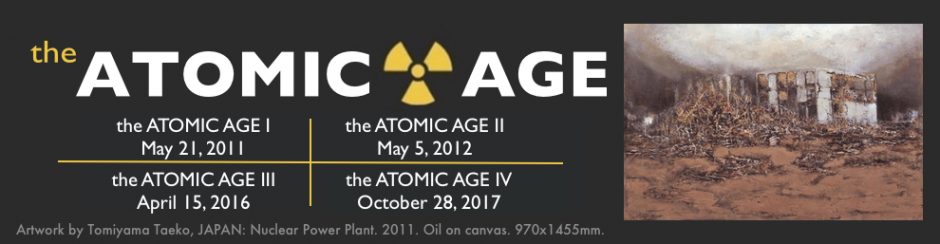
Atomic Age III Symposium 2016

ATOMIC AGE III
DePaul University, Chicago, IL
Friday, April 15, 2016
Schedule
5:30 – 6:00       Reception: Slide show of Illinois nuclear reactors, photos taken by Kelsey Haslam (Senior, Honors Program)
6:00 – 6:15       Opening Remarks: Dr. Norma Field, Professor Emerita, University of Chicago
6:15- 6:30         Student Presentation: Robert T. Johnston (Senior, Honors Program)
6:30 – 7:15         Guest Speaker: Dr. Timothy Mousseau, Professor, Department of Biological Sciences, University of South Caroline
7: 15 – 7:30         Q & A
7:30 – 7:45          Break
7:45 – 8:00          Student Presentation: Jasmine Dela Luna (Senior, Honors Program)
8:00- 8:45           Guest Speaker: Ms. Marian Naranjo, Director, Honor Our Pueblo Existence (HOPE)
8:45 – 9:00           Q & A
9:00                      Closing
Location

Richardson Library, Rosati Room 300 (3rd Floor) 2350 N. Kenmore Avenue, DePaul University

For more information, see Symposium 2016 Atomic Age III
Posted in *English | Comments Off on Atomic Age III Symposium 2016

At UN, Pakistan slams ‘nuclear doublespeak’ via DAWN

UNITED NATIONS: Pakistan has assailed the double standards practiced by some states, which preach nuclear disarmament but fail to take necessary steps themselves.

Speaking in a session of the UN Disarmament Commission, a subsidiary of the General Assembly, Ambassador Maleeha Lodhi said that a handful of nuclear weapon states advocate abstinence for others but are unwilling to give up their large inventories of nuclear weapons or their modernisation.

“This doublespeak has only aggravated the sense of insecurity among other states,” she told the 35-member commission.

“Instead of fulfilling their legal disarmament obligations, these States have almost exclusively pursued non-proliferation with messianic zeal,” the Pakistani envoy added. “This gap between legality and reality has eroded the global faith in the mutually reinforcing nature of these processes.”

Hinting towards the US-India nuclear pacts, Ambassador Lodhi said that some nuclear weapon states have also concluded discriminatory nuclear cooperation agreements and helped grant waivers in an unfortunate departure from long held non-proliferation principles.

[…]

The Pakistani envoy said it was a grim irony that weapons, which propel and sustain conflicts, come from areas or regions that enjoy peace. Only four countries account for two thirds of global arms exports, while major importers are developing countries, mainly in the Middle East, Asia and Africa.

Read more at At UN, Pakistan slams ‘nuclear doublespeak’

Posted in *English | Tagged , , , , | Comments Off on At UN, Pakistan slams ‘nuclear doublespeak’ via DAWN

Nuclear industry reveals its unsolved problem: waste via The Ecologist

Britain is shipping 700kg of highly-enriched uranium capable of making scores of nuclear bombs to the US, writes Gordon MacKerron. The move is a symptom of a huge problem that’s afflicting all nuclear nations – what to do with their nuclear wastes? The only real solution is deep geological disposal. But it’s politically fraught, technically challenging, very expensive – and has yet to be done.

A very unusual exchange is about to take place over the Atlantic.

The UK is sending some 700kg of highly enriched uranium to be disposed of in the US, the largest amount that has ever been moved out of the country.

In return, the US is sending other kinds of enriched uranium to Europe to help diagnose people with cancer.

The vast majority of the UK’s waste comes from its fleet of nuclear power stations. Most of it is stored at the Sellafield site in north-west England. But the material being sent to the US is a particularly high (weapons usable) grade of enriched uranium.

[…]

The £100 billion Sellafield problem

In the absence of a deep-disposal plan, the UK has a more immediately pressing issue – what to do with Sellafield’s contaminated materials and waste from the UK’s near-70 years in the nuclear power and weapons business, much of which is housed in dilapidated facilities that are not fit for purpose.

The Nuclear Decommissioning Authority (NDA) expects it will cost some £68 billion to clean up Sellafield by stabilising and safely packaging the waste and building new stores. This will only be completed by around 2120.

This problem is at least now getting serious attention and resource – despite the climate of public austerity. Currently the country is spending over £1.5 billion a year on the site, which is one of the most hazardous in Europe.

Sellafield stores a further 140 tonnes of waste plutonium that also stems from British and some overseas nuclear power. If used in bombs this amount could obliterate humanity several times over. The NDA is now focusing on what to do about this too, after years of political inattention.

Read more at Nuclear industry reveals its unsolved problem: waste

Posted in *English | Tagged , , , , , | Comments Off on Nuclear industry reveals its unsolved problem: waste via The Ecologist