Chernobyl’s Blown Up Reactor 4 Just Woke Up via History of Yesterday

Scientists don’t understand why…

Andrei Tapalaga

[…]

“Chernobyl will never be a problem”

Underneath reactor 4 there is still nuclear fuel that is active and which will take around 20,000 years for it to deplete. The uranium is too radioactive for anyone to live in the city and since the incident, the European Union had created a shield around the reactor which should not allow for the radioactive rays to come out.

“Chernobyl officials presumed any criticality risk would fade when the massive New Safe Confinement (NSC) was slid over the Shelter in November 2016.”

“The €1.5 billion structure was meant to seal off the Shelter so it could be stabilized and eventually dismantled.”

However, many other parts around Chernobyl have also been affected due to prolonged exposure, some more than others, and many of them have not been contained as they were not presenting any major radioactive activity until now. Neil Hyatt, a nuclear chemist from the University of Sheffield had mentioned that there is a possibility for the uranium fuel to reignite on its own.

[…]

Scientists from Ukraine have placed many sensors around reactor 4 that constantly monitor the level of radioactivity. Recently those sensors have detected a constant increase in the level of radioactivity. It seems that this radioactivity is coming from an unreachable chamber from underneath reactor 4 that has been blocked since the night of the explosion on the 26th of April, 1986.

[…]

What could be causing this?

The experts from Ukraine don’t really understand why this is happening although they do have a hypothesis. Water is used to start the fission process within nuclear materials, this makes the nuclear material release energy that within a nuclear reactor can be maintained under control, but in this instance, the experts are afraid they will not be able to control it.

Another hypothesis is that since reactor 4 has been completely shielded, no water from the rain was able to reach the nuclear fuel. The water from rain may have been what kept the nuclear material under control. With no water, the nuclear fuel may be at risk of overheating, leading to another nuclear disaster.


There may be another reason for this constant increase in radioactivity, what has been mentioned above are only hypotheses, maybe something totally different is occurring under reactor 4 or within the nuclear material left inside. This is something that definitely should ring some alarm bells in order to prepare for the worst sort of situation and hopefully the world’s smartest in the field of nuclear chemistry can come together to identify the problem and come up with a potential solution.

Read more at Chernobyl’s Blown Up Reactor 4 Just Woke Up
Posted in *English | Tagged , | 28 Comments

放射性廃棄物、海外処分に道筋 規制緩和で大型機器の「輸出」可能に via 朝日新聞

原発の放射性廃棄物は国内ですべて処分するという原則に関わる規制が、変わろうとしている。廃炉が相次ぐなか、低レベル廃棄物である一部の大型機器について、処分を海外業者に委託できるように輸出規制を緩和する。新たなエネルギー基本計画の改定案に方針が盛り込まれた。経済産業省が見直し案を検討するが、実施に向けては不透明な部分もある。

 海外での処分を検討しているのは「蒸気発生器」と「給水加熱器」、「核燃料の輸送・貯蔵用キャスク」の3種類の大型機器だ。いずれも原発の重要機器で、主なものだと長さは5~20メートル前後、重さは100~300トン前後もある。

 使用済み核燃料から出る高レベル放射性廃棄物核のごみ)ほど放射能レベルは高くはないが、低レベルの廃棄物として埋設処分などが必要だ。一部は放射能レベルが3段階のうち2番目の「L2」に該当し、地中で300~400年近く管理が必要なものもある。

 エネルギー基本計画の改定案に「有用資源として安全に再利用されるなどの一定の基準を満たす場合に限り例外的に輸出することが可能となるよう、必要な輸出規制の見直しを進める」と明記された。改定案には、今月3日から10月4日まで意見を公募している。

(略)

 国際条約では、放射性廃棄物は発生国での処分が原則だ。相手国の同意があれば例外的に輸出できるが、日本は外国為替及び外国貿易法外為法)の通達で禁じている。

 経産省は大手電力会社の要望などをもとに、専門家らを交えて検討してきた。国内処分を基本としつつ、対象を3種類の大型機器に絞り、再利用されることなどを条件に例外的に輸出を認める方向だ。法改正をしなくても通達の見直しなどで対応できるという。古くなって交換後に原発敷地内で保管している大型機器も対象になるとしており、稼働中の原発の廃棄物が輸出される可能性もある。

 電力会社から海外業者への支払額ははっきりしておらず、コストがふくらむ恐れもある。安全な輸送方法など課題は多い。規制が緩和されても、実施まで時間がかかりそうだ。

 低レベルの廃棄物は電力会社が責任を持って処分することになっている。原発の稼働や廃炉にともなって増えているが、処分先が決まらないことが大きな問題だ。たまり続ける廃棄物への地元住民らの不安感もあり、海外での処分に期待する見方もある。

(略)

東京大の岡本孝司教授(原子力工学)は、蒸気発生器は内部に配管が数千本走るなど構造が複雑で、一部が汚染された大型機器の解体に関するノウハウが国内にないと指摘する。表面を除染して解体すれば、8割ほどが金属としてリサイクル可能だという。岡本氏は「実績のある海外事業者に処理を委託してノウハウを学び、最終的には日本で処理できるようにするべきだ」と話す。

処分先のめど立たぬ廃棄物

 廃炉に伴って出る低レベル放射性廃棄物は、大型機器を含め最終的にどう処理するかが難題となっている。事故を起こした東京電力福島第一の6基を除く18基で計約16万5千トンに上る。うち9割以上は処分先のめどが立っていない。

 低レベルの廃棄物は放射能レベルが高い順に、原子炉の制御棒など「L1」、海外での処分を検討する大型機器にも含まれる「L2」、周辺の配管やコンクリートなど「L3」がある。放射能レベルに応じて地中数メートル~70メートルより深く埋めて、数十年から数百年管理する必要がある。例えばL2の場合は、地中にコンクリートピットなどをつくって埋設する。L1の場合は、活断層がなく火山から離れた場所の70メートルより深い地中に埋め、300~400年間にわたって管理するという。

 朝日新聞が電力各社に今年7月、発生見通しを聞いたところ、18基合計でL1が約3160トン、L2が約2万9320トン、L3が約13万2690トンに上った。

 このうち処分の見通しが示されているのは、日本原子力発電の東海原発(茨城県)のL3(約1万2300トン)分のみで、敷地内に埋設する計画だ。原子力規制委員会で審査しているが、L1、L2の処分先は決まっていない。

(略)

 廃炉作業が進む原発では廃棄物が積み上がりつつある。日本原電の東海原発と敦賀1号機(福井県)、中部電力浜岡1号機(静岡県)の計3基では、L2とL3で計約1320トンが発生。いずれも敷地内で保管している。

 政府や電力各社は廃炉作業に絡む廃棄物の処分先の確保を急ぐべきだが、事実上先送りしてきた。この見通しを示さないまま輸出規制を緩めれば、「海外任せ」の流れが強まりかねない。

 使用済み核燃料から出る高レベル放射性廃棄物核のごみ)の最終処分先の確保も難航している。国の選定プロセスの第1段階にあたる文献調査が北海道の2町村で始まったが、地元の反対は根強く実現は見通せない。(川村剛志、藤波優、長崎潤一郎)

全文は放射性廃棄物、海外処分に道筋 規制緩和で大型機器の「輸出」可能に

Posted in *日本語 | Tagged , , | 23 Comments

福島甲状腺がん「過剰診断」論の誤り via 放射線被ばくを学習する会

【放射線被ばくを学習する会 】 申入書:福島甲状腺がん・「過剰診断」論を撤回し、検査を拡充すべきです 「県民健康調査」検討委員会御中 「県民健康調査」検討委員会「甲状腺検査評価部会」御中 内堀雅雄・福島県知事殿 伊藤剛・福島県保健福祉部長殿 小泉進次郎・環境大臣殿 田原克志・環境保健部長殿 細野豪志・衆議院議員殿

申し入れ書 福島甲状腺がん・「過剰診断」論を撤回し、検査を拡充すべきです

1.福島甲状腺がん、少なくとも260名に 10年半前の3月、東電福島第1原発事故により膨大な放射能が放出されました。放射能による健康被害の中でも感度の高いのが小児甲状腺がんです。年間100万人に1人という極めてまれな病気で、1986年のチェルノブイリ原発事故後、被ばくにより小児甲状腺がんが増加したことが明らかにされています。 福島県は2011年10月、震災時に18歳以下だった約37万人を対象に2~3年に1回、超音波と細胞診による甲状腺検査を開始しました。これまでに260名(2021年3月末現在)の甲状腺がんが報告され、多発と認められています。福島県の検査以外で甲状腺がんと診断された例も多数明らかになっています。

2.甲状腺検査で早期発見・早期治療できます 福島県甲状腺検査が進む中で甲状腺がんの進行が非常に早いことが分かりました。2巡目以降の検査で甲状腺がんが見つかった人の39%は、2~3年前の検査では何の異常もありませんでした。 福島で手術された甲状腺がんは、事故前に他地域で手術された小児甲状腺がんと比べて全摘・亜全摘手術が少ないことが分かっています。全摘・亜全摘手術の場合、甲状腺ホルモンを作れなくなるので、術後に甲状腺ホルモン剤を毎日飲み続ける必要があります。早期に発見すれば甲状腺の半分を残すことができ、甲状腺ホルモン剤を毎日飲み続ける必要がありません。

3.検討委員会は被ばく影響を否定、「過剰診断」説 福島県県民健康調査検討委員会は2016年3月の「中間取りまとめ」で、「数十倍のオーダー」の甲状腺がん多発を認めつつ、多発の原因が被ばくであることを否定し「将来的に臨床診断されたり、死に結びついたりすることがないがんを多数診断している可能性が指摘されている(下線は引用者)」としています。いわゆる「過剰診断」論です。

4.「過剰診断」を防ぐ対策が取られています 米国、韓国などで中高年の小さな甲状腺がんを見つけて手術しましたが、死亡率が下がらず、「過剰診断」と問題になりました。福島甲状腺検査では5ミリ以下のものは精密検査の対象外としています。福島で手術されている甲状腺がんの2/3は10ミリ超で手術すべきものであり、5ミリ超10ミリ以下の超低リスクのものは「積極的経過観察」を勧めても手術を希望した場合のみ手術しています。福島甲状腺検査で「過剰診断」が生じているというエビデンスは何もないのです。

5.明らかに被ばく影響です チェルノブイリ原発事故で放出されたヨウ素131がほぼ完全に消滅したのちに生まれたベラルーシの子ども約3万5千人の甲状腺を超音波検査(1998年~2000年、および2002年)したところ、甲状腺がんは1人も見つかりませんでした。 他方、福島県の1巡目甲状腺検査では、10万人あたり38.3人の甲状腺がんが見つかっています。被ばく影響は明らかです。

6.「過剰診断」宣伝に躍起の環境省・福島県検討委員会 甲状腺検査の対象者は大部分が生徒であり、生徒の約85%が甲状腺検査を受け、早期発見・早期治療に役立っています。ところが福島県検討委員会や環境省は「甲状腺検査は過剰診断」との主張を強め、「受けたくない人は受けずに済むように任意性を確保する」と称して、検査を受ける生徒を減らそうと躍起になっています。 「過剰診断」を宣伝する細野豪志議員の国会質問に、小泉環境大臣は「問題意識は共有する」と述べ、福島県に「任意性の確保」を求めました。放射能安全宣伝「ぐぐるプロジェクト」の一環としてリーフレットを作り、「過剰診断」論を広めようとしています。

7.甲状腺検査の拡充を! 原発事故の放射能汚染に県境はありません。甲状腺検査は福島県内に限定せず、近隣都県でも実施すべきです。甲状腺がんは年齢が高くなるほど増えることが知られています。ところが2年に1回の福島県甲状腺検査が、20歳を過ぎると5年に1回になってしまいます。25歳節目検診では発見率が高く、腫瘍が大きくなっています。検査遅れは明らかで、20歳以降も最低限2年に1回の甲状腺検査が必要です。 エビデンスのない「過剰診断」論を唱えることは、検査を受ける人を減らし、早期発見・早期治療の機会を奪う結果になります。 私たちは「検討委員会」、「甲状腺検査評価部会」、小泉環境大臣、細野衆議院議員らが「過剰診断」論を撤回し、甲状腺検査を拡充するよう要求するとともに、その実現に向け早急に話し合いに応じるよう求めます。10月31日までにご回答ください。 2021年9月30日 放射線被ばくを学習する会ほか (呼びかけ・賛同団体・個人名は詳細版に記入) 第1次集約:2021年9月30日(検討委員会の日程によって早くなる可能性もあります) 第2次集約:2021年12月末日

Posted in *日本語 | Tagged , | 44 Comments

公開講座「被爆二世問題・運動の歴史と今後の展望」20210912

被爆問題、遺伝的影響の問題、そして被爆二世問題など、原爆と放射線被曝に関する最もコアなことを一気に解き明かした企画です。 被爆二世の森川聖詩さんの基調講演のあと、守田敏也(京都「被爆二世三世の会」)、島明美(個人被ばく線量計データ利用の検証と市民生活環境を考える協議会代表)、小山美砂(毎日新聞広島支局記者)、木原省治(広島市原爆被害者の会二世三世部会)と熱い報告が続きました。

Posted in *日本語 | Tagged , , , , , | 33 Comments

Lethal radiation levels detected in Fukushima nuke plant reactor lid via Asahi Shimbun

The operator of the crippled Fukushima No. 1 nuclear plant could be forced to reconsider the plant’s decommissioning process after lethal radiation levels equivalent to those of melted nuclear fuel were detected near one of the lids covering a reactor.

The Nuclear Regulation Authority said Sept. 14 that a radiation reading near the surface of the lid of the No. 2 reactor’s containment vessel was 1.2 sieverts per hour, higher than the level previously assumed.

The discovery came on Sept. 9 during a study by the NRA and Tokyo Electric Power Co., the operator of the plant.

[…]

When operators work on the decommissioning, the shield plug will be removed to allow for the entry into the containment vessel.

The NRA said a huge amount of radioactive cesium that was released during the meltdown of the No. 2 reactor in March 2011 remained between the uppermost lid and middle lid.

In the Sept. 9 study, workers bored two holes measuring 7 cm deep each on the surface of the uppermost lid to measure radiation doses there by deploying remotely controlled robots.

One radiation reading was 1.2 sieverts per hour at a location 4 cm down from the surface in a hole near the center of the lid.

[…]

While it is expected to be a huge challenge to dismantle the lids, TEPCO has yet to decide what to do with them during the decades-long cleanup work.

The NRA also mentioned the possibility that radioactive cesium is also concentrated between the middle lid and the lowermost lid.

But there is no way at the moment to confirm whether that is the case, according to NRA officials.

Read more.

Posted in *English | Tagged , | 28 Comments

“1時間で死亡”福島原発の建屋上部で致命的レベルの放射線を確認=韓国報道 via Yahoo!co.jp (Wow! Korea)

福島第1原発の格納容器から、1時間で人が死亡するレベルの放射線が測定された。これは当局の推算をはるかに上回る水準だ。福島原発処理水から放射性物質を除去するフィルターの大半が破損したのに続いてこのような発表が出たことを受け、事故原発の廃炉作業の不確実性が大きくなった。日本は2年後に福島原発処理水を海洋放出する計画であり、周辺国の不安も高まっている。

15日付の朝日新聞によると、日本の原子力規制委員会は福島第1原発2号機の原子炉格納容器の一番上にある蓋の表面で当初想定した水準を上回る1時間当たり1.2Sv(シーベルト)の放射線量が確認されたと前日発表した。  

該当の蓋は直径約12メートル、厚さ約60センチの円形鉄筋コンクリートだ。「シールドプラグ」と呼ばれ、炉心から出る放射線を遮断するために3重に設置されている。  

原子力規制委員会が1枚目の蓋の内側から遠隔ロボットで測定した放射線量は数十シーベルトに達すると分析された。当初、原子力規制委員会が推定した蓋の内側の放射線量である1時間当たり10シーベルトをはるかに超えるものだ。一般人の年間被ばく限度は1ミリシーベルトで、人は10シーベルトの放射線に1時間さらされると死亡に至る可能性がある。  

放射線量も致命的だが、150トンに達するふたの重さも廃炉作業を困難にしている原因だ。3重の蓋のうち、残りの2つの蓋の間にも放射性汚染物質が残っている可能性があるが、現在の状態では確認する方法がないと東京電力は説明した。

(略)

経済産業省と東京電力は今後20~30年以内に廃炉作業を終えるという立場だ。しかし、廃炉作業の足を引っ張るような事態が続々と明らかになっている。前日だけでも福島原発から出た処理水を保管するタンクから放射性物質が空気中に排出されることを防ぐフィルター25個のうち24個が損傷していたことが確認された。管理主体の東京電力は放射性物質が空気中に流出したことを認めた。

(略)

一方、日本政府は2023年から福島原発処理水を海に放流する計画だ。処理水に含まれた放射性物質は濾過して放出するため安全だというのが日本政府の立場だが、格納容器から致命的な放射線量が検出されたほか、フィルターの損傷を放置していたことが明らかになり、韓国を含め周辺国の不安が高まっている。

全文は“1時間で死亡”福島原発の建屋上部で致命的レベルの放射線を確認=韓国報道

Posted in *日本語 | Tagged , , , | 22 Comments

Germany to shut controversial Gorleben nuclear waste facility via DW

After serving for decades as a storage location for German radioactive nuclear waste, the government said it would close the Gorleben mine. Locals and environmental groups have protested against the facility for years.

The Gorleben mine in the German state of Lower Saxony will close, the country’s Environment Ministry announced on Friday.

The mine in the Wendland region became the center of a long-running controversy after it was proposed as a possible site for the disposal of radioactive nuclear waste.

[…]

The Gorleben mine controversy

Gorleben had been earmarked as a site for nuclear waste disposal almost 40 years ago.

But locals rejected the decision, arguing that the salt in the ground could weaken containment structures and cause radioactive leaks. The site became the focus of Germany’s anti-nuclear movement with activists staging sit-in protests and blocking trains bringing containers of nuclear waste to the facility.

[…]

Germany’s nuclear waste problem

Germany is seeking a safe place to store 1,900 containers of radioactive waste. The containers make up only 5% of the country’s nuclear waste but 99% of its radioactivity, according to BGE chairman Stefan Studt.

BGE has named 90 areas around the country as potential places for permanent waste disposal.

The sites are currently being vetted taking into account a number of factors, including population density.

Read more at Germany to shut controversial Gorleben nuclear waste facility

Posted in *English | Tagged , , | Comments Off on Germany to shut controversial Gorleben nuclear waste facility via DW

Hinkley Radioactive Waste Dredge-and-Dump off Cardiff Coast – UK Marine Biologist Tim Deere-Jones – NH #534 via Nuclear Hotseat

Radioactive waste dumping in the Bristol Channel off Cardiff Coast from UK nuclear reactors at Hinkley Point is being carried out by dredgers similar to this one (and leaving comparable plumes of pollution). Marine Biologist Tim Deere-Jones has shown increasing radiation exposure in Wales, UK.  

Listen Here:

Audio Player00:0000:00Use Up/Down Arrow keys to increase or decrease volume.

Podcast: Download

This Week’s Featured Interview:

  • A jaw-dropping interview with UK Marine Biologist Tim Deere-Jones on the true impact of nuclear industry dredge-and-drop of nuclear 600,000 cubic metres (approx 780,000 tons) of radioactive waste into the Bristol Channel off the coast of Wales.  He works as an independent Marine Pollution Researcher and Consultant with a client list that includes Greenpeace International, Greenpeace UK, Greenpeace Australia, Friends of the Earth, Campaign for Nuclear Disarmament, many citizens campaign groups, Local & Regional Authorities in UK , Ireland and across northwest coasts of Europe. He makes a point of stating he has NEVER worked for any industrial organization or national government or their agencies. We spoke on Thursday, September 9, 2021. He can be emailed at: timdj@talktalk.net.
Posted in *English | Tagged , | 22 Comments

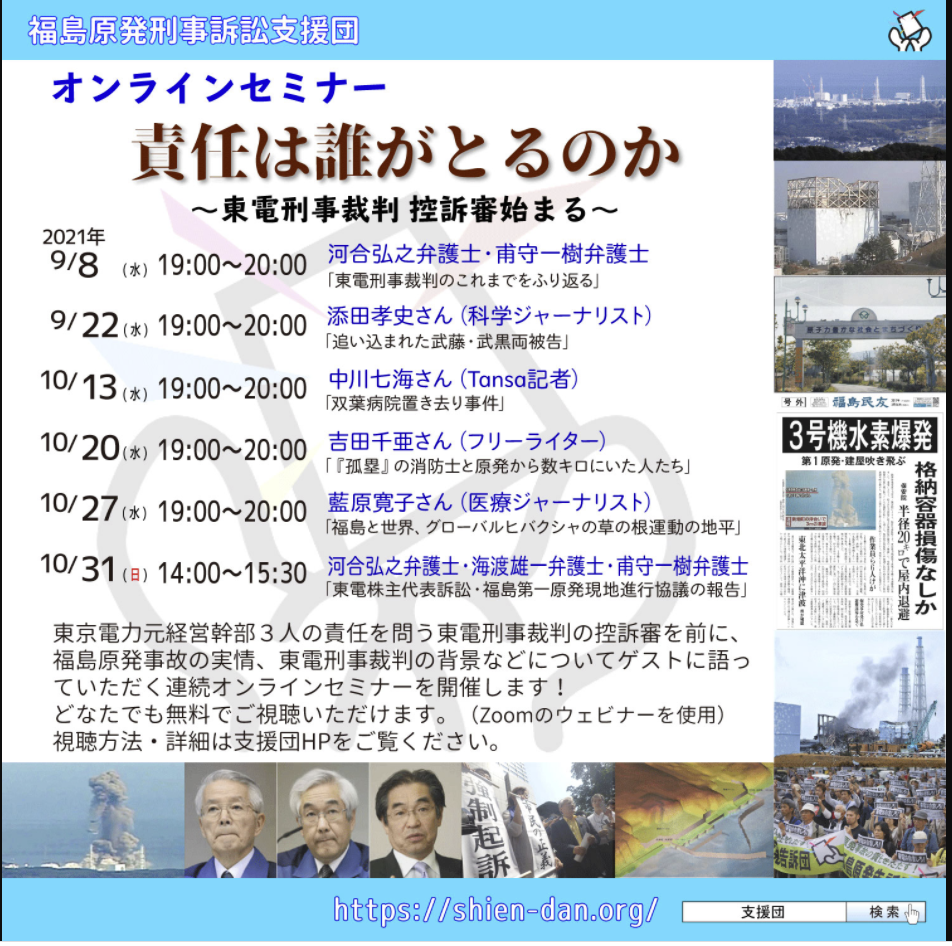
【全6回:連続オンラインセミナー】 「責任は誰がとるのか ~東電刑事裁判 控訴審始まる~」開催のお知らせ via 福島原発刑事訴訟支援団

もっと知る

Posted in *日本語 | Tagged , | 20 Comments

福島第一原発、地下水浄化装置が自動停止 via 讀賣新聞オンライン

 東京電力は16日、福島第一原子力発電所で同日早朝、1~4号機の原子炉建屋周辺の井戸からくみ上げた地下水を浄化する装置が自動停止したと発表した。同日夜には装置の不具合箇所が判明し、運転を再開させた。

 発表によると、同日午前5時18分、装置が自動停止した。警報は鳴らず

(略)

 原因を調査したところ、弁の開閉を検知する部品の不具合で自動停止したことが判明。改善した上、午後9時頃、運転を再開させた。地下水のくみ上げ作業に遅れは出なかった。

全文は福島第一原発、地下水浄化装置が自動停止

Posted in *日本語 | Tagged | Comments Off on 福島第一原発、地下水浄化装置が自動停止 via 讀賣新聞オンライン