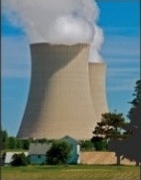
東海第二原発 ケーブル防火対策了承も運転延長見通せず via NHK

茨城県にある東海第二原子力発電所の再稼働の前提となる国の審査で、およそ320キロにわたる電気ケーブルを、燃えにくいものに交換したり、シートで覆ったりするとした防火対策がおおむね了承されました。審査は1つの山場を越えましたが、運転開始から40年を迎える東海第二原発の延長の手続きが来年の期限内に終わるかどうかは依然として見通せない状況です。

来年で運転開始から40年を迎える茨城県にある東海第二原発には、燃えにくい材質になっていない電気ケーブルが全長およそ320キロにわたって残っていて、その防火対策が再稼働の前提となる国の審査の焦点の1つでした。

[…]

これで審査は1つの山場を越えましたが、日本原電が今月示した防潮堤の新しい計画などに問題がないか確認する必要もあり、東海第二原発が来年11月の期限内に審査に合格して運転延長の手続きが終わるかどうかは依然として見通せない状況です。


全文

Posted in *日本語 | Tagged , | 1 Comment

NHK、ドキュメンタリー番組「”原爆の絵”は語る」を8Kで制作。ナビゲーターの波瑠が収録の感想を語った。2Kは8/6放送 via Stereo Sound Online

(抜粋)

「”原爆の絵”は語る」は、広島平和記念館に収蔵されている、被爆者自らが描いた膨大な原爆の絵を元にしたドキュメンタリー。昭和40年代に、ある一人の被爆者の発案によって始まったものだそうで、NHK広島が募集を行ない、これまでにおよそ4200枚もの絵が、同館に寄せられているという。

NHKではまず、その貴重な絵を、約1億画素のセンサーを持つスチルカメラによって静止画撮影。広島平和記念館の一角に専用の撮影ルームを作り、およそ2ヵ月の時間をかけてデジタル化したという。絵のサイズによってはレンズの収差が目立ってしまうものもあるため、複数のショットをステッチ(つなぎ合わせ)して1枚に仕上げたものもあるそうだ。完成した画像は1枚あたり15K相当のデータ量があり、拡大表示しても8K相当の解像度で見られるようになっている。

(略)

 番組のチーフ・プロデューサーの大久保氏は、「絵のリアルさを(8Kの映像を通して)体感してほしい」と語っていた。また、なせ8Kなのかについては、2年前の2015年に、被ばく遺品を8Kで撮影したミニ番組を制作した際、映像から伝わってくるリアルさに魅了されたのがその理由だという。

なお、デジタル化した画像については、NHKが専用のアプリ「インタラクティブ8Kビュアー」を開発。手元のタブレットで操作した映像を、8Kモニターに表示して見られるシステムを構築。8月1日~16日まで、広島平和記念資料館で展示する予定だ。

具体的には、4200枚の絵の中から時系列の判別のつく約1000枚を、広島の爆心地を中心にした写真に、時間、場所のタグをつけてマッピング。同時に、絵の裏書や聞き取り調査などによって、絵の説明文も表示できるようにしている。時系列の分からないものについても、作者や内容などによって検索できるようになっている。

●番組「”原爆の絵”は語る」
<2K放送>
8月6日 NHK総合 13:05~13:48
<スーパーハイビジョン(SHV)試験放送>
7月31日~8月2日、8月4日~9日、8月11日~16日 13:00~13:43

Posted in *日本語 | Tagged , , | 1 Comment

Grounded Podcast: Hanford’s Dream of the 90s via Oregon Department of Energy

For more than 40 years, the Hanford Nuclear Site near Richland, Washington produced plutonium for America’s nuclear weapons program. The once top-secret Manhattan Project site ended production in 1989.

When the focus at Hanford shifted to cleanup in the early 1990s, the dream was to complete the project in 30 years.

On this week’s podcast, our Assistant Director for Nuclear Safety, Ken Niles, is back to talk to us about the early years of the cleanup – and why there’s no way we’re hitting that 30-year cleanup goal.

Continue reading and listening to the program at Grounded Podcast: Hanford’s Dream of the 90s

Related programs:  

Posted in *English | Tagged , , , , , , , | 2 Comments

Illinois Issues: The Prairie State’s Nuclear Waste Conundrum via NPR Illinois

The Land of Lincoln is the country’s largest de facto nuclear waste dump.

Under a federal measure passed 30 years ago, the spent fuel from America’s nuclear reactors is supposed to be permanently buried out in the Mojave Desert, tucked deep under a mountain, far from any population center and easily guarded.

In reality, though, that radioactive waste – tens of thousands of tons of it – is sitting in temporary storage at dozens of current and former nuclear power sites all over the country, as it has been for decades. The largest portion of it is divided among seven sites that dot the nation’s fifth-largest state: Illinois.

The story of how the Land of Lincoln became the nation’s biggest de facto nuclear waste dump is a tale of public fear, political pragmatism and the power of NIMBY (Not In My Back Yard).

It’s a story that radiates political irony. Among those responsible for Illinois’ atomic dilemma is the state’s favorite son, Barack Obama, who scuttled a decades-old project that was to have created a national nuclear waste repository at Yucca Mountain, Nevada.

[…]

It is perhaps fitting that Illinois is the epicenter of the American nuclear power industry today, given that the Atomic Era started here. In December 1942, at the University of Chicago, Enrico Fermi and Leo Szilard created the first artificial self-sustaining nuclear chain reaction.

That breakthrough, previously hypothesized from the work of Albert Einstein and others, would speed the end of World War II three years later, would hang ominously over the ensuing decades of the U.S.-Soviet Cold War, and would ultimately light the computer screen on which you’re reading this.

[…]

Today, Illinois is home to six operational nuclear power sites, at Braidwood, Clinton, Cordova, LaSalle County, Morris and Ogle County. Together they operate 11 nuclear reactors currently in use, more than any other state.

The radioactive spent nuclear fuel from those reactors has remained in ostensibly temporary storage at each of Illinois’ operational sites – and at the now-shuttered Zion nuclear power plant on Lake Michigan – for years, as the federal government has failed to carry out its self-appointed responsibility to permanently dispose of it.

A revived Yucca Mountain project could change that. But not everyone believes it’s the answer to Illinois’ problem.

[…]

Kraft’s group does favor the general concept behind the Yucca Mountain proposal —  “deep geological permanent disposal” of nuclear waste — but argues that the chosen Nevada site is dangerously unsuitable.

To a broader point, Kraft cites the whole nuclear waste debate itself as further proof of what he claims is an untenable power source going forward. “Illinois has more nuclear generation than anyone else. We get all the benefits, but now we don’t want (the waste) in our backyard.”

[…]

The uranium fuel eventually loses its effectiveness in the nuclear reaction, and has to be replaced. The removed, “spent” fuel rods will continue to be dangerously radioactive for thousands of years. In addition to the health and environmental hazards, the waste contains materials that, in the wrong hands, could be weaponized. This stuff can’t just go into a dumpster.

Ten “years after removal from a reactor, the surface dose rate for a typical spent fuel assembly exceeds 10,000 rem (a unit of radiation) /hour —  far greater than the fatal whole-body dose for humans of about 500 rem,” explains a 2015 report by the U.S. Nuclear Regulatory Commission outlining the state of America’s nuclear waste issue.

The best solution, experts concluded decades ago, is to build a remote, impenetrable national repository where America’s nuclear waste could be consolidated and contained, monitored and guarded in one place, essentially forever.

Conversely, the most dangerous situation, it is generally agreed, would be to allow that waste to simply remain on site where it was produced, at dozens of nuclear plants around the country — many of them near population centers, each one requiring endless vigilance, each one a potential environmental disaster or terrorist target.

And yet that’s exactly where we are today.

Over the decades, U.S. nuclear reactors have produced some 79,000 metric tons of radioactive waste, a figure that grows by more than 2,000 metric tons every year. Most of it has remained in temporary storage in the same roughly 70 sites in more than 30 states where it was used, for the simple fact that there is nowhere else to put it. More than 10,000 tons of it resides in Illinois.

[…]

The Chicago-area plant on the shore of Lake Michigan shut down permanently after an operator-error mishap in 1997. Twenty years later, its spent nuclear waste still is stored on site because of the lack of a national repository for it.

Read more and listen to the program at Illinois Issues: The Prairie State’s Nuclear Waste Conundrum

Posted in *English | Tagged , , , , , , , , , | 1 Comment

原子力委員会「原発は低コスト利用推進」via NHK News Web

(抜粋)

かつての「原子力政策大綱」に代わる新たな指針として、国の原子力委員会は20日、今後の原子力政策の「基本的考え方」を取りまとめました。

それによりますと、国や電力会社などは福島第一原発の事故を真摯(しんし)に反省し、事故は必ず起こりうるという認識で安全性の向上に努めることが必要だとしたうえで、原発は排出する二酸化炭素が少なく運転コストが低い電源なので、地球温暖化問題への対応や国民生活への影響を踏まえながら利用を進めると明記しています。

一方、一部の委員や一般から募った意見では、福島第一原発の事故の教訓や高速炉開発を含めた核燃料サイクルの不透明さから、原発の経済性を疑問視する声が寄せられていましたが、20日に取りまとめられた指針には反映されませんでした。

これについて原子力委員会の岡芳明委員長は「原発のコストについては必要な時期がきたら改めて評価がなされるだろう」と述べ、5年後をめどに指針を見直す考えを示しました。

全文は原子力委員会「原発は低コスト利用推進」

Posted in *日本語 | Tagged , , , | 1 Comment

Magnitude 5.8 quake hits off Japan’s Fukushima, no damage or tsunami via The Straits Times

TOKYO (AFP) – A moderately strong earthquake struck off the coast of Japan’s Fukushima on Thursday (July 20) but no fresh damage to the crippled nuclear power plant there was reported and there was no risk of a tsunami, officials said.  

The 5.8-magnitude quake hit at 9:11 am (0011 GMT) off Fukushima prefecture in the Pacific Ocean with the epicentre located 34 kilometres (21 miles) under the sea, according to the US Geological Survey.  Japan’s meteorological agency said there was no risk of tsunami from the earthquake.  

“We have found no (new) abnormality so far” at the Fukushima Daiichi plant, said a spokesman at Tokyo Electric Power Co., the operator.  

Continue reading at Magnitude 5.8 quake hits off Japan’s Fukushima, no damage or tsunami

Posted in *English | Tagged , , , | 1 Comment

福島県沖が震源 いわき市などで震度4観測 (福島県)via 日テレNEWS24

気象庁によると、きょう午前9時11分ごろ、福島県沖を震源とする地震があり、浜通りで震度4を観測した。

震度4を観測したのは、いわき市、広野町、楢葉町、富岡町、双葉町となっている。

また、浜通りと中通りの各地で震度3を観測している。

気象庁によると、震源地は福島県沖で、震源の深さは40キロ、地震の規模を示すマグニチュードは5.6と推定される。

(略)

また、東京電力によると、今回の地震で福島第一原発、第二原発に新たな異常はないという。

全文は福島県沖が震源 いわき市などで震度4観測 (福島県)


Posted in *日本語 | Tagged , , , | 1 Comment

Release of tritium isn’t without real hazards via the Cape Cod Times

On July 14, Japan Times reported:

“Radioactive tritium, said to pose little risk to human health, will be released from the crippled Fukushima nuclear power complex into the sea. … ‘The decision has already been made,’ Takashi Kawamura, chairman of Tokyo Electric Power Company Holdings Inc., said.”

Although exploited by nuclear industry defenders, this idea of tritium posing “little risk to human health” originates from ignorance. In the 1940s, atomic radiation was poorly understood. Gamma radiation, known to cause burns and pass through steel, was considered more hazardous than beta, which in turn was deemed more hazardous than alpha radiation (which cannot penetrate dead skin cells).

But tritiated water is readily absorbed through the skin or inhaled as water vapor, and the work of researcher R. Lowry Dobson has shown that (heavy) alpha particles will cause severe damage, cancer or death in adjacent cells once an individual is internally contaminated.

Dr. Dobson wrote in 1979, “As an isotope of hydrogen (the cell’s most ubiquitous element), tritium can be incorporated into essentially all portions of the living machinery. … Tritium is primarily a byproduct of the nuclear power industry, which releases large amounts (megacuries) of tritium per year.”

David Agnew

Harwich


Source

Posted in *English | Tagged , , | 1 Comment

Australia quietly makes first uranium shipment to India three years after supply agreement via ABC online

Foreign Minister Julie Bishop provided little detail about the inaugural sale, saying only that it was subject to commercial negotiations.

The supply deal with India, signed in 2014, is the first of its kind Australia has made with a country not party to the nuclear non-proliferation treaty.

At the time, then-prime minister Tony Abbott said Australian uranium could play a reliable long-term role in supplying India’s growing energy needs.

But it was not until last night, in a brief and low key announcement, that Ms Bishop said the first shipment was finally en route.

[…]

Parliament only passed the final legislation enabling sales last December, following years of debate about supplying uranium to a country with a strategic nuclear weapons program and that refuses to sign the non-proliferation treaty.

Parliamentary hearings to ratify the supply treaty in 2014 heard the International Atomic Energy Agency still had concerns about India’s safeguards.

Ongoing tensions between India and its neighbour Pakistan, which also has not signed the non-proliferation treaty, have raised the spectre of armed confrontation in the past.

But Ms Bishop said the Government was confident Australian uranium would not be misused.

[…]


Read more.

Posted in *English | Tagged , , , , | 1 Comment

Westinghouse Bankruptcy Will Kill US Nuclear Expansion Plans in India via DiaNuke.org

Westinghouse, a leading nuclear reactor manufacturer has filed bankruptcy in U.S. dealing a blow to the nuclear power industry. Newsclick spoke to Prabir Purkayastha, on the impacts this will have globally and in India. The filing ends the takeover of Westinghouse by Toshiba, one of a handful of nuclear contractors left worldwide. It will also have an impact on India, as Westinghouse was a part of the Indo-US nuclear deal.

DiaNuke site

Posted in *English | Tagged , , | 2 Comments