■小泉純一郎元首相
ほかの国に比べて日本は地震、津波、火山の噴火が多い。原発をやってはいけない国だと確信した。政府は『日本の原発は世界一、安全基準が厳しい』と言うが、米国やフランス、アイルランドと比べてどこが厳しいのか、全然示していない。廃炉の費用、賠償費用、安全対策の費用。最終処分場なんて千年万年作らない。これを入れてないんだから、原発のコストが一番安いというのは、とんでもないうそだった。
(Reuters) – Japanese prosecutors must decide this week whether to charge Tokyo Electric Power Co executives for their handling of the 2011 Fukushima disaster, in a process that could drag the operator of the stricken nuclear plant into criminal court.
The judicial review is unlikely to see Tepco executives go to jail, legal experts say, but rehashing details of the meltdowns and explosions that followed an earthquake and tsunami will cast a harsh light on the struggling utility and will not help Prime Minister Shinzo Abe’s unpopular effort to restart Japan’s nuclear reactors.
The Tokyo’s District Prosecutors Office last year declined to charge more than 30 Tepco and government officials after investigating a criminal complaint from residents, who said officials ignored the risks to the Fukushima Daiichi plant from natural disasters and failed to respond appropriately when crisis struck.
But a special citizens’ panel opened another legal front in July, asking prosecutors to consider charges of criminal negligence against three executives over their handling of the world’s worst nuclear disaster since Chernobyl in 1986.
Under the review system, the prosecutors must respond by Thursday.
If they again decline to take up the case, as some experts expect, the 11-member panel of unidentified citizens can order prosecutors to indict, if eight members vote in favor.
[…]
Nationwide, a majority of people has consistently opposed restarting nuclear power, according to opinion polls since the disaster.
The citizens’ panel said Tsunehisa Katsumata, Tepco chairman at the time of the disaster, and former executive vice presidents Sakae Muto and Ichiro Takekuro failed to take protect the Fukushima plant despite warnings it faced big tsunamis.
The prosecutors are unlikely to change their minds, said Shin Ushijima, an attorney and former public prosecutor.
“Prosecutors exhaust all means in their investigations and certainly would have in a special case like this, so if they were convinced they could not prosecute Katsumata and the others earlier, they will not reach a decision to indict now,” he said.
“There is a 50 percent chance that some or all of the three ex-Tepco executives will be indicted and 99.9 percent chance those indicted will be found not guilty,” Ushijima said.
“How can you prove one person, Katsumata for example, is liable or guilty, when such a big organization was behind such a large accident?”
Read more at Japan prosecutors set to rule on possible Fukushima indictments
東京電力福島第1原発事故後、初となる福島県知事選で「脱原発」をめぐる議論が深まらない。6新人が争う構図だが、ほとんどの候補者が県外の原発再稼働に 反対を訴える一方で、自民、民主などが相乗りする有力候補が明言を避け、争点となりにくくなっている。
▽既定路線 「復興の大前提として、県内の原発全基廃炉をやり遂げる」。原発事故の避難区域を抱える南相馬市で開かれた演説会。各党の県議や団体の関係者約600人 を前に、選挙戦を優位に進める前副知事の 内堀雅雄 (うちぼり・まさお) 氏(50)が力を込めた。だが、県外の原発について言及することはなかった。 内堀氏を含め6人の候補者全員が、県内原発の全基廃炉に賛成している。しかし、福島第1原発の1~6号機はすでに廃炉が決定。第2原発の4基について も、 佐藤雄平 (さとう・ゆうへい) 知事や県議会がこれまで廃炉を国と東電に求めており、多くの県民は県内全基廃炉を「既定路線」と受け止めている。
▽思惑 原発再稼働をめぐっては、第1号と見込まれる九州電力川内原発(鹿児島県)で地元同意が得られつつあり、着々と進行する。 「世界が注目している選挙。これだけ過酷な原発事故を経験した福島の知事だからこそ、県外の原発再稼働にも『ノー』と言わなければいけない」。元岩手県 宮古市長で医師の 熊坂義裕 (くまさか・よしひろ) 氏(62)は脱原発を明確に主張し県内を遊説している。第1原発のある双葉町の元町長 井戸川克隆 (いどがわ・かつたか) 氏(68)ら他の候補者も、県外の原発再稼働に反対の姿勢だ。 一方の内堀氏は記者会見で県外原発の是非を問われると「個別の原発再稼働について、福島の知事が言及すべきではない」と述べるだけ。その訳を内堀氏の陣 営幹部は「原発再稼働を進めたい自民党が支援に回ったことで、原子力政策について言いづらくなっている」と明かす。
High winds and faulty power plants lift wind power above nuclear for the first time in the UK
鹿児島県は22日、国の新規制基準に適合した九州電力川内原発(同県薩摩川内市)に関して開いた住民説明会で、参加者を対象に実施したアン ケート結果を発表した。適合と判断した原子力規制委員会の審査結果の理解度を調べるもので、説明会の感想について半数近くが「良くなかった」と回答した。
(略)
県は事故時の避難計画など審査内容以外への対応が不十分だったとし、追加の説明会を29日に日置市で開催することを決めた。
脱核団体、2011年から輸入されている日本産スクラップの現況と流通実態調査要求
ムン・ジュヒョン記者 2014.10.20 19:24
2011年の福島核事故以後、群山港から輸入される日本産スクラップの輸入が急増している。 しかし群山港には、原子力安全委員会により設置・運営されるはずの放射線監視装置が設置されていない。脱核エネルギー転換全北連帯と民主労総全北本部群山市支部は10月20日、 日本産スクラップ輸入・流通の実態を調査する官民調査団構成を要求した。
これらの団体は「群山地方海洋港湾庁が3段階にわけて、 税関と鉄鋼業者で放射能検査を実施しているので問題ないと釈明しているが、 きちんとした検査の規定もなく、携帯用放射線検査器でサンプル調査をしているのは信じられない」と話した。
もっと読む。
By Junpei Monma / Yomiuri Shimbun Staff Writer
FUKUSHIMA — Workers trying to bring the situation under control at Tokyo Electric Power Co’s crippled Fukushima No.1 nuclear power plant continue to work in a severe environment 3½ years after the Great East Japan Earthquake.To promote reactor decommissioning, which is expected to take 30 to 40 years, it is essential to improve that environment by addressing the workers’ dissatisfaction concerning issues such as decreased work efficiency due to the use of masks and the lack of space in resting rooms.
[…]
Serious manpower shortagesA man from Hokkaido, who said it was the first time he had worked at a nuclear power plant, said: “In Hokkaido, it’s difficult to find a job. Recently, many people have tried to find a job either in Fukushima at the nuclear power plant or in Tokyo, where the Olympics will be held in 2020.”
Some people are concerned about the deteriorating work quality as the number of staff unfamiliar with working at such an environment increases. A local worker in charge of electrical work on the premises said: “As there aren’t enough workers, there was no choice but to entrust a person who had the experience of working at another nuclear power plant for just a few months to lead a group of workers. It wouldn’t be surprising if an accident occurred at any time.”
According to TEPCO, 25 workers experienced some work-related difficulties, such as injury or heat stroke, in fiscal 2012, but that figure increased to 32 in fiscal 2013. In March this year, a 55-year-old man died after he was buried in soil while excavating it. The accident was the first fatality since decommissioning work started.
Akihiro Yoshikawa, 34, former TEPCO employee now supporting workers at the No. 1 nuclear power plant, explained that manpower shortages have occurred because veteran workers left Fukushima unsatisfied with short-term contracts and an unstable existence. “TEPCO and the government should improve the work environment while taking into account the long-term decommissioning processes, and also make efforts to educate workers to improve their techniques,” he said.Speech
Read more.
原子力発電所の近くに住んでいて甲状腺がんを発症した住民に対し、原発側が賠償する責任があるという判決が下った。釜山東部地裁民事2部(チェ・ホ シク裁判長)は、釜山市機張郡に住む女性(48)が甲状腺がんを発症したことについて、原発の責任が一部認められるとし、原発を運営する韓国水力原子力 (韓水原)=韓国電力公社の子会社=が女性に慰謝料1500万ウォン(約151万円)を支払うよう命じる判決を下した。
地 裁は判決理由について「原発から5キロ以内に住む女性の甲状腺がん発症率が、30キロ以上離れた地域に比べ2.5倍に達するなど、甲状腺がんの発症は放射 線にさらされていることが決定的な要因となっていることが知られている。原告は原発の近くに住んでいて、原発から発生する放射線に長期間さらされたことに より、甲状腺がんを発症したものと考えられる」と述べた。
当サイト既出関連記事:
関連記事:
France is looking to undo decades of nuclear power growth and instead boost energy sources like wind, solar, and small hydro projects.
French President Francois Hollande has promised to limit the growth of the country’s nuclear power, many older reactors have been targeted for decommissioning, and Greenpeace and other environmental groups have been relentless in their anti-nuclear campaigning. But until now, it seemed unlikely that France would ever truly rethink its love affair with nuclear power.
Last week, it did. On Oct. 10, France’s parliament voted to begin moving to undo decades of nuclear growth and to reduce its importance to the country’s energy mix. Over the next 11 years, France will reduce the amount of electricity coming from nuclear by one-quarter — from 75 percent to 50 percent. To do that, estimates are that as many as 20 of France’s 58 reactors would have to be closed.
The vote was part of a package of legal reforms in France’s long-awaited energy transition law, a main pillar of which was slowing nuclear power production and then maintaining it at the new lower level before progressively lowering it over the next 10 years. (Related: Is Fusion Power Closer Than We Thought?)
The second pillar was removing bureaucratic hurdles that prevented renewable energy projects from getting off the ground. A trial period will see wind, solar, bio-gas and small hydro projects receive streamlined authorization in seven French regions.
Continue reading at Au revoir, nuclear power? France eyes an energy shift of its own
[…]
Funahashi’s “Nuclear Nation” films follow the residents of Futaba, who were evacuated after the March 2011 earthquake and tsunami triggered meltdowns at the nearby Fukushima Daiichi nuclear complex, dousing their town with radiation and turning it into a “no-go zone”.
In the broader region, tens of thousands were forced to flee.
He filmed the first installment, which premiered at the Berlin International Film Festival less than a year after the disaster, at an abandoned high school in a Tokyo suburb where 1,400 Futaba evacuees were living in classrooms.
“Nuclear Nation 2”, produced by Documentary Japan and Big River Films, picks up from New Year 2012 and covers a two-year period. Evacuees at the school wish each other well for the coming year, admire New Year cards and chat over “bento”, single-portion takeout meals, trying to maintain a semblance of normal life.
Funahashi’s lens deftly captures a television news program in the background reporting on the nuclear regulator and the problem of decontamination, underlining the issue at hand and foreshadowing discontent to come.
[…]
The government is keen to restart the country’s reactors once they pass tougher security checks imposed after the Fukushima disaster, to reduce reliance on expensive imported fuel. Last month, the nuclear regulator approved the restart of a nuclear plant in southwestern Japan.
Public mistrust of atomic power remains high, however, and Funahashi says he will keep making “Nuclear Nation” films to show the human side of the nuclear equation.
“We are the ones who used the power from Fukushima Daiichi. I feel, as a filmmaker, responsible to keep making this film as long as the Futaba people’s refugee life continues,” he said.
Read more at Fukushima film shows reality sinking in for ‘nuclear refugees’
Related article:



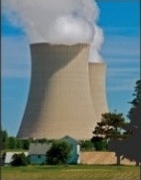
A nuclear power plant in Byron, Illinois. Taken by photographer Joseph Pobereskin (http://pobereskin.com).