東京電力は22日、福島第1原発3号機で、物質を通り抜ける性質を持つ宇宙線の一種を利用して原子炉内部を透視する調査を5月に始めると明らかにした。溶け落ちた核燃料(デブリ)の位置を調べて、取り出し手順や工法を今夏にも絞り込む。
調査では、地球に降り注ぐ宇宙線の一種「ミュー粒子」を検出できる装置を建屋付近に数カ月間設置する。ミュー粒子はデブリのような密度が高い物質に遮られる性質があり、原子炉を撮影するとデブリの大まかな位置や量が分かるという。
全文を読む。
東京電力は22日、福島第1原発3号機で、物質を通り抜ける性質を持つ宇宙線の一種を利用して原子炉内部を透視する調査を5月に始めると明らかにした。溶け落ちた核燃料(デブリ)の位置を調べて、取り出し手順や工法を今夏にも絞り込む。
調査では、地球に降り注ぐ宇宙線の一種「ミュー粒子」を検出できる装置を建屋付近に数カ月間設置する。ミュー粒子はデブリのような密度が高い物質に遮られる性質があり、原子炉を撮影するとデブリの大まかな位置や量が分かるという。
全文を読む。
原発の使用済み核燃料からプルトニウムを取り出す国内初の再処理工場「東海再処理施設」(茨城県東海村)の設備や建物を解体撤去する総費用について、作業終了までの70年間で約8千億円に上るとみられることが22日、運営主体の日本原子力研究開発機構への取材で判明した。機構は国の交付金で運営されており、廃止費用は国民負担となる。
使用済み燃料を細断し、むき出しになった放射性物質を扱うことから、「廃止措置」では核燃料が原子炉内に集中している原発に比べて汚染が広範囲に及ぶ。このため廃止の総費用は数百億円とされる原発廃炉の10倍以上となる。(共同通信)
佐賀県の玄海原子力発電所で再稼働に向けた地元の手続きが進む中、世耕経済産業大臣は22日、佐賀県の山口知事と会談し、安全対策などに国が責任を持つことを伝えました。山口知事は、国の責任を明確にすることなどを条件に、再稼働を容認する考えを示しており、早ければ来週にも地元として最終的な同意を表明する見通しです。
再稼働の前提となる国の審査に合格している、玄海原発3号機と4号機をめぐっては、地元の玄海町が再稼働に同意したのに続いて、佐賀県議会も再稼働を容認する決議を可決し、地元の手続きは山口知事の最終的な判断を残すのみとなっています。
(略)
このあと世耕大臣は佐賀県庁で山口知事と会談し、山口知事は「再稼働や使用済み核燃料の処分のめどが立っていないことに、県民の不安の声は総じて多い」としたうえで、原子力防災などの課題に国が責任を果たすよう求めました。
これに対し、世耕大臣は「誠意を持って対応していく」と述べて、安全対策などに国が責任を持つことを伝えました。
山口知事は、国の責任を明確にすることなどを条件に、再稼働を容認する考えを示しており、早ければ来週にも地元として最終的な同意を表明する見通しです。
26日で発生から31年が経過するチェルノブイリ原発事故の被災地ベラルーシ。現地で日本語教師を務める古沢晃さん(43)=山形県村山市出身=は、東京電力福島第1原発事故が起きて以降、福島県と同国の学生が交流する機会をつくるなど、被災地同士の絆を強める活動に取り組んでいる。
「元々、チェルノブイリの事故は自分と関係ないと思っていた」という古沢さん。しかし福島の事故後、現地の友人は「私たちは悲劇で結ばれている」と義援金を募り、折り鶴で励ましてくれた。その思いに応えたいという気持ちが活動の原動力
関連記事
今夏、ベラルーシ共和国を訪れる「日本・ベラルーシ友好派遣団2016」のオリエンテーションは4日、いわき市生涯学習プラザで開かれ、浜通りの高校生が派遣への決意を新たにした。
高校生とスタッフ約40人が出席した。一人一人が自己紹介した後、ベラルーシ国立大日本語講師の古沢晃さんがベラルーシについて紹介した。相馬中央病院医師の森田知宏さんが外部被ばくと内部被ばくの違いなどの知識を解説した。
5つの班に分かれて、ベラルーシの高校生に日本の風土や文化、歴史などを紹介する方法を話し合った。
NPO法人アース・アイデンティティ・プロジェクツの主催、NPO法人ハッピーロードネットの共催。7月20日に出発し、文化・研修施設で現地の高校生らと交流しながらチェルノブイリ原発事故からの復興状況などを学ぶ。8月4日に帰国する。
東京電力福島第一原子力発電所の事故でメルトダウンが起きた3基のうち、これまでほとんど内部調査が行われていない3号機で、来月、宇宙から降り注ぐ素粒子を使って原子炉の内部を透視する調査が行われることになりました。
福島第一原発の事故では、1号機から3号機の3つの原子炉で核燃料が溶け落ち、構造物と混じった「燃料デブリ」となって、原子炉やその外側の格納容器の中にあると見られますが、どこにどのような状態であるのか、事故から6年たった今もわかっていません。
このうち、3号機について東京電力は、さまざまな物質を通り抜ける性質がある宇宙から降り注ぐ素粒子「ミューオン」を使って原子炉の内部をレントゲン写真のように透視する調査を来月行うことになり、今月中にも装置の設置を始める予定です。
(略)
ことし、ロボットやカメラによる内部調査が行われた1号機と2号機では、いずれもデブリを確認するには至っていませんが、去年までに行われたミューオンによる調査で、1号機ではほとんどの核燃料が原子炉の底を抜けたと見られ、2号機では核燃料の大部分が原子炉の底の部分に残っていると見られる調査結果が得られています。
OKUMA, FUKUSHIMA PREF. – At the facility on the Pacific Coast, people in casual clothes stroll under cherry trees in full bloom.
Hot meals made with local ingredients are served for ¥380 at a cafeteria. Cold drinks, snacks and sweets are available at a convenience store.
This scene is not unfolding at a popular tourist site, but at the Fukushima No. 1 nuclear power plant, which was rocked by a magnitude-9 earthquake and the ensuing tsunami on March 11, 2011.
Accompanied by officials from Tokyo Electric Power Company Holdings Inc., a group of reporters was given access to the power station earlier this month.
Six years have passed since the world’s worst nuclear disaster since Chernobyl in 1986.
Efforts to remove radioactive debris and to cover tainted soil with materials like mortar have helped decrease the radiation at the plant, allowing workers to wear regular uniforms at about 95 percent of the site.
Tainted water has been moved to more secure welded tanks, replacing weaker ones made of steel sheets and bolts, reducing leaks.
Visitors can overlook the four reactor buildings from a hill about 80 meters from the facility, where core meltdowns hit reactors 1, 2 and 3. Hydrogen explosions heavily damaged the buildings for units 1, 3 and 4, which have since received new facades.
On the hill, the radiation in the air was 150 microsieverts per hour, less than the amount received during a round-trip flight between Tokyo and New York. Tepco says there is no health hazard here as long as you wear masks and helmets and keep your stay short. Workers once needed to change into tightly woven clothing at the J-Village soccer training center about 20 km away before entering the Fukushima complex. But that burden has been lifted.
About 7,000 workers — 6,000 from construction, electronics and machinery companies and 1,000 from Tepco — work at the power station to deal with the aftermath of the meltdown and decommission the reactors.
[…]
Since the radiation has dropped sharply at the facility, about 10,000 people per year, including journalists from the United States, Europe and Asian countries, have visited. Last year, high school students dropped by.
After the two-hour tour, a dosimeter carried by a reporter showed she was exposed to only 40 microsieverts, less than the amount from a chest X-ray.
Although the working environment has certainly improved, the fate of the plant is far from clear.
Decommissioning the crippled reactors is expected to take 30 to 40 years. The utility is aiming to begin removing fuel debris from one reactor by the end of 2021, but so far it has failed to even ascertain the condition inside the reactors.
A lot of rubble remains in many of the buildings on the seaside, keeping alive fears of a quake-tsunami catastrophe like the one that struck six years ago.
A frozen underground wall has seen only limited success in preventing groundwater from flowing into the reactor and turbine buildings, regulators have said, acknowledging that the facility is still a perpetual generator of tainted water.
Tepco is also struggling to dispose of tainted waste, such as used protective garments, gloves and socks. It has burned 1,500 tons of such waste while monitoring the radiation in the smoke. It still had 70,000 cu. meters of garbage as of the end of February.
Read more at Six years later, some workers at Fukushima nuclear plant say they can do without protective gear
福井市の福井県庁前の交差点でアピール活動をしている反原発の市民団体に対し、県が活動を自粛するよう文書で要請し、市民団体のメンバー4人が21日に県庁を訪れて抗議した。
県と団体によると、市民団体は5年ほど前から、県公安委員会の許可を得て、平日昼に拡声機などを使い、県庁前の歩道で反原発などを訴えるアピール活動をしてきた。庁舎管理担当の県財産活用推進課長らは3月31日、活動後のメンバーに文書を手渡した。
文書では「活動の音量が大きくて不快」「横断幕やのぼりは美観上好ましくない」「通行の妨げ」といった苦情が寄せられているとし、活動を控えるよう要請した。団体側は「警察から許可を得ているのにおかしい」と抗議。メンバーの一人は「市民活動の自由を制限する内容。行政としておかしい」と話した。(影山遼)
Some U.S. states are trying to save money-losing nuclear plants — and disrupting America’s electricity markets in the process.
New York and Illinois have cleared the way for nuclear power to be subsidized with higher fees on buyers — aid normally reserved for renewable energy like solar and wind. One reason policy makers gave was to protect jobs at aging plants teetering on closure. Another was nuclear’s emission-free electricity, because states are trying to address climate change by relying less on fossil fuels like coal and natural gas. Connecticut and Ohio are considering similar moves, and pressure is mounting in New Jersey.
But federal regulators and gas-fueled generators including Dynegy Inc. and Calpine Corp. say the states are fundamentally altering the way wholesale power markets work. Armed with billions of dollars in new clean-energy benefits, higher-cost nuclear generators can now compete with companies that get no aid. The first test comes next month when PJM Interconnection LLC, the biggest grid, takes bids to supply power from Chicago to Washington.
[…]
While nuclear power has kept its share of U.S. electricity at around 20 percent over the past decade, it’s become a high-cost supplier with the emergence of gas-fired turbines burning cheap shale fuel, as well as more-efficient wind farms and solar panels. The country now gets more electricity from gas than from coal, which has seen its market share plunge.
[…]
The federal agency that regulates power markets is so concerned that the acting chairman called for both sides to meet and figure out a compromise.
“The markets weren’t designed to” compensate nuclear resources for carbon-free power, “and that’s something those state programs are seeking to do,” said Cheryl LaFleur, acting chairman of the Federal Energy Regulatory Commission. “That’s something that we have to work out.”
Read more.
Peter Gorman, Contributor
As we’ve seen recently, President Trump seems quite comfortable responding to world problems with military force. So far this has not involved using nuclear weapons. But President Trump has a history with these weapons. A few weeks before his inauguration, he called for a renewed arms race, tweeting that the United States should “greatly strengthen and expand its nuclear capability.” He told one journalist that he would welcome an arms race, and has said that he wants to be “unpredictable” with these weapons. These statements come after more than three decades of bipartisan efforts to decrease the threat from nuclear weapons.
Not surprisingly, a week into the new administration, the Bulletin of Atomic Scientists moved its Doomsday Clock half a minute closer toward catastrophe – the closest the clock has been to “midnight” since 1953. And of course, at the moment, our country is engaged in a risky game of brinksmanship with North Korea.
Before the U.S. begins expanding its nuclear arsenal, setting off an arms race and heightening tensions with other nuclear-capable countries, we should be very clear about the medical consequences of nuclear war. It’s been more than two decades since the end of the Cold War, and many people may not know what such a conflagration would look like. As a physician and a scientist who grew up during that era, I remember.
[…]When a nuclear bomb explodes, it unleashes a cascade of five massively destructive effects: an initial blast wave, an electromagnetic pulse, a thermal wave, a radiation burst, and radioactive fallout. The blast wave creates an enormous wind that travels at supersonic speeds outward in all directions from ground zero, destroying all people, animals and buildings for miles. Those who aren’t killed by the initial blast will be in mortal danger from flying debris. The electromagnetic pulse can damage electronic devices over an enormous area, possibly hundreds of miles; this may disrupt all electrical power and all forms of modern communication. The explosion also causes a thermal wave that has a temperature of 10 million degrees Centigrade or higher; this completely incinerates anything close to ground zero, causes severe burns to anyone within several miles, and has the potential to trigger enormous fires. The intense light from this thermal blast causes retinal burns in anyone looking directly at it, even those who are miles away.
Finally, fallout, radioactive dust and particles from the explosion, floats downwind of ground zero; wherever the wind takes the fallout, people suffer damaged immune systems and an increased cancer risk. If there are multiple bombs, with multiple fallouts, the food supply around the world could be contaminated. In areas further from the blast, contamination of the water supply and disruption of sanitation systems would raise the risk of infectious disease outbreaks.
What could the health care system do after a nuclear explosion? Very little. In the immediate area, hospitals would be destroyed, and doctors and other health care workers would be dead. There would be little or no remaining equipment, supplies, or medicine, even morphine for the victims suffering unspeakable pain. Movement of casualties would be extremely difficult.
There is an even darker scenario, one that makes questions about medical care superfluous. If as few as 100 bombs were to explode over densely-populated cities, soot from the resulting fires would enter the upper atmosphere and lead to global cooling for a decade or more—resulting in a nuclear winter. If the United States and Russia use their several thousand weapons, the planet will cool dramatically, likely leading to a mass extinction and the end of civilization and life as we know it.
All of this information is well-known and scientifically validated. It is not controversial. The severity of effects differs depending on the particular scenario, but the undeniable fact is that nuclear war poses a grave and present danger to our planet.
In the United States, the president has sole authority to order a nuclear strike. Within a few minutes of that order, missiles could be launched. This policy must be changed. Sen. Edward Markey of Massachusetts and Rep. Ted Lieu of California have introduced a bill that would prohibit the president from launching a first strike without a prior declaration of war by Congress. The Constitution gives Congress alone the power to declare war; a nuclear first strike is undoubtedly an act of war. This change in our nuclear policy is long overdue, and makes sense no matter who is in the White House. It is especially urgent now, though, given the current president’s apparent attitude toward the issue. This change would represent a small but crucial first step toward the ultimate elimination of these weapons from the world.
[…]
Read more.
As the student began forcefully pedaling the bicycle in the first-floor hallway of the former Hangni branch school of Ilgwang Elementary School in Busan on Apr. 5, the blender went into motion. Nineteen on-looking Ilgwang fourth graders gasped in astonishment. They nodded along as it was explained to them that the kinetic energy from the bicycle was being converted into electrical energy to power the blender.The Hangni branch school was shut down in 2006 after the number of students dropped so low that both first and second graders were left sharing the same classroom. After debating what to do with the building, the Busan Metropolitan Office of Education (BMOE) decided to turn it into a center aimed at sharing experiences and instilling lifestyle habits of using alternative and renewable energy sources like solar and wind power rather than relying on the fossil fuels, which are a major cause of global warming.
Another factor was the branch school‘s location – about 8 km from the Kori Nuclear Power Plant complex, home of the world’s densest concentration of nuclear power plants. The decision was that with South Korea’s dependence on nuclear power among total energy consumption growing by the day, it might be more effective for the future generation of elementary, middle, and high school students to visit a school nearby the complex and experience for themselves how they could live full lives without relying on nuclear power.On Apr. 21, the building is set to reopen as the Hangni Climate Change Education Center. The opening comes 10 years after the branch school was closed down. One feature of the center is that the building runs entirely on solar energy. Indoor energy is produced with a solar energy generator on the structure’s roof, while 15 kilowatts of energy produced by a solar heat generator are used for water heating. The center also has solar-powered streetlights. The building was remodeled with a carbon-reducing environmentally friendly structure using recycled resources. It’s a “passive house” designed to prevent indoor energy from leaking outside. The over 500 million won (US$438,000) in project costs were paid by the BMOE from a 2015 metropolitan and provincial office of education assessment prize fund awarded by the Ministry of Education.
[…]
Read more.



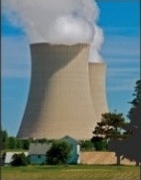
A nuclear power plant in Byron, Illinois. Taken by photographer Joseph Pobereskin (http://pobereskin.com).