Japan Says It Needs Nuclear Power. Can Host Towns Ever Trust It Again? via the New York Times

By Motoko rich and Hikari Hida

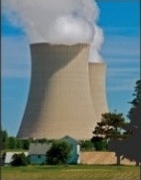
KASHIWAZAKI, Japan — Growing up, Mika Kasahara saw the nuclear power plant that hugs the coast of her hometown simply as the place where her father worked, a familiar fortress of cooling tanks and steel lightning towers overlooking the Sea of Japan.

“We thought that as long as nothing bad happened, it’s fine,” Ms. Kasahara, 45, said.

After the disaster 11 years ago at a nuclear power station in Fukushima, where an earthquake and tsunami led to a triple meltdown, Japan took most of its nuclear plants offline. Now, Ms. Kasahara, spooked by security breaches and damaged infrastructure at the power station near her home, wants it shuttered for good.

Ms. Kasahara symbolizes the long road Japan faces as Prime Minister Fumio Kishida, confronting threats to fuel supplies posed by the Ukraine war and vowing urgent action to reduce carbon emissions, intensifies efforts to reboot the country’s nuclear power network.

For the first time since the Fukushima catastrophe, a small majority of the Japanese public has expressed support for bringing the plants back online, indicating a growing awareness that the world’s third-largest economy may struggle to keep the lights on as it confronts its own limited resources during a time of geopolitical upheaval.

When Ms. Kasahara’s father died of esophagus and lung cancer three years ago, she wondered if his two decades inside the plant had been a factor. A traffic jam during an evacuation drill left her fearing that she and her family would be trapped by a nuclear accident.

“I was honestly very afraid,” she said.

Business leaders and workers whose livelihoods depend on the plant warn that if it does not come back online, the area will deteriorate, like many rural Japanese communities that are experiencing steep population decline. Currently about 5,500 people are working to maintain the idled plant, although employment would be likely to grow if it reopened.

Many local residents work in the plant or know friends and family who do. “I think that there are more people who understand the necessity of the plant,” said Masaaki Komuro, chief executive of Niigata Kankyo Service, a maintenance contractor at the facility.

Public polling presents a muddier picture. According to a 2020 survey by the city of Kashiwazaki, close to 20 percent of residents want to decommission the plant immediately. About 40 percent would accept the temporary operation of some reactors, but ultimately want the plant shut down. Just over half of prefectural residents oppose a nuclear restart, according to a 2021 survey by Niigata Nippo, a local newspaper.

The public wariness will be tested in an election for governor this month in Niigata Prefecture. The current governor, Hideyo Hanazumi, 63, is backed by the governing Liberal Democrats but has remained vague about his restart intentions. His challenger, Naomi Katagiri, a 72-year-old architect, promises to block the resumption of operations in Kashiwazaki and Kariwa.

The stakes are high because an unwritten government policy requires local political leaders to ratify nuclear reboots. Kariwa’s mayor, Hiroo Shinada, 65, is a vociferous proponent, while the mayor of Kashiwazaki, Masahiro Sakurai, 60, is investing in wind power but would support the temporary operation of some reactors.

Out of 60 reactors in Japan, 24 have been decommissioned and five are currently operating. Another five have been approved to restart but are suspended for routine checkups, and three are under construction. The rest have not been approved to restart.

Nuclear power now contributes less than 4 percent of the nation’s electricity, down from nearly a third before the Fukushima disaster. Japan currently draws more than three-quarters of its electricity from fossil fuels, and about 18 percent from renewable sources.

Since 2014, the Liberal Democrats have said nuclear plants should generate more than 20 percent of Japan’s electricity by 2030. The war in Ukraine and the threat of a blackout in Tokyo after a strong earthquake this spring have made the public more receptive to this message.

In a March poll by the Nikkei business newspaper, 53 percent supported a restart of the plants. As recently as four years ago, more than 60 percent of the Japanese public opposed rebooting nuclear power.

[…]

In Kashiwazaki and Kariwa, the national regulator has suspended approvals, citing concerns about the safety culture at the Tokyo Electric Power Company, the plant’s operator.

Last year, Tokyo Electric revealed that a plant worker had used a colleague’s security card and bypassed biometric systems in 2020, gaining entrance to a control room. The company admitted flawed welding work and a failure to install fire prevention machinery in a reactor. It reported that an earthquake in 2007 had damaged two concrete pegs in a building foundation, and the regulator found a risk of liquefaction in the ground beneath a sea wall protecting reactors.

Officials at Tokyo Electric say they are addressing the issues. The company has spent about $9 billion reinforcing the Kashiwazaki-Kariwa plant.

The setbacks have raised doubts among residents about the competence of the company, which also operated the Fukushima plant where the meltdowns occurred 11 years ago.

“I only feel distrust,” Miyuki Igarashi, 33, said as she loaded her 6-month-old daughter into an S.U.V. at a strip mall in Kashiwazaki. “I think they are hiding things.”

Some local residents say the problems have been overblown by antinuclear activists.

[…]

Read more.

Posted in *English | Tagged , , , , | Comments Off on Japan Says It Needs Nuclear Power. Can Host Towns Ever Trust It Again? via the New York Times

Three myths about renewable energy and the grid, debunked via Beyond Nuclear International

By Amory B. Lovins and M.V. Ramana

This story was originally published in Yale Environment 360.

[…]

Myth No. 1: A grid that increasingly relies on renewable energy is an unreliable grid.

Going by the cliché, “In God we trust; all others bring data,” it’s worth looking at the statistics on grid reliability in countries with high levels of renewables. The indicator most often used to describe grid reliability is the average power outage duration experienced by each customer in a year, a metric known by the tongue-tying name of “System Average Interruption Duration Index” (SAIDI). Based on this metric, Germany — where renewables supply nearly half of the country’s electricity — boasts a grid that is one of the most reliable in Europe and the world. In 2020, SAIDI was just 0.25 hours in Germany. Only Liechtenstein (0.08 hours), and Finland and Switzerland (0.2 hours), did better in Europe, where 2020 electricity generation was 38 percent renewable (ahead of the world’s 29 percent). Countries like France (0.35 hours) and Sweden (0.61 hours) — both far more reliant on nuclear power — did worse, for various reasons.

The United States, where renewable energy and nuclear power each provide roughly 20 percent of electricity, had five times Germany’s outage rate — 1.28 hours in 2020. Since 2006, Germany’s renewable share of electricity generation has nearly quadrupled, while its power outage rate was nearly halved. Similarly, the Texas grid became more stable as its wind capacity sextupled from 2007 to 2020. Today, Texas generates more wind power — about a fifth of its total electricity — than any other state in the U.S.

Myth No. 2: Countries like Germany must continue to rely on fossil fuels to stabilize the grid and back up variable wind and solar power.

Again, the official data say otherwise. Between 2010 — the year before the Fukushima nuclear accident in Japan — and 2020, Germany’s generation from fossil fuels declined by 130.9 terawatt-hours and nuclear generation by 76.3 terawatt hours. These were more than offset by increased generation from renewables (149.5 terawatt hours) and energy savings that decreased consumption by 38 terawatt hours in 2019, before the pandemic cut economic activity, too. By 2020, Germany’s greenhouse gas emissions had declined by 42.3 percent below its 1990 levels, beating the target of 40 percent set in 2007. Emissions of carbon dioxide from just the power sector declined from 315 million tons in 2010 to 185 million tons in 2020.

So as the percentage of electricity generated by renewables in Germany steadily grew, its grid reliability improved, and its coal burning and greenhouse gas emissions substantially decreased.

In Japan, following the multiple reactor meltdowns at Fukushima, more than 40 nuclear reactors closed permanently or indefinitely without materially raising fossil-fueled generation or greenhouse gas emissions; electricity savings and renewable energy offset virtually the whole loss, despite policies that suppressed renewables. 

Myth No. 3: Because solar and wind energy can be generated only when the sun is shining or the wind is blowing, they cannot be the basis of a grid that has to provide electricity 24/7, year-round.

While variable output is a challenge, it is neither new nor especially hard to manage. No kind of power plant runs 24/7, 365 days a year, and operating a grid always involves managing variability of demand at all times. Even with no solar and wind power (which tend to work dependably at different times and seasons, making shortfalls less likely), all electricity supply varies.

Seasonal variations in water availability and, increasingly, drought reduce electricity output from hydroelectric dams. Nuclear plants must be shut down for refueling or maintenance, and big fossil and nuclear plants are typically out of action roughly 7 percent to 12 percent of the time, some much more. A coal plant’s fuel supply might be interrupted by the derailment of a train or failure of a bridge. A nuclear plant or fleet might unexpectedly have to be shut down for safety reasons, as was Japan’s biggest plant from 2007 to 2009. Every French nuclear plant was, on average, shut down for 96.2 days in 2019 due to “planned” or “forced unavailability.” That rose to 115.5 days in 2020, when French nuclear plants generated less than 65 percent of the electricity they theoretically could have produced. Comparing expected with actual performance, one might even say that nuclear power was France’s most intermittent 2020 source of electricity.

[…]

The bottom line is simple. Electrical grids can deal with much larger fractions of renewable energy at zero or modest cost, and this has been known for quite a while. Some European countries with little or no hydropower already get about half to three-fourths of their electricity from renewables with grid reliability better than in the U.S. It is time to get past the myths.

Read more.

Posted in *English | Tagged , , , | Comments Off on Three myths about renewable energy and the grid, debunked via Beyond Nuclear International

US nuclear power: Status, prospects, and climate implications via The Electricity Journal

By Amory V. Lovins

Abstract

Nuclear power is being intensively promoted and increasingly subsidized in both old and potential new forms. Yet it is simultaneously suffering a global slow-motion commercial collapse due to intrinsically poor economics. This summary in a US context documents both trends, emphasizing the absence of an operational need and of a business or climate case.

[…]

Thus the basic assumption that nuclear power, of any kind and size, is an effective substitute for fossil-fueled generation is simply wrong. Only if today’s three nominally carbon-free196 power choices—nuclear, renewables, and efficiency—were all equivalent in cost and speed could they be equally climate-effective, hence selectable based on other attributes like reliability, resilience, stability, and safety. Since they’re actually manyfold different in cost and speed, hence in climate-effectiveness, that difference would seem decisive in a climate emergency.

Let us not repeat past mistakes. Coal plants were built by counting cost but not carbon. Nuclear plants are promoted by counting carbon but not cost. Effective climate solutions must count carbon and cost and speed. If you haven’t heard this logic before, perhaps it’s because the nuclear industry is desperately keen not to discuss economics, still less comparative economics, and least of all climate-effectiveness. They want you to think that operating without emitting CO2 is good enough, and that relative cost and speed don’t matter because we need every option. A handwaving argument197 claims this, but shrivels in the face of data, field experience, and literature198.

Climate will be stabilized by judicious choices, not mushy mantras or nostalgic nostrums. As US nuclear critic Dave Kraft puts it, “We’re in a climate crisis, not a Chinese buffet.” Our goal must be not to choose one dish from each category, but to select the menu items that will save the most carbon with the limited time and money we have, satisfying our hunger and fitting our wallet. It’s really that simple. “All of the above” remains a popular bipartisan substitute for thoughtful analysis in US energy policy, which in the US, UK and EU are trying to reclassify nuclear power as “clean” to qualify it for new mandates and subsidies while diluting competitors’ brand and financing. But Peter Bradford cogently completed the political mantra “We’re not picking and backing winners” by agreeing, then adding: “They don’t need it. We’re picking and backing losers.”

Like a proud, stubborn, and illusion-ridden elder mortally stricken with cancer, nuclear power is slowly dying of an uncurable attack of painful market forces, yet is unwilling to accept reality and enter hospice. From powering postwar growth to displacing oil to displacing coal to saving the climate to serving the world’s poor, nuclear power has run through and now run out of reasons to live. Despite outward cheer and booming voice, its pallor and withering can be seen through the makeup. How much more money, talent, attention, political capital, and precious time will its intensive care continue to rob from the life of its vibrant successors? Will its terminal phase be orderly or chaotic, graceful or bitter, emerging by default or by design? That is our choice.

Read article.

Posted in *English | Tagged , | Comments Off on US nuclear power: Status, prospects, and climate implications via The Electricity Journal

「原発が狙われる」と独り訴えた福井県原子力委員が辞めた理由 via 毎日新聞

 ロシアによるウクライナ侵攻でザポロジエ原発が攻撃され、戦時に原発が標的とされる危険性が明白となる中、日本国内最多の15基(廃炉含む)の原発が立地する福井県で、ある変化が起きた。県の諮問機関として原発の安全性を評価する県原子力安全専門委員会で10年以上、安全性に疑念を投げかけてきた田島俊彦・福井県立大名誉教授(76)が3月31日、自ら退任したのだ。田島さんに思いを聞くと、「実は……」。静かに語り始めた。

ロシア軍による原発攻撃のニュースが飛び込んできた3月上旬、記者のもとに田島さんから一通のメールが届いた。ザポロジエ原発の状況を踏まえた「日本でも、直ちに最低でも今運転中の原子炉の運転を停止すべきだ」との訴えとともに、「私はこの3月で委員をやめる予定です」と書かれていた。

 田島さんが委員を務めていた県原子力安全専門委は、関西電力美浜原発3号機(同県美浜町)の蒸気噴出事故が起きた2004年に発足。21年度時点で、鞍谷文保委員長(福井大教授)ら11人の委員と外部委員で構成する。11年3月の東京電力福島第1原発事故後に原発の安全性への懸念が高まる中、歴代の福井県知事は、委員会がまとめる「報告書」を原発の安全性の根拠とし、再稼働の実質的なゴーサインである「地元同意」を判断してきた。つまり、委員会は「原発銀座」の安全を巡る「最後の砦(とりで)」だ。

 その中で、独り原発の安全対策の不備を指摘し続けてきた田島さんが委員をやめる――。今後の委員会の議論が安易に「推進」に流れるのではないかと懸念した。すぐに電話で田島さんに「これまでの委員会での議論への思いなどについて話していただけませんか」とインタビュー取材を申し込んだ。

 数日後、富山市の自宅を訪れた。田島さんは硬い表情で、静かに語り始めた。委員に就任したのは08年。もともと素粒子物理学の研究者で原子力は専門外。就任前は学生に「原発は安全だ」と教えたこともあった。だが、福島原発事故が考えを大きく変えた。「事故後は、どんなに小さくても危険性が考えられる限り運転してはいけないと思うようになった」と明かす。

「軍事標的になる」と主張したが……

 だからこそ、ロシア軍のウクライナ侵攻での原発攻撃を受けて、原発の安全対策の不備への危機感を強める。福井県内の原発は日本海側に建ち並んでおり、断続的な北朝鮮のミサイル発射と結びつけて危険性が指摘されてきた。

[…]

もっと読む(有料記事)

Posted in *English | Tagged , , | Comments Off on 「原発が狙われる」と独り訴えた福井県原子力委員が辞めた理由 via 毎日新聞

Why the Debate Over Russian Uranium Worries U.S. Tribal Nations via New York Times

By Simon Romero

KAIBAB NATIONAL FOREST, Ariz. — After Russia invaded Ukraine in February, the United States slapped bans on Russian energy sources from oil to coal. But one critical Russian energy import was left alone: uranium, which the United States relies on to fuel more than 90 nuclear reactors around the country.

That dependence on Russia is breathing life into ambitions to resurrect the uranium industry around the American West — and also evoking fears of the industry’s toxic legacy of pollution. With some of the most coveted uranium lodes found around Indigenous lands, the moves are setting up clashes between mining companies and energy security hawks on one side and tribal nations and environmentalists on the other.

Arizona’s Pinyon Plain Mine, situated less than 10 miles from the Grand Canyon’s southern rim, is emerging as ground zero for such conflicts.

The Havasupai Tribe, whose people have lived in the canyonlands and plateaus of the Grand Canyon since time immemorial, call the area of the mining site Mat Taav Tiijundva — “Sacred Meeting Place” in a rough translation.

The Grand Canyon went through a uranium mining boom in the 1950s that ebbed by the 1980s, when Pinyon Plain was built. Near Havasupai burial sites, and targeted by legal battles nearly since its inception, the mine has never been fully operational. But the mine produces water heavy in arsenic and uranium as a result of drilling several years ago that punctured an aquifer, provoking fears that the site could contaminate Havasupai water supplies.

“It’s easy to use this war as an excuse to advance this project,” Stuart Chavez, a member of the Havasupai Tribal Council, said about the Pinyon Plain Mine, which is one of several permitted uranium sites in states including Arizona, Utah and Wyoming that could quickly increase activity if sanctions are levied on Russian uranium. He contends that the United States could turn to Canada or other friendly nations to make up for Russian uranium if the imports end.

[…]

The United States still relies on Russia and two former Soviet republics, Kazakhstan and Uzbekistan, for nearly half the uranium needed to fuel American nuclear reactors.

[…]

Leaders in the American uranium industry, which has largely been in a slump since the 1990s, are seizing the moment even as resistance to their plans emerges in various parts of the West.

Talking about Indigenous leaders and environmental groups opposing the mining resurgence, Mr. Chalmers, the mining executive, said, “A lot of them would rather get uranium from Russia than mine our own.”

The Russian uranium imports originated in the Cold War’s aftermath. Aiming to curb the risk of nuclear war, the United States struck a deal in 1992 to buy enriched uranium that had been used in thousands of scrapped Russian nuclear warheads.

Called Megatons to Megawatts, the nonproliferation program lasted until 2013. Still, even when Russia annexed the Crimean Peninsula in 2014 and went on to invade Ukraine this year, the United States kept importing large quantities of Russian uranium.

As the Russian uranium sales took hold, the American uranium industry idled mines around the West, a result of the collapse of prices after the end of the Cold War arms race and of a slowdown in construction of new nuclear plants.Now the industry is finding powerful support in Washington. Senator John Barrasso of Wyoming, a Republican, introduced a bill in March to ban Russian uranium imports partly as a way to revive American mines. Legislators in the House of Representatives, including Henry Cuellar of Texas, a Democrat, introduced their own bipartisan bill in March calling for a ban.

[…]

“The possibility that this mine could go forward is unthinkable under an administration that has made promises to prioritize environmental justice,” said Amber Reimondo, energy director at the nonprofit Grand Canyon Trust.

As nuclear power companies seek ways to expand mining and jump-start the enrichment supply chain in the United States, opponents of Pinyon Plain warn it could produce an outcome similar to the hundreds of abandoned uranium mines still emitting dangerous radiation levels on Indigenous lands.

“This specific site is sacred for us, dotted with burial places and remains of homes and sweat lodges,” said Carletta Tilousi, a former Havasupai Tribal Council member who has been fighting the mine for decades.

Like other uranium projects around the country, activity at the mine was suspended in the 1990s when uranium prices crashed. But the mine’s owners managed to advance the project, even after the Obama administration announced a 20-year ban in 2012 on new uranium mining around the Grand Canyon.

Owners of the mine, which was grandfathered in before the moratorium, have prevailed in one legal challenge after another. In February, a federal appeals court sided with the U.S. Forest Service in a ruling against the Havasupai and three environmental groups seeking to prevent the mine from operating.

Mr. Chalmers, of Energy Fuels, called the ruling a victory for energy security, contending that the mine had enough uranium to provide the entire state of Arizona with electricity for one year.

“It’s the highest-grade uranium mine in the United States,” said Mr. Chalmers, who has extensive experience in Australia and former Soviet republics.

Eying uranium prices, which have shot up more than 30 percent since the war flared up, he also said that Energy Fuels was close to negotiating contracts to supply uranium to nuclear power plant operators in the United States. At the same time, he argued that the mine would not be harmful to the Havasupai.

David Kreamer, a professor of hydrology and an authority on groundwater contaminants at the University of Nevada, Las Vegas, disputed that assertion.

“I’m all for mining if it’s done responsibly with proper safeguards,” Dr. Kreamer said. But he called Pinyon Plain a potential “time bomb” that could have detrimental effects in a decade or so.

Dr. Kreamer said he was especially concerned about drilling activity at the mine that pierced an aquifer several years ago, releasing millions of gallons of water high in both uranium and arsenic.

To prevent the water from contaminating nearby areas, Energy Fuels is collecting it in a pool at the mine, where some of it evaporates. The company has also trucked the water nearly 250 miles to White Mesa, Utah, where the company owns the country’s only fully licensed and operating conventional uranium mill. The Ute Mountain Ute Tribe, whose members live near the White Mesa site, called last year for the mill to close.

In correspondence this year with Arizona regulators, Scott Bakken, vice president for regulatory affairs at Energy Fuels, said the company was also measuring the daily volume and conducting periodic sampling of the water pumped to the surface. Mr. Bakken added that Energy Fuels would increase the frequency of pumping to mitigate any risk to groundwater if water quality standards were not met.

The Arizona Department of Environmental Quality on Thursday gave the company the green light to continue, moving to grant an aquifer protection permit to Energy Fuels. The ruling, which is the latest stamp of regulatory guidance for the project, allows the company to use engineering controls to “reduce discharge of pollutants to the greatest degree achievable,” the agency said.

But members of the Havasupai Tribe, as well as hydrologists such as Dr. Kreamer, are also expressing concern that the uranium-heavy water released by the aquifer, despite the company’s efforts to collect it, could jeopardize the supply of water to nearby Supai Village, home to Havasupai families, and springs within the Grand Canyon itself.

[…]

Read more.
Posted in *English | Tagged , , | Comments Off on Why the Debate Over Russian Uranium Worries U.S. Tribal Nations via New York Times

オンライン講演 「福島・甲状腺がんを発症した若者たちの訴え via チェルノブイリ子ども基金

福島第一原発事故による放射線被ばくが原因で甲状腺がんを発症したとして、事故当時福島県内に住んでいた17~27歳の男女6人が、1月27日、東京電力に対し損害賠償を求める訴訟を東京地裁に起こしました。この裁判の弁護団長、井戸謙一氏による講演会を開催します。原発事故が原因で健康被害を受けた責任を住民が問う日本初の裁判。2022年5月26日(木)の第1回口頭弁論期日も決まり、いよいよ本格的に裁判がはじまります。甲状腺がんで苦しむ若者たちの訴えを多くの方々に知っていただき、裁判の支援につなげたいと考えます。 また、長年、ウクライナ・ベラルーシの甲状腺がんの子どもと若者を支援している「チェルノブイリ子ども基金」と、福島の子どもたちの保養や健康支援を続ける「未来の福島こども基金」の活動を報告します。

▼井戸弁護士の講演資料ダウンロード https://www.palsystem-tokyo.coop/deta

<本編プログラム> 00:00:13 開会あいさつ 00:05:20 チェルノブイリ子ども基金報告 00:21:10 未来の福島こども基金報告 00:30:48 基調講演 井戸弁護士 01:35:20 原告のメッセージ(音声のみ) 01:40:40 質疑・応答 司会-井戸弁護士 02:00:40 閉会あいさつ・告知 終了 <登壇者紹介> 311子ども甲状腺がん裁判弁護団長 井戸謙一氏(弁護士) チェルノブイリ子ども基金共同代表 小寺隆幸氏 チェルノブイリ子ども基金共同代表・事務局長 佐々木真理氏 未来の福島こども基金代表 チェルノブイリ子ども基金顧問 黒部信一氏(小児科医) 未来の福島こども基金世話人 チェルノブイリ子ども基金理事 向井雪子氏

<団体ホームページ・ブログ> チェルノブイリ子ども基金:http://ccfj.la.coocan.jp/ 未来の福島こども基金:https://fukushimachildrensfund.org/ 311甲状腺がん子ども支援ネットワーク:https://www.311support.net/ ———————————————————————————————————

主催:チェルノブイリ子ども基金・福島未来のこども基金 後援:生活協同組合パルシステム東京

◆BGM https://dova-s.jp/ 曲名     

アーティスト Maystorm    yuhei komatsu

Painfulness

Starless

#甲状腺がん #福島 #原発 #東京電力 #井戸謙一 #裁判 #復興支援 #チェルノブイリ #パルシステム #311 #放射能

Posted in *English | Tagged , , , , , , | Comments Off on オンライン講演 「福島・甲状腺がんを発症した若者たちの訴え via チェルノブイリ子ども基金

チェルノブイリ、激しく鳴り続けた線量計 記者が見たロシア軍の痕跡 via 朝日新聞

金成隆一、竹花徹朗

ロシア軍が約1カ月占拠した旧ソ連チェルノブイリ原発周辺に26日、記者が入った。道中にはロシア兵が食べた弁当の空き箱が散乱し、橋は破壊されるなど、戦闘と占拠の痕跡が今も残っていた。

 ロシア軍は侵攻した2月24日、ベラルーシから南下し、ウクライナの首都キーウ(キエフ)への進軍ルートにある同原発を制圧。国際原子力機関(IAEA)がロシア軍が離れたと発表したのは3月31日だった。

 1986年4月の爆発事故からちょうど36年たった今月26日。記者はウクライナ内務省主催の現地視察に、地元や欧米の記者ら約80人とともに参加した。ウクライナ政府による記事の検閲などは受けていない。

続きは[有料サイト]チェルノブイリ、激しく鳴り続けた線量計 記者が見たロシア軍の痕跡

Posted in *日本語 | Tagged , , | Comments Off on チェルノブイリ、激しく鳴り続けた線量計 記者が見たロシア軍の痕跡 via 朝日新聞

Girl’s Cancer Leads Mom to ‘Overwhelming’ Discovery of More Than 50 Sick Kids Near Closed Nuclear Lab via People

By Johnny Dodd

“Pediatric cancer is rare — you’re not supposed to have neighbors whose children also have it,” says Melissa Bumstead, who “knew I had to do something”  

Melissa Bumstead made a terrifying discovery in 2014 as her four-year-old daughter Grace lay in a hospital bed battling a rare form of leukemia. While keeping vigil at the Los Angeles medical center where Grace was receiving treatment, Bumstead began meeting the parents of more than 50 children with equally rare cancers and was horrified to learn that they all lived near one another.

“I just kept meeting people who lived down the corner or around the block or behind the high school,” she tells PEOPLE during an interview in this week’s issue. “And that’s when the panic started to set in.”

Even more alarming, Bumstead soon learned that all their homes were located in a circle around a 2,850-acre former top-secret rocket engine and nuclear energy test site—built in 1947—that had long been contaminated with radioactive waste and toxic chemicals.

[…]

While caring for her daughter, whose acute lymphoblastic leukemia has been in remission since a bone marrow transplant five years ago, Bumstead and her group — Parents Against the Santa Susana Field Lab — has pressured California state officials to enforce a 2007 cleanup agreement, scheduled to have been completed in 2017, that they say has remained stalled. That agreement, among other things, called for the removal of contaminated topsoil that residents allege gets blown from the site into surrounding communities by high winds or washed offsite during rains.

Since 2015 Bumstead has immersed herself in scientific studies on the site, testifying at countless public meetings, launching a Facebook page (now with nearly 5,000 members) and creating a change.org petition on the issue (that has attracted over 750,000 signatures).

“It was frightening,” says Bumstead, who is featured in the 2021 documentary In The Dark of the Valley, “to read studies about how adults who lived within two miles from the lab had a 60 percent higher cancer rate than those living more than five miles away or that over 1,500 former workers at the site received federal compensation after being diagnosed with cancer.”

Even more frightening for Bumstead was learning that the lab was the location of one of the nation’s largest — and least known — nuclear accidents that occurred 1959 when one of the facility’s ten sodium nuclear reactors experienced a partial meltdown, releasing enormous amounts of radiation into the surrounding environment.           

Read more at Girl’s Cancer Leads Mom to ‘Overwhelming’ Discovery of More Than 50 Sick Kids Near Closed Nuclear Lab

Posted in *English | Tagged , , , | Comments Off on Girl’s Cancer Leads Mom to ‘Overwhelming’ Discovery of More Than 50 Sick Kids Near Closed Nuclear Lab via People

小さな字がびっしり、これで読める?意見と回答で全く同じ文章も 東電が「処理水」意見への回答公表 via 東京新聞

東京電力は28日、福島第一原発(福島県大熊町、双葉町)の汚染水を浄化処理後の水の海洋放出計画に対する意見公募の結果を、同社ウェブサイトの「処理水ポータルサイト」に公開した。印刷するとA4判で10枚に、小さな字でびっしりと寄せられた意見と回答を記載。目を凝らさないと読むのに苦労する形式で、放出に理解を得るのに消極的な姿勢を象徴している。

東電の広報担当者は取材に「見づらい面はあるので、見やすくなるよう修正する方向で考えている」と回答した。 東電は昨年11月、浄化処理では取り除けない放射性物質トリチウムを主に含む処理水を海洋放出することの環境や人への影響予測をまとめた。「影響は極めて軽微」とした内容について、インターネットで1カ月間、国内外から意見を募った結果、414件が集まり、今回136項目に分けて回答した。 放出反対を訴えるものや、処理水のタンク保管継続など放出以外の選択肢を検討すべきだとする意見が多くあったが、東電は「政府方針に示された海洋放出を着実に実施する必要がある」などと回答している。 また意見と回答が全く同じ文章の部分があり、社内で十分にチェックされた形跡がなかった。東電は本紙の指摘を受け、28日夜に修正した。(小川慎一、小野沢健太)

[…]

全文

Posted in *English | Tagged , | Comments Off on 小さな字がびっしり、これで読める?意見と回答で全く同じ文章も 東電が「処理水」意見への回答公表 via 東京新聞

Nuclear Power Could Help Europe Cut Its Russia Ties, but Not for Years via New York Times

April 26, 2022, 5:00 a.m. ETApril 26, 2022April 26, 2022

Liz Alderman and Stanley Reed

PARIS — On the windswept coast of Flamanville, an industrial city in northwest France facing the choppy waters of the English Channel, a soaring concrete dome houses one of the world’s most powerful nuclear reactors.

But when this hulking giant will begin supplying power to France’s electrical grid is anyone’s guess.

Construction is a full decade behind schedule and 12 billion euros, or $13 billion, over budget. Plans to start operations this year have been pushed back yet again, to 2024. And the problems at Flamanville are not unique. Finland’s newest nuclear power plant, which started operating last month, was supposed to be completed in 2009.

[…]

“Putin’s invasion redefined our energy security considerations in Europe,” said Fatih Birol, head of the International Energy Agency. He added, “I would expect that nuclear may well make a step back in Europe and elsewhere as a result of the energy insecurity.”

But turning a nuclear revival into a reality is fraught with problems.

The dash to find ready alternatives to Russian fuel has magnified a political divide in Europe over nuclear power, as a bloc of pronuclear countries led by France, Europe’s biggest atomic producer, pushes for a buildup while Germany and other like-minded countries oppose it, citing the dangers of radioactive waste. A recent European Commission plan for reducing dependence on Russia pointedly left nuclear power off a list of energy sources to be considered.

[…]

quarter of all electricity in the European Union comes from nuclear power produced in a dozen countries from an aging fleet that was mostly built in the 1980s. France, with 56 reactors, produces more than half the total.

[…]

Two of Germany’s largest energy companies said they were open to postponing the shutdown to help ease the nation’s reliance on Russia. But the Green party, part of Berlin’s governing coalition, ruled out continuing to operate them — let alone reopening three nuclear stations that closed in December.

“We decided for reasons that I think are very good and right that we want to phase them out,” Chancellor Olaf Scholz told Parliament this month, adding that the idea of delaying Germany’s exit from nuclear power was “not a good plan.”

[…]

Read more.

Posted in *English | Tagged , , , | Comments Off on Nuclear Power Could Help Europe Cut Its Russia Ties, but Not for Years via New York Times