A Ukrainian nuclear plant survived Russian attack. But it raises security concerns over reactors in war zones, analyst says. via The World

March 4, 2022 · 3:45 PM EST

Atomic safety experts said a war fought amid nuclear reactors represents an unprecedented and highly dangerous situation.

To get a better understanding of the risks at nuclear power plants in war zones, The World’s host Carol Hills spoke to Henry Sokolski, executive director of the Nonproliferation Policy Education Center.

Carol Hills: We know there was a fire at the plant. What are the risks?Henry Sokolski: The risks would be, instead of shooting at an auxiliary building, some young buck might aim the artillery or the missile out of a spent-fuel pond [pool] storage building, or the containment building for the reactor core, or the electrical lines coming in that supply the electricity to keep both of those facilities cool so that they don’t melt down or produce spent-fuel fires. If any of that might have occurred, the hyperbole of many Chernobyl’s isn’t really far from the mark.

Ukraine has said the power plant is now occupied by the Russian military, and we know that employees are still operating the plant. But how do we know the situation is under control?Well, I mean, the IAEA [International Atomic Energy Agency] wants to get there. I don’t know that that’s a complete thought. You want to probably have some way to know without having physical visits that things are operating properly, particularly at facilities that might be subject to war operations. And we just don’t have that. I mean, we have to go on the reports of the people operating that are in control of it. And I don’t know that this is a big issue, because only one of the six plants is operating now. The others were all shut down for fear that the containment buildings would have been penetrated and that the big radiological release that I talked about might occur. What you do is you shut the thing down so that the pressures and heat aren’t as great. And so, the emissions from penetration wouldn’t be quite as dramatic. But you know, that means that most of these facilities are not operating right now.

What are these plants built to withstand?Not as much as being advertised. What they’re built primarily to withstand is pressures from the inside of the plant getting out. And so, some of the containment systems are as low as 15 or 20 pounds per square inch. They were not meant to prevent ballistic objects from penetrating from outside. The spent-fuel pond [pool] building is incredibly soft in comparison to the containment building.

But are they routinely built to, say, withstand an earthquake?They are supposed to be sited to not have to experience the earthquakes. In Japan, they have not done well in earthquakes. I don’t know whether the seismic issue is a big one in Ukraine. But I think we have oversold to ourselves how resistant these plants are to the kinds of military operation threats that are going on here in Ukraine and that could occur in the Middle East. We did a big study on what would happen if missiles hit various portions of reactors in the Middle East, and the radiological models and patterns were very disturbing. We didn’t have the presence of mind to do it for Ukraine, but obviously, this should be a wake-up call. I don’t know that these kinds of studies have been properly done within our own government. I say that as somebody who worked at the Defense Department, at a pretty senior level.

[…]

Read more.

Posted in *English | Tagged , , , | Comments Off on A Ukrainian nuclear plant survived Russian attack. But it raises security concerns over reactors in war zones, analyst says. via The World

Japan’s top court orders damages for Fukushima victims in landmark decision -NHK via Reuters

TOKYO, March 4 (Reuters) – Japan’s Supreme Court upheld an order for utility Tokyo Electric Power (Tepco) (9501.T) to pay damages of 1.4 billion yen ($12 million) to about 3,700 people whose lives were devastated by the Fukushima nuclear disaster, the first decision of its kind.

Public broadcaster NHK said the average payout of about 380,000 yen ($3,290) for each plaintiff covered three class-action lawsuits, among more than 30 against the utility, which are the first to be finalised.

[…]

Friday’s decision came as the court rejected an appeal by Tepco and ruled it negligent in taking preventive measures against a tsunami of that size, the broadcaster said.

The court withheld a verdict on the role of the government, which is also a defendant in the lawsuits, and will hold a hearing next month to rule on its culpability, NHK added.

Lower courts have split over the extent of the government’s responsibility in foreseeing the disaster and ordering steps by Tepco to prevent it.

Read more.

Posted in *English | Tagged , , | Comments Off on Japan’s top court orders damages for Fukushima victims in landmark decision -NHK via Reuters

Military action in radioactive Chernobyl could be dangerous for people and the environment via The Conversation

By Timothy A. Mousseau

[…]

On April 26, 1986, Chernobyl’s reactor number four melted down as a result of human error, releasing vast quantities of radioactive particles and gases into the surrounding landscape – 400 times more radioactivity to the environment than the atomic bomb dropped on Hiroshima. Put in place to contain the radioactive contaminants, the exclusion zone also protects the region from human disturbance.

[…]

I’ve spent more than 20 years working in Ukraine, as well as in Belarus and Fukushima, Japan, largely focused on the effects of radiation. I have been asked many times over the past days why Russian forces entered northern Ukraine via this atomic wasteland, and what the environmental consequences of military activity in the zone might be.

Why invade via Chernobyl?

In hindsight, the strategic benefits of basing military operations in the Chernobyl exclusion zone seem obvious. It is a large, unpopulated area connected by a paved highway straight to the Ukrainian capital, with few obstacles or human developments along the way. The Chernobyl zone abuts Belarus and is thus immune from attack from Ukrainian forces from the north. The reactor site’s industrial area is, in effect, a large parking lot suitable for staging an invading army’s thousands of vehicles.

The power plant site also houses the main electrical grid switching network for the entire region. It’s possible to turn the lights off in Kyiv from here, even though the power plant itself has not generated any electricity since 2000, when the last of Chernobyl’s four reactors was shut down. Such control over the power supply likely has strategic importance, although Kyiv’s electrical needs could probably also be supplied via other nodes on the Ukrainian national power grid.

The reactor site likely offers considerable protection from aerial attack, given the improbability that Ukrainian or other forces would risk combat on a site containing more than 5.3 million pounds (2.4 million kilograms) of radioactive spent nuclear fuel. This is the highly radioactive material produced by a nuclear reactor during normal operations. A direct hit on the power plant’s spent fuel pools or dry cask storage facilities could release substantially more radioactive material into the environment than the original meltdown and explosions in 1986 and thus cause an environmental disaster of global proportions.

Environmental risks on the ground in Chernobyl

The Chernobyl exclusion zone is among the most radioactively contaminated regions on the planet. Thousands of acres surrounding the reactor site have ambient radiation dose rates exceeding typical background levels by thousands of times. In parts of the so-called Red Forest near the power plant it’s possible to receive a dangerous radiation dose in just a few days of exposure.

Radiation monitoring stations across the Chernobyl zone recorded the first obvious environmental impact of the invasion. Sensors put in place by the Ukrainian Chernobyl EcoCenter in case of accidents or forest fires showed dramatic jumps in radiation levels along major roads and next to the reactor facilities starting after 9 p.m on Feb. 24, 2022. That’s when Russian invaders reached the area from neighboring Belarus.

Because the rise in radiation levels was most obvious in the immediate vicinity of the reactor buildings, there was concern that the containment structures had been damaged, although Russian authorities have denied this possibility. The sensor network abruptly stopped reporting early on Feb. 25 and did not restart until March 1, 2022, so the full magnitude of disturbance to the region from the troop movements is unclear.

If, in fact, it was dust stirred up by vehicles and not damage to any containment facilities that caused the rise in radiation readings, and assuming the increase lasted for just a few hours, it’s not likely to be of long-term concern, as the dust will settle again once troops move through.

But the Russian soldiers, as well as the Ukrainian power plant workers who have been held hostage, undoubtedly inhaled some of the blowing dust. Researchers know the dirt in the Chernobyl exclusion zone can contain radionuclides including cesium-137, strontium-90, several isotopes of plutonium and uranium, and americium-241. Even at very low levels, they’re all toxic, carcinogenic or both if inhaled.

Possible impacts further afield

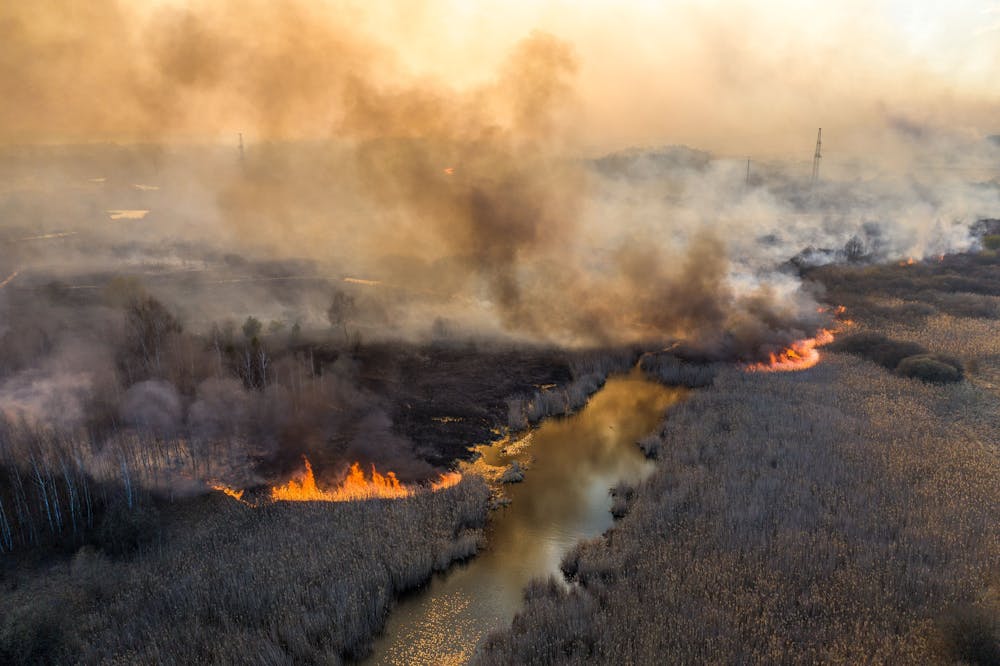
Perhaps the greater environmental threat to the region stems from the potential release to the atmosphere of radionuclides stored in soil and plants should a forest fire ignite.

Such fires have recently increased in frequency, size and intensity, likely because of climate change, and these fires have released radioactive materials back into the air and and dispersed them far and wideRadioactive fallout from forest fires may well represent the greatest threat from the Chernobyl site to human populations downwind of the region as well as the wildlife within the exclusion zone.

Currently the zone is home to massive amounts of dead trees and debris that could act as fuel for a fire. Even in the absence of combat, military activity – like thousands of troops transiting, eating, smoking and building campfires to stay warm – increases the risk of forest fires.

It’s hard to predict the effects of radioactive fallout on people, but the consequences to flora and fauna have been well documented. Chronic exposure to even relatively low levels of radionuclides has been linked to a wide variety of health consequences in wildlife, including genetic mutationstumorseye cataractssterility and neurological impairment, along with reductions in population sizes and biodiversity in areas of high contamination.

There is no “safe” level when it comes to ionizing radiation. The hazards to life are in direct proportion to the level of exposure. Should the ongoing conflict escalate and damage the radiation confinement facilities at Chernobyl, or at any of the 15 nuclear reactors at four other sites across Ukraine, the magnitude of harm to the environment would be catastrophic.

Read more.

Posted in *English | Tagged , , , , | Comments Off on Military action in radioactive Chernobyl could be dangerous for people and the environment via The Conversation

The vulnerability of nuclear plants during military conflict:Lessons from Fukushima Daiichi Focus on Zaporizhzhia, Ukraine via Greenpeace International

2 March 2022 Briefing -Greenpeace International by Jan Vande Putte (radiation protection advisor & nuclear campaigner for Greenpeace East Asia & Greenpeace Belgium) and Shaun Burnie (senior nuclear specialist, Greenpeace East Asia)

[…]

Nuclear power plants are some of the most complex and sensitive industrial installations, which require a very complex set of resources in ready state at all times to keep them operational. This cannot be guaranteed in a war. An operational nuclear power plant requires at all times electricity supply to power pumps and water supply to cool its nuclear fuel, both in the reactor and in the adjacent spent nuclear fuel pool. Even when the reactor is shut down, there is an enormous amount of residual heat in the fuel core which requires continuous cooling. Without cooling, the water in the reactor core (and spent fuel pool) begins to heat. In the case of an operational reactor the heating is rapid. The water reaches boiling point and begins to evaporate, and the hot nuclear reactor fuel assemblies are at risk of being exposed to air which then would lead to a thermal reaction of the nuclear fuel assembly cladding and reactor core fuel melt. In the case of nuclear fuel in the spent fuel pool, the highly exothermic chemical reaction is called a runaway zirconium oxidation reaction or autocatalytic ignition, with resultant release of a very large volume of radioactivity. In March 2011, the magnitude 9.0 earthquake and tsunami in Japan led to the loss of site power at the Fukushima Daiichi nuclear plant – the site was no longer connected to the grid. The tsunami that then struck the plant flooded it, including Emergency Diesel Generators (EDGs) and their fuel supply, all needed to power the cooling pumps. Even with some level of redundancy in case the EDGs would not be available such as batteries and turbine driven pumps , all three reactor cores that were in operation at the time of the earthquake and floodingSo, even without physical damage to the power plant, such as through an intentional or accidental hit by artillery or missiles, a nuclear power plant is very vulnerable to a disruption of the support systems. A nuclear power plant that is in operation requires active systems to remain functioning at all times. This includes many aspects, not only electricity but also cooling water and the continuous presence of qualified personnel to operate the plant. Even under normal functioning, hundreds of workers need to be able to reach the plant from their homes, which is evidently not feasible under war circumstances.

In a scenario where there would be a technical disruption, which could be for instance the electricity grid failing, or some of the diesel generators not starting up properly, you would need the ability to quickly mobilise vast amounts of equipment and additional personnel, such as fire brigades or crane operators. The example of Fukushima again demonstrated the need to be able to bring in heavy equipment such as massive cranes and specialised crane operators, fire brigades, heavy pumps etc . Every technical disruption, for whatever reason, could require a major logistical operation at a nation-wide level which could be severely compromised through the war activities around the power plant. In the context of an armed conflict, it cannot be excluded that a power plant would be isolated from the grid for a longer period of time, which would require emergency diesel generators to remain reliable and have sufficient fuel supply till the grid connection is re-established.

Nuclear power plants present unique hazards in terms of the potential consequences resulting from a severe accident, even without physical damage to the power plant, such as through an intentional or accidental hit by artillery or missiles, a nuclear power plant is very vulnerable to a disruption of the support systems. A nuclear power plant that is in operation requires active systems to remain functioning at all times. This includes many aspects, not only electricity but also cooling water and the continuous presence of qualified personnel to operate the plant. Even under normal functioning, hundreds of workers need to be able to reach the plant from their homes, which is evidently not feasible under war circumstances.

In a scenario where there would be a technical disruption, which could be for instance the electricity grid failing, or some of the diesel generators not starting up properly, you would need the ability to quickly mobilise vast amounts of equipment and additional personnel, such as fire brigades or crane operators. The example of Fukushima again demonstrated the need to be able to bring in heavy equipment such as massive cranes and specialised crane operators, fire brigades, heavy pumps etc . Every technical disruption, for whatever reason, could require a 5 major logistical operation at a nation-wide level which could be severely compromised through the war activities around the power plant. In the context of an armed conflict, it cannot be excluded that a power plant would be isolated from the grid for a longer period of time, which would require emergency diesel generators to remain reliable and have sufficient fuel supply till the grid connection is re-established.

Nuclear power plants present unique hazards in terms of the potential consequences resulting from a severe accident. Nuclear reactors and their associated high level spent fuel stores are vulnerable to natural disasters, as Fukushima Daiichi showed, but they are also vulnerable in times of conflict. This brief seeks to explain some of the hazards and potential consequences that exist today in Ukraine.evere accident. Nuclear reactors and their associated high level spent fuel stores are vulnerable to natural disasters, as Fukushima Daiichi showed, but they are also vulnerable in times of conflict. This brief seeks to explain some of the hazards and potential consequences that exist today in Ukraine.

Read more.

Posted in *English | Tagged , , | Comments Off on The vulnerability of nuclear plants during military conflict:Lessons from Fukushima Daiichi Focus on Zaporizhzhia, Ukraine via Greenpeace International

Nuclear Hotseat #558: SPECIAL: NUCLEAR UKRAINE IN A RUSSIAN WAR ZONE – Gundersen, Grossman, Kraft


LISTEN HERE:

Audio Player00:0000:00Use Up/Down Arrow keys to increase or decrease volume.

Podcast: Download

Nuclear Ukraine in a Russian War Zone – There are more ways to trigger a nuclear catastrophe i  Ukraine than mainstream media is currently reporting.  For this Nuclear Hotseat SPECIAL, we have three interviews with genuine experts.  Each knows the nuances of nuclear issues and covers the nightmare variants of possible Armageddon that we currently face.  They also provide some positive steps we can take at this dangerous moment towards ridding the planet of all nukes.

THIS WEEK’S FEATURED INTERVIEWS:

  • Arnie Gundersen is a nuclear engineer, a licensed nuclear reactor operator and expert witness, as well as the Chief Engineer for Fairewinds Associates
  • Karl Grossman is host of the television program Enviro Close-Up with Karl Grossmana professor at the State University of New York/College at Old Westbury, and author of six books – so far.  He has been covering nuclear issues for more than 50 years. 
  • Dave Kraft is Executive Director of Nuclear Energy Information Service (NEIS), base in Chicago, and a 40+ year veteran of anti-nuclear work.

Read more.

Posted in *English | Tagged , , | Comments Off on Nuclear Hotseat #558: SPECIAL: NUCLEAR UKRAINE IN A RUSSIAN WAR ZONE – Gundersen, Grossman, Kraft

福島第一原発の廃炉「終了時期を見通すことは不可能」原子力規制委 via YAHOO!ニュースJAPAN

[…]

原子力規制委員会・更田豊志委員長:「(廃炉について)現実的に、例えばさまざまな方面に対して約束できるような年数を確定させるのは私は技術的に不可能だというふうに思っています」

 会見で更田委員長は、福島第一原発の1号機から3号機にある燃料デブリ一つとっても、いつまでに片付けられるか年限を区切るのは事実上不可能だと思っていると述べました。  

そのうえで、福島県などの人達に廃炉まで何年という約束を確定させるのは技術的に不可能だとの認識を示しました。  

デブリ取り出しなどが難航するなか、政府と東京電力は廃炉まで最大であと29年という目標を依然として掲げたままです。

全文

Posted in *English | Tagged , , | Comments Off on 福島第一原発の廃炉「終了時期を見通すことは不可能」原子力規制委 via YAHOO!ニュースJAPAN

311子ども甲状腺がん裁判〜原告がいま、話したいこと。伝えたい思い。via 311甲状腺がん子ども支援ネットワーク

3月2日夜8時、「311子ども甲状腺がん裁判」原告・弁護団が初のオンラインイベント「原告がいま、話したいこと。伝えたい思い。」を配信しました。 東京電力を訴える裁判に挑む若い小児甲状腺がん患者たち。10年もの時を経てようやく声をあげるに至った原告がそれぞれの思いを語りました。一人でも多くの方に、原告の思いを聞いていだければと思います。

オンラインイベント「〜原告がいま、話したいこと。伝えたい思い。」 日時:2022年3月2日(水)20:00〜21:00

出演:原告・家族 弁護団(井戸謙一弁護団長、河合弘之副団長、大河陽子事務局長、北村賢二郎弁護士、田辺保雄弁護士、斎藤悠貴弁護士、中野宏典弁護士)

クラウドファンディングではたくさんの応援メッセージありがとうございます、引き続き応援をお願いいたします。

クラウドファンディングのサイト https://readyfor.jp/projects/311suppo…#311子ども甲状腺がん裁判#甲状腺がん

Posted in *English | Tagged , | Comments Off on 311子ども甲状腺がん裁判〜原告がいま、話したいこと。伝えたい思い。via 311甲状腺がん子ども支援ネットワーク

汚染土再利用、賛成の知事ゼロ「安全性が」「理解が」… via 朝日新聞

 東京電力福島第一原発事故後に福島県内の除染で出た汚染土を県内外の道路工事などで再利用する。そんな国の計画への理解が全国で広がっていないことが、朝日新聞の知事アンケートで浮き彫りになった。7知事が反対し、他の知事も「安全性がまだわからない」「判断できない」「回答を差し控える」などと答え、賛成の回答はなかった。

 アンケートは1~2月に実施。福島を除く46都道府県の知事に賛否を尋ねた。福岡は知事が入院中として副知事が答えた。「県民の理解が得られると思えない」などとして道路や農地造成に使うことに反対した知事が5人、道路だけ、農地だけ反対した知事がそれぞれ1人ずついた。

 汚染土は2045年までに県外に搬出して最終処分すると法律で定められている。中間貯蔵施設への搬入量は来春に約1400万立方メートル(東京ドーム11個分)に達する見込み。国は、膨大な量をすべて最終処分するのは現実的でないとして全体の8割を再利用したい考え。放射能濃度が比較的低い汚染土を普通の土で覆うなどの手法を想定し、24年度までに用途や管理方法などをまとめる方針だ。

[…]

アンケートでは最終処分の受け入れ意向も聞いた。8知事は「受け入れることはできない」と拒否。ほかの知事は、国が工程を示していないなどとして「回答できない」「どちらとも言えない」と答えた。(福地慶太郎、戸田政考)

っと読む

Posted in *English | Tagged , | Comments Off on 汚染土再利用、賛成の知事ゼロ「安全性が」「理解が」… via 朝日新聞

マイホームの下に除染土が…知らずに新築 保管が長びき搬出困難に via 朝日新聞

 東京電力福島第一原発事故後の除染で出た放射能に汚染された土や廃棄物の一部が、法令で定める中間貯蔵施設に搬入できなくなっている。除染後の現場保管が長びき、埋設した土地に住宅が新築されるなどした例が多い。地元自治体への取材で、こうした除染土や廃棄物は福島県内の約830カ所で約8460立方メートル分(10トントラック約1300台分)あることがわかった。保管方法などをめぐり、国と福島県側が対応を協議している。

原発周辺など放射線量の高い地域を除く福島県内43市町村での除染は2018年3月までに終わり、除染土や廃棄物は45年までに県外で最終処分することが法律で決まっている。国は今年3月末までに、最終処分までの保管先となる中間貯蔵施設(大熊町、双葉町)への搬入を完了させる方針だが、一部で大幅な遅れが避けられない状況だ

[…]

もっと読む

Posted in *English | Tagged | Comments Off on マイホームの下に除染土が…知らずに新築 保管が長びき搬出困難に via 朝日新聞

35 YEARS AFTER CHERNOBYL’S MELTDOWN, THE FALLOUT OF RADIATION CONTINUES via Inverse

THE FALLOUT FROM CHERNOBYL IS BOTH VAST AND ONGOING. In 1986, the Chernobyl Nuclear Power Plant accident killed two workers at the plant immediately, and in the following days and weeks, the fatalities rose. Today, two studies show how the accident’s effects continue to manifest in ripples of illness and death.

In one study, researchers based in the United States and Ukraine looked at genetic mutations in the children of people who had been exposed to radiation; in the other, scientists evaluated the genomic profile of cancerous tumors removed from people exposed to the blast’s radiation.

[…]

WHAT DOES CHERNOBYL RADIATION DO TO YOUR BODY?

Exposure to even low doses of ionizing radiation can damage the body in any number of ways, but one of the biggest concerns is cancer. This happens because ionizing radiation damages DNA. It is why Marie Curie, the famous scientist who discovered both polonium and radium, two radioactive elements, died of cancer. It is also why you need to wear a lead apron when you get an X-Ray to protect your body.

The severity and kind of illness people develop from ionizing radiation depends on several factors, including:

  • How much radiation they were exposed to
  • What tissue in the body was exposed to the radiation
  • Length of exposure (and/or the number of times exposed)
  • Vehicle for exposure — in other words, eating contaminated food, breathing it in, touching a radioactive element, etc)

Two studies provide new insight into the effects of ionizing radiation.

THE FALLOUT FROM CHERNOBYL IS BOTH VAST AND ONGOING. In 1986, the Chernobyl Nuclear Power Plant accident killed two workers at the plant immediately, and in the following days and weeks, the fatalities rose. Today, two studies show how the accident’s effects continue to manifest in ripples of illness and death.

The reason why the scientists are looking again at the fallout from the explosion today is not out of morbid curiosity. Rather, these studies are a bid to better understand how genetic material may be changed by radiation — and how exposure manifests in the genetics of future generations, too. With ongoing threats to staff and residents around the Fukushima Daiichi nuclear power plant, and 440 active nuclear reactors around the globe, it’s crucial to understand the long-term, and generational effects, of ionizing radiation.

WHAT HAPPENED AT THE CHERNOBYL NUCLEAR POWER PLANT?

Shortly after midnight on April 26, 1986, a nuclear power plant 2 miles from the city of Pripyat, in what was then the Soviet Union (now Ukraine), started to malfunction. Reactor 4 of the Chernobyl Nuclear Power Plant was in trouble. The reactor and its emergency cooling core had been shut down the day before for routine maintenance and tests. But the test had to be postponed. Despite the delay, communication and safety protocols lapsed, and, the cooling core was kept offline. Steam started to build in the cooling pipes, causing a power surge the plant’s engineers couldn’t shut down.

The explosions began at 1:23 am, spreading a toxic cloud full of radioactive debris into the air above the plant. The explosion also caused a fire, which tore through another building and further spread the radioactive cloud across the surrounding communities. Over the next several hours, two plant workers died of acute radiation poisoning. The people of Pripyat, meanwhile, started vomiting and reporting a metallic taste in their mouths. They weren’t evacuated until more than 24 hours after the planet blew up.

WHAT DOES CHERNOBYL RADIATION DO TO YOUR BODY?

Exposure to even low doses of ionizing radiation can damage the body in any number of ways, but one of the biggest concerns is cancer. This happens because ionizing radiation damages DNA. It is why Marie Curie, the famous scientist who discovered both polonium and radium, two radioactive elements, died of cancer. It is also why you need to wear a lead apron when you get an X-Ray to protect your body.

The severity and kind of illness people develop from ionizing radiation depends on several factors, including:

  • How much radiation they were exposed to
  • What tissue in the body was exposed to the radiation
  • Length of exposure (and/or the number of times exposed)
  • Vehicle for exposure — in other words, eating contaminated food, breathing it in, touching a radioactive element, etc)

WHAT DISEASES DID CHERNOBYL CAUSE?

The World Health Organization estimates that the health of 5 million people in the former USSR was affected by the disaster in some way By other estimates, as many as 800,000 people in Belarus, a neighboring state, were affected by the radiation alone.

Some of the workers drafted to do the initial cleanup later developed leukemiaLindsay Morton is a Senior Investigator with the National Institute of Health and an author on one of the new studies examining Chernobyl. She tells Inverse that people in the surrounding areas were likely exposed to radiation from Chernobylthrough “leafy greens and milk.” The radiation-contaminated plants, including the plants farm animals ate, and therefore any animal products those animals produced were contaminated, too.

In the years after the explosion, incidences of thyroid cancer skyrocketed in the surrounding areas. “Iodine is one of the building blocks in thyroid hormones,” Morton explains, “and the body can’t distinguish between iodine and radioactive iodine. So when a person ingests radioactive iodine, it concentrates in the thyroid.”

The rates of thyroid cancer increased the most in children, a morbid finding that suggests, according to one study, that children under the age of five are “particularly vulnerable to the effects of radiation.”

DO MUTATIONS FROM RADIATION EXPOSURE PASS DOWN?

There is some good news from the new studies. The first study, published Thursday in Science, found that parents who had been exposed to radiation from the accident were no more likely to have children with so-called de novo genetic mutations than parents who experienced no radiation exposure.

De novo mutations are genetic alterations that happen after conception and are not inherited directly from one’s parents; rather, they may be the result of other factors, like age, environment, health, and other things that affect the biology of cells.

Stephen Chanock, one of the researchers on the new papers, tells Inverse that typically, you expect to see between 50 and 100 de novo mutations occur in any conception. Chanock is the Director of the Division of Cancer Epidemiology & Genetics at the National Institute of Health. In this study, Chanock and his colleagues couldn’t find any significant difference in the germline of parents who had been exposed to radiation and those who hadn’t.

“In science, it’s very difficult to prove a negative,” he says. “We modeled it many, many different ways, and we didn’t find any significant differences.”

Chanock and his colleagues note in the study that the children were conceived “months or years” after their parents had been exposed. As a result, the findings may not apply to children conceived closer to the moment when their parents are exposed to ionizing radiation.

HOW DOES RADIATION CAUSE TUMORS?

The second study analyzed thyroid tumors, thyroid tissue, and blood collected from people who were exposed to radiation from Chernobyl, and then compared these samples to equivalent issues and blood taken from people who were not exposed to radiation. The comparison reveals a significant dose-dependent increase in double-strand DNA breaks among the exposed group.

Why it matters — Sometimes, when there’s a clean, double-strand DNA break, the cell can repair it quickly, Morton says. Other times, the repair job is less clean and efficient. When something like ionizing radiation is responsible for a double-strand DNA break, she says, there can be multiple double-strand DNA breaks.

[…]

“We measured DNA double-strand breaks in multiple ways. And all of them showed consistent, clear, strong associations with radiation.”

Previous studies have shown double-strand DNA breaks in the blood of people recently exposed to ionizing radiation. But “double-strand DNA breaks have never actually been linked to a human tumor before,” Morton says.

Taken together, these findings have important consequences for how we understand ionizing radiation and how to protect ourselves from it.

“There’s a bit of a debate in radiation science about whether very low doses of ionizing would cause damage,” Morton says. The linear relationship between dose-dependent exposure and double-strand DNA breaks puts that question to rest.

[…]

Read more.

Posted in *English | Tagged , , , | Comments Off on 35 YEARS AFTER CHERNOBYL’S MELTDOWN, THE FALLOUT OF RADIATION CONTINUES via Inverse