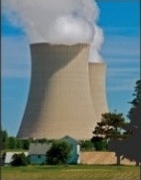
80,000 TONS OF NUCLEAR WASTE ARE SITTING IN LIMBO via Futurity

Thousands of tons of highly radioactive spent fuel are in temporary storage in 35 US states, with no permanent solution in the works. Experts now show how to end this status quo.

The United States government has worked for decades and spent tens of billions of dollars in search of a permanent resting place for the nation’s nuclear waste. Some 80,000 tons of highly radioactive spent fuel from commercial nuclear power plants and millions of gallons of high-level nuclear waste from defense programs sit in pools, dry casks, and large tanks at more than 75 sites throughout the country.

[…]

CAUGHT IN A KNOT

Over the past four decades, the US nuclear waste program has suffered from continuing changes to the original Nuclear Waste Policy Act, a slow-to-develop and changing regulatory framework. Erratic funding, significant changes in policy with changing administrations, conflicting policies from Congress and the executive branch and—most important—inadequate public engagement have also blocked any progress.

“The US program is in an ever-tightening Gordian knot—the strands of which are technical, logistical, regulatory, legal, financial, social, and political—all caught in a web of agreements with states and communities, regulations, court rulings, and the congressional budgetary process,” the report says.

After describing the Sisyphean history of the US nuclear waste management and disposal program, the report makes recommendations all focused around a final goal: long-term disposal of highly radioactive waste in a mined, geologic repository.

[…]

“Spent nuclear fuel stored above ground—either in pools or dry casks—is not a solution. These facilities will eventually degrade. And, if not monitored and cared for, they will contaminate our environment.”

[…]

Source: Stanford University

Read more at 80,000 TONS OF NUCLEAR WASTE ARE SITTING IN LIMBO 

Posted in *English | Tagged , , , | Comments Off on 80,000 TONS OF NUCLEAR WASTE ARE SITTING IN LIMBO via Futurity

「福島の姿、半世紀前の水俣と同じ」 水俣病テーマのカメラマン、写真集「FUKUSHIMA」出版 via 毎日新聞

「公害の原点」といわれる水俣病をテーマに40年以上前から撮影を続けているカメラマンの小柴一良(かずよし)さん(70)が、東日本大震災による福島原発事故後の被災地の姿を描いた写真集「FUKUSHIMA」を出版した。公害と原発事故で形は違うが、環境や住民の暮らしが大々的に破壊された水俣との共通点に心を寄せ、今なお残る爪痕と悲しみを記録した。

 小柴さんは大阪府出身。昭和を代表する写真家、故・土門拳の撮影助手を経て1974年に水俣へ。網元の娘の女性と結婚し、水銀汚染魚の捕獲作業に携わりながら撮影を続けた。5年後に水俣を離れたが、同じく水俣を撮り続けている写真家、桑原史成さん(82)の勧めもあって2007年以降再び水俣へ通い続け、13年には写真集「水俣よサヨウナラ、コンニチワ」を出版した。

(略)

写真集は「『豊かさ』の受難」「子供たち」「被曝(ひばく)の大地」の3章に分け、モノクロ写真200枚で構成した。住民の日常風景や人影の消えたまちの姿、事故後に生まれた子供たちの笑顔などを静かに記録した。知人の胎児性水俣病患者の弟が福島で除染作業に就いていることを知り、その生活の一部を取り上げた。踊りを通じて福島と交流する水俣のコミックバンドの公演風景も紹介した。

 小柴さんは「原発事故で環境が破壊されただけでなく、家族や地域社会が分断された福島の姿は半世紀前の水俣と同じではないか。なぜ被害者が差別され、非難され、無視され、放置されなければならないのか」と話している。A4判、232ページ。七つ森書館(東京)刊。3240円。【西貴晴】

全文は「福島の姿、半世紀前の水俣と同じ」 水俣病テーマのカメラマン、写真集「FUKUSHIMA」出版

Posted in *日本語 | Tagged , , , | 2 Comments

High iodine distribution, low intake among children after Fukushima nuclear accident via Healio

[…]

In Miharu, health care professionals distributed stable iodine to 3,134 households (94.9% distribution rate) after explosions at the Fukushima nuclear plant caused by the 2011 earthquake in eastern Japan, along with instructions provided by the local government. Screening and questionnaire records included age of participants at the time of the nuclear accident, sex, region of residence before the accident, whether the participant was evacuated, whether the child and parents took stable iodine orally after the accident and dietary habits, including iodine intake. Researchers used logistic regression models to identify factors associated with stable iodine intake.

Within the cohort, 610 children (63.5%) had taken stable iodine, according to questionnaire data.

Researchers found that children were more likely to take stable iodine provided after the accident if their parents took stable iodine (OR = 61; 95% CI, 37.9-102.9). Compared with preschool and school-aged children, infants (aged 2 years or younger) were less likely to take stable iodine (OR = 0.21; 95% CI, 0.11-0.36).

[…]

Read more.

Posted in *English | Tagged , , , | 2 Comments

Pope Francis hoping to visit Hiroshima, Nagasaki around end of 2019 via Kyodo News

ROME– Pope Francis has expressed his desire to visit Japan, including the atomic-bombed cities of Hiroshima and Nagasaki, around the end of next year, the Japanese cardinal said Monday.

If the plan is realized, he will become the first pope to travel to Japan since John Paul II visited the two cities in 1981.

Japan’s Cardinal Manyo Maeda, who met with Pope Francis at the Vatican earlier in the day, said the pope during his trip is expected to offer prayers for the victims of the U.S. atomic bombings of Hiroshima and Nagasaki in 1945 in World War II.

[…]

The mayors of Hiroshima in western Japan and Nagasaki in southwestern Japan as well as the governor of Hiroshima Prefecture also asked for the pope to visit when they attended his public weekly audiences.

[…]

Although the population of Catholics in Japan is small at around 400,000, or 0.3 percent of the national population, the country has a history with the Catholic Church stretching over centuries since Jesuit Francis Xavier landed in southwestern Japan in 1549.

Read more at Pope Francis hoping to visit Hiroshima, Nagasaki around end of 2019


Posted in *English | Tagged , | 1 Comment

福島第1原発事故 自主避難者への賠償が初確定 via 毎日新聞

 東京電力福島第1原発事故後、福島県郡山市から京都市に自主避難した40代男性の一家5人が、東電に総額約1億8000万円の損害賠償を求めた訴訟の上告審で、最高裁第1小法廷(木沢克之裁判長)は13日付で男性側と東電双方の上告を棄却する決定を出した。事故が原因で男性がうつ病になり、働けなくなったと認定して東電に約1600万円の支払いを命じた2審・大阪高裁判決(2017年10月)が確定した。

原発被災者弁護団(東京)によると、自主避難者への賠償を認めた判決が最高裁で確定するのは初めてという。ただし、小法廷は双方の主張が「上告理由に当たらない」と述べただけで、自主避難の合理性など、注目された論点について独自の見解は示さなかった。

(略)

 1審・京都地裁は16年2月、事故とうつ病の因果関係を認めて休業損害や慰謝料など計約3000万円を支払うよう東電に命じた。一方で「年間20ミリシーベルトを下回る被ばくが健康被害を与えると認めることは困難」として自主避難の合理性が認められるのは12年8月までと判断し、政府の避難指示基準や見解を追認した。

 2審は大筋で1審を支持したが、事故が原因のうつ病治療期間を1審の4年半から2年に短縮し、休業損害を大幅に減額していた。【伊藤直孝】

全文は福島第1原発事故 自主避難者への賠償が初確定

Posted in *日本語 | Tagged , | 1 Comment

FOOD IMPORTS FROM FUKUSHIMA-AFFECTED AREAS BECOME WEDGE ISSUE WITH JAPAN via New Bloom

IT IS UNSURPRISING that Taiwan will not be admitted to the Comprehensive and Progressive Agreement for Trans-Pacific Partnership (CFTPP) because of the referendum vote against food imports from Fukushima-affected areas held in late November concurrent with nine-in-one elections. Namely, the issue of food imports is one upon which Taiwan has long been pushed around by larger, more powerful countries, who dangle the threat of being denied admittance to international free trade agreements if Taiwan does not allow food imports.

[…]

Concerns over whether food from Fukushima is safe are valid, seeing as this is an issue of contention in Japan itself. Abe’s Liberal Democratic Party (LDP) is deeply wedded to the Japanese nuclear industry, with an unusual willingness to push for nuclear energy in spite of outbreaks of large-scale public protest. Concerns have also been longstanding that the LDP has been unwilling to provide accurate nuclear assessments for the Fukushima area, or sought to mislead through official statistics.

After the results of the referendum in late November, in which 7,791,856 voted against allowing food imports from Fukushima, the Japanese government initially expressed understanding regarding the results of the referendum, suggesting that not allowing food imports from Fukushima would not be an obstacle for Japan-Taiwan relations going forward. However, this appears to have not entirely been the truth.

[…]

The CFTPP is a regional free trade agreement that is the form that the Trans-Pacific Partnership (TPP) took on after America withdrew from the trade agreement under Donald Trump. Despite the fact that the TPP was orchestrated under American auspices as a means to counter growing Chinese influence in the Asia-Pacific region, the Trump administration favored protectionism instead of free trade, seeing free trade as overextending American resources rather than expanding its economic reach.

Japan subsequently became the dominant power among former TPP signatories, continuing to push for the agreement because it was still beneficial to Asia-Pacific nations to economically integrate as a regional bloc against the threat of China.

Read more at FOOD IMPORTS FROM FUKUSHIMA-AFFECTED AREAS BECOME WEDGE ISSUE WITH JAPAN 

Posted in *English | Tagged , , , , | 2 Comments

High iodine distribution, low intake among children after Fukushima nuclear accident via In the Journal Plus

Despite a high distribution rate of stable iodine after the 2011 Fukushima nuclear accident in Japan, only 63.5% of parents reported children took the tablets, with many citing safety concerns in questionnaires, according to findings published in The Journal of Clinical Endocrinology & Metabolism.

The intake of stable iodine after a nuclear emergency is a key strategy for preventing childhood thyroid cancer, along with evacuation and other measures, Yoshitaka Nishikawa, MD, a physician and medical researcher in the department of internal medicine at Hirata Central Hospital in Fukushima, Japan, and colleagues wrote in the study background. The timing of iodine administration is optimally between 24 hours before and up to 2 hours after the expected onset of exposure, they noted; however, iodine is still reasonably effective when taken up to 8 hours later. To date, there is limited information about the acceptability and feasibility of implementation of iodine distribution in actual cases, they wrote.

[…]

In a retrospective, observational study, Nishikawa and colleagues analyzed data from 961 children from Miharu, a town in Fukushima prefecture, who underwent biennial thyroid screenings at Hirata Central Hospital between August and November 2017 (median age at time of accident, 5 years). In addition to the Fukushima Health Management Survey, Miharu has continued thyroid screenings for all primary and secondary school students.

In Miharu, health care professionals distributed stable iodine to 3,134 households (94.9% distribution rate) after explosions at the Fukushima nuclear plant caused by the 2011 earthquake in eastern Japan, along with instructions provided by the local government. Screening and questionnaire records included age of participants at the time of the nuclear accident, sex, region of residence before the accident, whether the participant was evacuated, whether the child and parents took stable iodine orally after the accident and dietary habits, including iodine intake. Researchers used logistic regression models to identify factors associated with stable iodine intake.

Within the cohort, 610 children (63.5%) had taken stable iodine, according to questionnaire data.

Researchers found that children were more likely to take stable iodine provided after the accident if their parents took stable iodine (OR = 61; 95% CI, 37.9-102.9). Compared with preschool and school-aged children, infants (aged 2 years or younger) were less likely to take stable iodine (OR = 0.21; 95% CI, 0.11-0.36).

In assessing questionnaire data from parents who reported children did not take stable iodine (n = 351), concern about safety was the most frequent reason provided (n = 164; 46.2%), followed by evacuation to other areas, no national or prefectural instruction and iodine not being delivered.

Read more at High iodine distribution, low intake among children after Fukushima nuclear accident

Posted in *English | Tagged , , | 2 Comments

核兵器製造を目指した「マンハッタン計画」のコスト内訳を調べてわかったこととは? via Gigazine

第二次世界大戦中にアメリカ・イギリス・カナダなどの研究者らが原子爆弾の製造・開発を行ったマンハッタン計画は、優秀な科学者や技術者を多数動員した非常に大規模なプロジェクトでした。結局マンハッタン計画は原子爆弾の開発に成功し、日本に原子爆弾を落としただけでなく戦後の冷戦構造を生み出す結果につながりました。そんなマンハッタン計画に投入された資金について分析した結果を、スティーブンス工科大学の科学歴史家であるAlex Wellerstein氏が公開しています。

The price of the Manhattan Project | Restricted Data
http://blog.nuclearsecrecy.com/2013/05/17/the-price-of-the-manhattan-project/

原爆開発における大きなターニングポイントとなったマンハッタン計画では、当時のレートでおよそ20億ドル(2200億円)、2012年時点の資産価値に換算するとおよそ300億ドル(約2兆4000億円)もの費用が投入されたとのこと。Wellerstein氏はマンハッタン計画における支出の内訳について調査しました。

投入されたコスト順に並んだ表の一番上にあるオークリッジ(OAK RIDGE)には、「K-25」「Y-12」「S-50」といったコードネームのウラン濃縮工場がありました。その下に位置するハンフォード技術工場(HANFORD ENGINEER WORKS)では、プルトニウムが生産されていたとのこと。ハンフォード技術工場の下にある特殊操作材料(SPECIAL OPERATING MATERIALS)とはプロジェクト全体に必要な、グラファイトフッ素といった材料を指しています。マンハッタン計画に参加した科学者らが実験や研究を行ったロスアラモス研究所に費やされた支出額は、これらの施設よりもずっと低いことがわかります。

(略)

また、Wellerstein氏はアメリカの歴史家であるRichard Hewlett氏らが著した「The New World(新世界)」という文献にもとづいて支出の内訳をさらに細かく分類し、「工場部門」と「運営部門」に分けてプロジェクトが使用した金額を分析。その割合を見ると、費用全体の4分の3が工場の建設などに使用されていることがわかります。マンハッタン計画によって製造され、実際に爆発まで行われた原子爆弾はガジェットリトルボーイファットマンのわずか3個とされていますが、プロジェクトに費やされた金額のほとんどが兵器生産プロセスに割り当てられているのです。

(略)

原爆は長らく「行き過ぎた科学の進歩が招いた惨劇」であると言われ続けてきました。また、工業的な物語よりも科学的な物語の方が人々にとって好まれやすいという傾向もあります。たとえば大規模な工場建設に伴う障壁を解決するストーリーよりも、オッペンハイマー氏らが倫理的・科学的困難を乗り越えて原爆を開発したストーリーの方が、人々を楽しませて印象に残るものです。さらに原爆の場合、基礎的な物理学的知識がそもそも戦前から世界中の科学者の知るところであり、最も困難なエンジニアリング的ノウハウは工業の領分であった点も、研究部門より工場部門の使用する費用が多くなる結果をもたらしたとWellerstein氏は考えています。

全文は核兵器製造を目指した「マンハッタン計画」のコスト内訳を調べてわかったこととは?

Posted in *日本語 | Tagged , , | 1 Comment

Radiation-soaked Fukushima town REOPENS to visitors 7 years after meltdown via DailyStar

THE town next to the Fukushima Nuclear Power Planet that suffered a devastating meltdown in 2011 has reopened.

Futaba – on the Fukushima Prefecture – was turned into a ghost town after a huge tsunami swamped the nuclear reactors, triggering a massive radiation leak.

But authorities are now planning on reopening the town – despite warnings of worryingly high levels of radiation.

Shortly after the meltdown, all of Futaba was closed off after critical levels above 50 millisieverts of radiation were recorded.

Those hoping to travel there will need to apply for permission to enter before they will be allowed past a checkpoint.

It is thought the town could be rebuilt and ready for evacuees to move back in by 2022 provided it reaches government-set safe levels of contamination by the end of the year.

[…]

Tamotsu Baba, mayor of the town of Namie, said at the time: “It is not really clear now which is the master of the town, people or wild boars.

“If we don’t get rid of them and turn this into a human-led town, the situation will get even wilder and uninhabitable.”

Read more at Radiation-soaked Fukushima town REOPENS to visitors 7 years after meltdown

Related article: 

Posted in *English | Tagged , , , | 3 Comments

福島出身の監督が原発事故と戦った農家描く「ハッピーアイランド」19年春公開 via 映画.com

[映画.com ニュース] 福島県出身の渡邉裕也監督が、東日本大震災後もたくましく農業を営んだ祖父の姿を描いた「ハッピーアイランド」が、2019年春に公開することがわかった。吉村界人萩原聖人大後寿々花が共演し、俳優としても活躍するミュージシャン・古舘佑太郎が主題歌「ハッピーアイランディア」を手掛けた。

第3回四万十映画祭2018の長編部門最優秀賞や、福岡インディペンデント映画祭2018の100分ムービー部門最優秀作品に輝いた本作。新鋭・渡邉監督が、15年12月から被災地の人々とともに福島でロケを行い、震災の原発事故による風評被害に負けず、農業に取り組んだ祖父の物語を紡いだ。

東京に住む23 歳の真也(吉村)は、仕事を転々とする中途半端な日々を送っていた。ある日、知人からの紹介がきっかけで、真也は福島の農家を手伝うことに。「寒い」「朝が早い」「辛い」農作業に嫌気が指し、逃げ出そうとしていた真也だったが、農業を通して地元に貢献する、震災で妻を亡くした正雄(萩原)や、保育士・里沙(大後)と出会い、徐々に仕事にやりがいを見出していく。

(略)

「農作業を続ける祖父がかっこいいと思って作りましたが、祖父はもういません。いないけど、この映画が届けばいいと思います。 そして、世の中の方々にこの映画を見て頂き、祖父と福島で戦う農家の方々を自慢出来る事を嬉しく思います」と力強くメッセージを残した。

ハッピーアイランド」は、19年春から東京・ユーロスペースほかで公開。

全文は福島出身の監督が原発事故と戦った農家描く「ハッピーアイランド」19年春公開

Posted in *日本語 | Tagged , , | 2 Comments