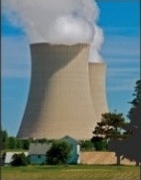
原発再稼働・維持に13兆円 via徳島新聞

東京電力福島第1原発事故の反省から、国が原発に安全対策の強化を義務付けた新規制基準を2013年に導入したことにより、全国の商用原発で必要となった再稼働のための安全対策費と、施設の維持費、廃炉費用の総額が約13兆4569億円に上ることが15日、分かった。費用はさらに膨らむ見通しで、最終的には電気料金に上乗せされるため長期の国民負担となる。合わせて19原発57基を保有する電力11社の会計資料や、各社への聞き取り結果を共同通信が集計した。

 政府は、11年3月の事故後も原発存続を選択し、自然災害や重大事故への対策強化を義務付けた新基準を導入した。

原文

Posted in *日本語 | Tagged , | 4 Comments

IAEA Mission Expected To Belarus In February Over Nuclear Power Station Under Construction via RadioFree Europe RadioLiberty

[…]

Belarusian President Alyaksandr Lukashenka signed off on the nuclear power plant back in 2008, partly to lessen the country’’ dependence on Russia to meet its energy needs.

The nuclear power plant, however, is being built by Russian companies contracted by Rosatom and Moscow is jointly financing the project, which has had cost estimates ranging from $5 billion to $22 billion.

The construction site has witnessed a series of mishaps, including the dropping of a 330-ton nuclear-reactor casing in July 2016. It was only more than two weeks after the incident that the Belarusian Energy Ministry confirmed there had been an “emergency situation” at the construction site.

The planned site of the Astravets plant has been a concern for Lithuania ever since the project was announced in 2008. The Lithuanian capital, Vilnius, is less than 50 kilometers away, meaning that Minsk is at odds with IAEA recommendations made after the 2011 Fukushima disaster in Japan that plants should not be built within 100 kilometers of major population centers.

[…]

Read more.

Posted in *English | Tagged , | Comments Off on IAEA Mission Expected To Belarus In February Over Nuclear Power Station Under Construction via RadioFree Europe RadioLiberty

No long-term prospects in Japan for reusing, storing spent MOX fuel via The Mainichi

There are no prospects that spent mixed-oxide (MOX) fuel, made by reprocessing spent nuclear material, can be further reprocessed and reused for nuclear power generation in accordance with the Japanese government’s energy policy. Storing such fuel for a long period has thus raised safety concerns.

[…]

It was the first time that the company has removed spent MOX fuel since it began to use MOX fuel — produced by extracting plutonium and other reusable nuclear materials from spent nuclear fuel and mixing them with uranium — for commercial power generation at the plant.

An employee operated a crane to extract MOX fuel rods, each of which is about 4.1 meters long and weighs some 700 kilograms, from the reactor core and transfer them into a storage pool one by one inside the reactor building.

According to the company, work to extract spent nuclear fuel rods began on the evening of Jan. 13, and will have removed 16 rods by Jan. 16. In early March five new rods will be inserted into the core. The firm will keep cooling down spent MOX fuel in the pool for more than 10 years.

However, the Nuclear Regulation Authority (NRA) has expressed concerns that the storage of spent MOX fuel in the pool over such a long period is highly dangerous. In case of a power blackout, the temperature of the water in the pool could not be maintained at a certain level and it would become unable to cool the fuel just as was the case with the Fukushima nuclear crisis.

“From the viewpoint of safety, it’s undesirable that a large number of such rods are preserved,” said NRA Chairman Toyoshi Fuketa.

Furthermore, spent MOX fuel generates heat about three to five times that generated by ordinary used nuclear fuel. In case of trouble with a cooling system, such MOX fuel would be far more dangerous than conventional spent nuclear material.

Nevertheless, an employee of an electric power company confessed that the firm “has no leeway to think about what it should do after cooling down spent MOX fuel.”

Pools holding spent fuel at nuclear power plants are almost full, and utilities operating atomic power stations are struggling to find places to store the material.

The Federation of Electric Power Companies of Japan (FEPC) intends to use MOX fuel in 16 to 18 nuclear reactors across the country. Tokyo Electric Power Company Holdings Inc. (TEPCO) and Chubu Electric Power Co. had planned to use MOX fuel in the No. 3 reactor at the Kashiwazaki-Kariwa Nuclear Power Plant in Niigata Prefecture, and the No. 4 unit at the Hamaoka Nuclear Power Plant in Shizuoka Prefecture, respectively.

However, such fuel is being used at only four reactors — Ikata’s No. 3 reactor, the No. 3 and 4 reactors at Kansai Electric Power Co.’s Takahama plant in Fukui Prefecture and the No. 3 unit at Kyushu Electric Power Co.’s Genkai complex in Saga Prefecture.

Japan and France are the only countries in the world that are still working on the extraction of reusable nuclear materials from spent MOX fuel. Japan’s Agency for Natural Resources and Energy will have allocated a total of 1.4 billion yen from state budgets in fiscal 2019 and 2020 for basic research on reuse of spent MOX fuel, and will earmark more funds through fiscal 2024.

However, it remains to be seen how far such technology can be developed in the foreseeable future.

“There have been no research achievements enabling the commercial use of the technology,” said an official of the Japan Atomic Energy Agency.

Even if the technology to reuse spent MOX fuel is developed, there is a possibility that sufficient funds will not be secured to put it into commercial use unless idled nuclear power stations are restarted steadily because massive amounts of money are needed just for reprocessing spent nuclear fuel. Many atomic power stations remain offline because safety regulatory standards for such facilities have been stiffened following the outbreak of the Fukushima nuclear crisis in March 2011.

An official of the Agency for Natural Resources and Energy said the reprocessing and reuse of spent MOX fuel is not a priority.

“There is approximately 19,000 metric tons of ordinary spent nuclear fuel that hasn’t been reprocessed in Japan, and priority is placed on reprocessing such material into MOX fuel. The volume of spent MOX fuel is extremely small, and we’re not working fast enough to consider how to reuse such fuel,” said the official.

(Japanese original by Yuichi Nakagawa and Ryoko Kijima, Matsuyama Bureau, and Suzuko Araki, Riki Iwama and Yuka Saito, Science & Environment News Department)

Read more.

Posted in *English | Tagged , | 4 Comments

Some Hanford radiation exposure records could harm workers and taxpayers, report says via Tri-City Herald

BY ANNETTE CARY

Recordkeeping at Hanford could be improved to track worker radiation exposure, including to ensure fair compensation for workers who develop cancer, according to an inspection report of the Department of Energy Office of Inspector General.

Issues in recordkeeping can be a problem for both individual workers and the federal government under a compensation program for ill workers, said the report released Monday.

If a group of workers’ radiation exposure cannot be determined because of lack of records, the compensation program conservatively assumes that working at Hanford caused any of a wide range of cancers and the federal government must offer compensation.

Recordkeeping issues also could prevent a worker from having complete records to make an individual case that cancer was caused by radiation exposure.

The Energy Employee Occupational Illness Compensation Program Act (EEOICPA) pays each worker $150,000 in compensation for cancer plus medical coverage. An additional payment of up to $250,000 compensation may be made related to wage loss and impairment

The program has paid out $1.7 billion to Hanford workers, former workers and their survivors in compensation and reimbursement of medical costs.

[…]

PAST RADIATION RECORDKEEPING INCOMPLETE
The review of the radiation exposure, or dosimetry program, at Hanford generally found that DOE Hanford contractor Mission Support Alliance was doing a good job of managing radiation exposure records for all Hanford workers.

But it raised concerns that about 111 tank farm workers hired in 2014 and 2015 were not given radiation history forms to fill out by their employer, Washington River Protection Solutions. Some may have had previous exposures at the Hanford nuclear reservation or other DOE sites.

[…]

The Hanford nuclear reservation is contaminated from the past production of plutonium for the nation’s nuclear weapons program from World War II through the Cold War.

[…]

Hanford workers or the survivors of ill workers can learn more about compensation programs and how to apply for them at the Hanford Workforce Engagement Center at 309 Bradley Blvd., Suite 120, in Richland. The center can be reached at 509-376-4932.

Read more at Some Hanford radiation exposure records could harm workers and taxpayers, report says

Posted in *English | Tagged , , , , , | 6 Comments

Life after Oyster Creek: nuclear waste piles up in Lacey via app.

LACEY — Almost a half century’s worth of nuclear waste is accumulating on concrete pads in southern Lacey, refuse from what used to be the town’s economic engine. 

Towering steel-and-concrete canisters of highly radioactive fuel rods, which once powered the reactor inside the now-defunct Oyster Creek nuclear plant, are piling up at the plant, and more are scheduled to be filled.

The mounting collection of toxic material is worrying residents and town officials, who contend their community is at risk from storing nuclear waste but not being fairly compensated for the burden.

[…]

The company’s nuclear waste storage site “affects the whole county,” said Ocean County Freeholder Gary Quinn, a Lacey resident and former town mayor who sits on the municipal Planning Board.

On Monday, as plant officials sought approval to increase the storage capacity of nuclear waste on their site, the Planning Board threw a delay into the process. 

Citing concerns over safety, lack of information, and no hard plans to remove the spent nuclear fuel in the near future, the Planning Board voted unanimously to declare the plant’s application incomplete.  

[…]

Holtec and a collection of its subsidiary companies are looking to demolish the plant within eight years and profit from the plant’s nearly $1 billion decommissioning trust fund. But when the plant is gone, the nuclear waste is likely to remain on the site. 

“It is going to be here in perpetuity?” Quinn said Tuesday. “God forbid there’s any kind of catastrophe.”

[…]

he new pad would hold 25 casks, according to Holtec’s application. Once the plant is fully decommissioned, 63 casks will be left at the site, D’Ambrosio said.

The casks are designed to contain the dangerous, radioactive by-products of nuclear energy. The company says its casks are designed to last 300 years, although the Nuclear Regulatory Commission, which oversees nuclear power plants, only licenses casks for 40 years, with the expectation that companies will apply for renewals periodically. Some nuclear experts say the company’s 300-year claim cannot be proven.

Inside the cask

Casks hold dangerous radioactive elements like Cesium-137, Strontium-90 and Plutonium-239, fuel bi-products created inside reactors, which remain dangerous for generations. 

[…]

“The Oyster Creek site was never designed to be a storage facility,” he said, adding that he believed the property was not a safe location to store large amounts of nuclear waste for the long term.

LeTellier said he has written numerous elected officials over the years, urging them to  find another location to store the material, but he has received few responses.

[…]

Power companies have successfully sued the federal government for compensation to store the spent nuclear fuel, but there are no federal protections for local governments to also receive money for hosting the sites. 

“We don’t have much faith in either the state or the federal government looking out for our economic well-being,” said Kennis. “We just want to make sure our voices are heard.” 

Read more at Life after Oyster Creek: nuclear waste piles up in Lacey

Posted in *English | Tagged , | 4 Comments

川から海にセシウム29兆ベクレル流出 原発事故後の半年間で 原子力機構推定 via 毎日新聞

日本原子力研究開発機構は15日、東京電力福島第1原発事故後の半年間で河川から海に流出した放射性セシウムは29兆ベクレルと推定されると発表した。河川経由の流出量の把握は困難だったが、物質の観測結果を基にした計算モデルを新たに開発。大気から海に降下した量や原発構内から直接海に流れた量に比べ、100分の1未満だったと分かった。

計算モデルは、福島県内6河川での放射性物質濃度の定期測定結果を基に、事故直後の実測データがなかった時期の流出量を他の河川も含めて推定。算出した結果、2011年9月までに29兆ベクレルが川から海に流れ出たとみられる。

原子力機構によると、先行研究では、11年5月までに大気から海に流出したのは7600兆ベクレル、同年6月までに第1原発構内から汚染水として直接流れ出たのは3500兆ベクレルとの推定がある。

続きは川から海にセシウム29兆ベクレル流出 原発事故後の半年間で 原子力機構推定

Posted in *日本語 | Tagged , , | 4 Comments

‘Mother of Chernobyl’ via The Current

Student short film is selected for the 2020 Santa Barbara International Film Festival

By Sonia Fernandez

The year is 1987, and in the wake of the Chernobyl nuclear disaster a young Ukrainian mother named Masha grapples with an unfathomable decision: stay or go.

For those of us who have never lived in the Soviet Union, the woman’s choice is difficult to comprehend. But for Masha — and for many whose lives and identities were bound to the few pieces of property they could pass on to their children — it is the only option: Remain in the radiation zone.

Masha is the main protagonist of the student short film “Mother of Chernobyl,” and her troubles are just the beginning.

[…]

Add to that the future Masha fears for her child, born deformed due to radiation, and there isn’t much incentive to leave the only home they have ever known.

The film, which began as a student production, is now an official selection at the Santa Barbara Film Festival (SBIFF). It will screen Sunday, Jan. 19, at 7:30 p.m. at the Arlington Theatre.

Such a granular perspective on the impact of the Chernobyl nuclear disaster is fairly rare; most stories prefer instead to hit the high notes: the timeline of the reactor failures, the evacuations of the masses, the devastation to the area, the tragic health effects, the impact on politics and international relations, and the ensuing emptiness and desolation of places like Pripyat, the city where the meltdowns occurred. But for the film’s director, Alexander Shuryepov, the decisions of a young woman in the face of such a devastating event loom just as large — they reflect the type of choices his own family faced.

“My mother and grandmother were both in Kyiv during the time of the disaster; I grew up hearing them recount their side of the story,” said Shuryepov, who wrote and directed the film in 2019 as a freshman in UC Santa Barbara’s film and media studies department. The project started out like any regular assignment at the UCSB Carsey-Wolf Center’s GreenScreen program, with the single requirement that it somehow had to involve the environment.

Over the course of production the film evolved into an intimate, unique look at Ukranian culture and society, gleaned, according to Shuryepov, from moments he had witnessed during a visit to the country.

Read more at ‘Mother of Chernobyl’

Posted in *English | Tagged , , | 4 Comments

チェルノブイリ原発の立ち入り禁止区域でウクライナ人4人が拘束される via Sputnik

チェルノブイリ原子力発電所の立ち入り禁止区域で狩猟をしようとしていたウクライナ人4人が、ウクライナの治安当局に拘束された。15日、ウクライナ国家国境庁が発表した。

同庁は「ウクライナ人4人が、設置されたチェックポイントの外の強制移住区域の後方境界を車で通過した」と発表した。

ウクライナ国家国境庁によると、4人の男はそれぞれ狩猟用ライフルと弾を持っていた。

4人に関する行政報告書が作成され、4人には罰金が科される可能性があるという。

続きはチェルノブイリ原発の立ち入り禁止区域でウクライナ人4人が拘束される

Posted in *日本語 | Tagged , | 4 Comments

「五輪で復興にくぎりでしょ」 福島の被災者、国に疑念 via 京都新聞

[…]

昨年12月。野球・ソフトボールの会場となる県営あづま球場から約7キロ離れた福島市の復興公営住宅を訪ねた。

 4階建て鉄筋コンクリートの建物にはエレベーターもあり、整然としている。「私たちには関係ない」「何とも思っていません」。住人に声を掛けても言葉は少ないが、飯舘村出身という男性(75)が、思いを打ち明けてくれた。

 「オリンピックに合わせて国は(復興に)区切りをつけるという考え方なんでしょ」。東日本大震災後、居住制限区域になった自宅を離れ、避難生活は8年を超える。3年ほど前からこの復興住宅で妻と暮らす。団地内には交流スペースもあって不便はないが、望郷の念は積もる。

 かつてソフトボールのチームを作るほどスポーツは好き。五輪は楽しみだが、心からは喜べない。「何を言ったってあんまり意味がない。不平不満があっても、オリンピックを境に全てを打ち切りたいっていうのが国の本音でしょう」と諦めた様子で語った。地元である五輪の試合を見に行く予定はないという。

■東京が福島利用し金儲け

 1964年の東京五輪が敗戦からの復活をアピールしたように、2度目の祭典は震災からの復興が旗印とされる。「他に取り組むべき問題は多いのに、五輪なんて役に立たない。名ばかりのパフォーマンスだ」。福島県南相馬市の市長を2018年まで8年務めた桜井勝延(64)の口調は厳しい。

 福島原発の使用済み核燃料の搬出は遅れ、増え続ける処理水を保管するタンクにも限界がある。招致の際、首相が確約した「状況はコントロールされている」という言葉からは、ほど遠い。五輪関連の建設ラッシュが資材高騰や作業員不足に拍車をかけ、桜井は「五輪が逆に復興を遅らせている面もある。原発も五輪も、東京が福島を利用して金儲けする構図は変わらない」と指弾する。

 震災年は30万人を超えた避難者が、昨年は5万人以下に。3月にJR常磐線が全線復旧する予定で、仮設住宅から復興公営住宅への移行も進んだ。ただ、震災時に福島大で教えていた立命館大准教授の丹波史紀(46)らが17年に実施した双葉郡5町2村の住民アンケートによると、64歳以下の3割が無職という結果が出た。避難者の6割近くは「元の居住地に戻る気はない、戻れない」と回答。[…]

■東京が福島利用し金儲け

 1964年の東京五輪が敗戦からの復活をアピールしたように、2度目の祭典は震災からの復興が旗印とされる。「他に取り組むべき問題は多いのに、五輪なんて役に立たない。名ばかりのパフォーマンスだ」。福島県南相馬市の市長を2018年まで8年務めた桜井勝延(64)の口調は厳しい。

 福島原発の使用済み核燃料の搬出は遅れ、増え続ける処理水を保管するタンクにも限界がある。招致の際、首相が確約した「状況はコントロールされている」という言葉からは、ほど遠い。五輪関連の建設ラッシュが資材高騰や作業員不足に拍車をかけ、桜井は「五輪が逆に復興を遅らせている面もある。原発も五輪も、東京が福島を利用して金儲けする構図は変わらない」と指弾する。

 震災年は30万人を超えた避難者が、昨年は5万人以下に。3月にJR常磐線が全線復旧する予定で、仮設住宅から復興公営住宅への移行も進んだ。ただ、震災時に福島大で教えていた立命館大准教授の丹波史紀(46)らが17年に実施した双葉郡5町2村の住民アンケートによると、64歳以下の3割が無職という結果が出た。避難者の6割近くは「元の居住地に戻る気はない、戻れない」と回答。丹波は「暮らしの再建は途上にある」と指摘する。

■被災地を知る端緒に

 復興五輪とは何だろう。被災地でのイベントに積極参加し、福島で聖火ランナーも務める元サッカー女子日本代表の海堀あゆみ(33)=京都府長岡京市出身=に尋ねると、悩みながらも話してくれた。「心の傷は癒えないだろうし、本当に復興が進んでいるかは無責任に言えない。でも復興五輪とすることで、東北のことを考えてもらうきっかけにはなると思う。海外の人も含めて、本当の意味で被災地を知ってもらいたい」=敬称略

全文

Posted in *日本語 | Tagged , | 4 Comments

City Council approves nationwide denuclearization resolution via The Daily Northwestern

Grant Li, Reporter
January 14, 2020

[…]

City Council voted unanimously to approve a resolution supporting nationwide denuclearization as part of the international Back from the Brink movement at Monday’s meeting.

Back from the Brink has worked to pass similar resolutions at all levels of government across the country. Monday’s resolution calls for Congress to take up the United Nations Treaty on the Prohibition of Nuclear Weapons. The agreement prevents nuclear development and provides for remedial action to assist those who have been negatively affected by nuclear technologies.

The treaty was approved by the United Nations in July 2017, and has since been in circulation for ratification. Fifty countries need to ratify the treaty for it to take effect, and 33 have already ratified it.

[…]

Some of the speakers alluded to recent international events and foreign policy decisions as support for a heightened sense of urgency. Marcia Bernsten, a board member of Chicago Area Peace Action, said Trump’s actions, especially in the past 2 weeks, have, “definitely put us on a more combative footing with Iran.”

David Combs, a member of the Union of Concerned Scientists, noted that more than $22 million of Evanston’s federal tax dollars go to nuclear weapons.

“Chicago, very close to our borders here in Evanston, is one of the top targets in the unimaginable event of a nuclear exchange,” Combs said.

Proponents of the resolution cited the support of U.S. Rep. Jan Schakowsky (D-Ill.), and U.S. Sen. Dick Durbin (D-Ill.).

After the meeting, some attendees emphasized the significance of the council’s approval. Evanston is now the 42nd municipality to pass resolutions advocating for denuclearization and the first in Illinois, according to the Back from the Brink website. Most of the other municipalities are concentrated along the two coasts.

Combs plans on organizing a group to bring a similar resolution to the Chicago City Council, as well as other cities and towns.

Read more.

Posted in *English | Tagged | 5 Comments