
[…]
聖火は五輪開催延期を受け、聖火リレーの国内出発地点だったJヴィレッジで2日から30日までの予定で一般公開が始まった。県内での展示は今後行わない。
組織委は5月以降に福島県以外でも聖火を展示することを検討していたが、今後の展示は未定としている。保管場所は非公表。
一般公開された2~7日に計約5400人が見物に訪れた。聖火はランタンにともった状態で、宿泊施設なども備える建物のホールに展示されていた。感染防止対策で来場者にはマスク着用と手指の消毒を求めていた。〔共同〕
[…]
聖火は五輪開催延期を受け、聖火リレーの国内出発地点だったJヴィレッジで2日から30日までの予定で一般公開が始まった。県内での展示は今後行わない。
組織委は5月以降に福島県以外でも聖火を展示することを検討していたが、今後の展示は未定としている。保管場所は非公表。
一般公開された2~7日に計約5400人が見物に訪れた。聖火はランタンにともった状態で、宿泊施設なども備える建物のホールに展示されていた。感染防止対策で来場者にはマスク着用と手指の消毒を求めていた。〔共同〕
[…]
政府の小委員会は2月、海洋と大気(水蒸気)への放出を「現実的な選択肢」として海洋放出の利点を強調する報告書をまとめた。政府は関係者の意見を聞き、取り扱い方針を決める。13日には福島市と富岡町で2回目の会合を開く。
出席者は県や県漁連など7団体の10人。内堀雅雄知事は風評対策と正確な情報発信が重要とし、「本県の農林水産業や観光業に影響を与えることがないよう慎重に対応方針を検討してほしい」と述べた。一方、県漁連の野崎哲会長は「増産にかじを切ろうとする中、海洋放出には反対」と改めて強調。県森林組合連合会の秋元公夫会長は「森林所有者の経営意欲も低下する」として海洋放出と大気放出のいずれも反対だとした。
県町村会の小椋敏一会長は「本県のみで処分が行われたり、本県から始まるのであれば風評は必至だ」と指摘。県旅館ホテル生活衛生同業組合の小井戸英典理事長は、大気放出と海洋放出のうち「観光的な影響が比較的狭い地域に抑えられる海洋放出を選択することが旅館ホテル業界にとっては最も損失の少ない処分案」と述べ、影響は風評被害ではなく実害だとして補償などの対応を求めた。
By Linda Pentz Gunter
On Saturday, March 21, 50,000 people queued up at Sendai station to see the Olympic flame displayed in a cauldron there. Packed together, not all of them wearing masks, the eager spectators waited as long as three hours to glimpse a flame that should have been extinguished in Japan months ago.
[…]
Yes, it was beyond stupidity to have continued contemplating an event that would have brought tens of thousands of corona-carrying athletes and spectators to Tokyo and beyond. But it was worse that the persistent radiological contamination of Japan in the now 9-year long aftermath of the Fukushima nuclear disaster didn’t cancel the Games months ago. Or better still, disqualify Japan’s bid in the first place. Things in Japan won’t be significantly better in that regard one year from now. But radiation remains untouchable as a topic.
Japan needed the Games for one compelling reason; to cover-up and sanitize the world’s worst, or second worst, nuclear disaster — arguments still abound as to whether Fukushima will end up being worse than the 1986 Chernobyl nuclear accident in Ukraine, whose long-term health effects now pass down generations.
That’s why Japan gave the Games, the “Recovery Olympics” moniker, to prove that Fukushima wasn’t all that bad after all and that everything is back to normal. Which is, of course, a big and unforgivable lie.
[…]
The refusal to cancel the Games because of the radiation risks prompted a group in Japan called Citizens’ Group for Appealing against Danger of Tokyo Olympics, to produce a book warning against going forward. What Endangers Tokyo Olympics — Clear and Present Radioactivity and Health Damage, details a host of reasons to have called off the event long before the cancelation was forced on the Japanese government by the covid-19 pandemic. (The book is in Japanese but there is an introductory summary in English.)
The book is edited by Etsuji Watanabe, a member of ACSIR (Association for Citizens and Scientists Concerned about Internal Radiation Exposure) who also relates that activists opposing the Olympics have faced harassment by police.
The book urges athletes, visitors and spectators planning to attend the Tokyo Olympics not to trust any Japanese government propaganda “claiming that Fukushima and Tokyo ‘are 100% safe now’, ‘have no risk of radiation exposure’, or ‘radiation exposure won’t cause any health effects’.”
[…’
Read more.
By Linda Pentz Gunter
It was no surprise really, when the first to line up with outstretched palms as Congress debated and formulated its now passed $2 trillion coronavirus-prompted emergency relief bill, were nuclear corporations.
The sinking nuclear power industry spotted an economic lifeline and couldn’t wait to make a grab for it. The Nuclear Energy Institute, the lobbying arm of the nuclear power industry, rushed off a letter to congressional leaders asking for a 30% tax credit and waivers for existing regulatory fees.
One of NEI’s apparently needy recipients is the financial fiasco known as Vogtle 3 and 4, the new nuclear power plant construction project in Georgia, which is already more than five years behind schedule and is projected to cost $28 billion, double the original predicted price.
[…]
The two new Georgia reactors aren’t needed, and their continued slow progress is by no means a matter of national security right now — or at all. But the NEI would like to see a nice fat grant go to Georgia Power to continue construction there, even though the company has already received two federal loan guarantees totaling $12 billion.
[…]
Before long, the nuclear weapons manufacturers got in on the act as well. Wrote the group, Code Pink: “Boeing has the audacity to demand a $60 billion taxpayer bailout for their shareholders and CEO.”
Boeing is responsible for the Minuteman Intercontinental Ballistic Missiles, to be replaced this year with the misleadingly named Ground Based Strategic Deterrent. Boeing has also already received a $26.7 million contract from the U.S. Navy for Trident II D5 ballistic missile maintenance, rebuilding and technical services.
Astonishingly, it was ultra conservative senator, Ted Cruz, who was one of those who pushed back against the corporate bailouts for the likes of Boeing and GE, manufacturer of the ill-fated Fukushima nuclear power plants and similar boiling water reactors in the US that are meltdowns waiting to happen.
Cruz tweeted that “some are pushing for a special carve-out just for Boeing & GE. That would be WRONG. Millions are losing jobs; we don’t need bailouts or corporate welfare — those companies should participate in the same liquidity programs as everyone else.”
But Boeing apparently got its wish. A $17 billion federal loan package contained in the stimulus bill passed by both the House and Senate and signed by President Trump on March 27, “was crafted largely for the company’s benefit,” according to reporting in the Washington Post.
Boeing may also be able to dip its fingers into the “$58 billion the Senate package is providing in loans for cargo and passenger airlines, as well as the $425 billion in loans it is allocating to help firms, states and cities hurt by the current downturn,” wrote the Washington Post, even though, as Code Pink pointed out, alluding to the two 737 MAX disasters, Boeing is responsible for “defective civilian planes that plummet from the sky in mid-flight.”
Boeing shares soared more than 24% on the day the Senate bill passed.
The US is already spending $35.1 billion a year on its nuclear weapons arsenal. As the timely graph below from ICAN points out, this money could be redirected to a wealth of essential needs that would help quell the novel coronavirus in the US.
[…]
Read more.
| Mary Olson — April 3, 2020 |
| It was the last day of January when Magnus Lovold, Policy Advisor to the Arms Unit, International Committee of the Red Cross (ICRC), called to invite Gender and Radiation Impact Project to speak on the disproportionate harm from ionizing radiation exposure to girls and women at a one-day ‘expert consultation’ on the Humanitarian Impacts of Nuclear Weapons in the ICRC offices in Geneva, Switzerland, in March. […] My talk that day in Vienna is among the videos on this website. ICRC was a strong supporter the Vienna Conference as the Red Cross / Red Crescent was the first global organization to call for the termination of the production and use of nuclear weapons, in 1945, immediately following the destruction of Hiroshima…before the United Nations had been formed. […] I joined a panel that focused on ongoing research on the consequences of the use of nuclear weapons and how impossible it would be for humanitarian institutions to respond. I shared the basic finding that radiation is more harmful to girls and to women compared to boys and men and then offered the research questions that I identified in my recent peer-reviewed paper “Disproportionate Impact of Radiation and Radiation Regulation.” |
[…]
Read more.
The shortage of protective gear caused by the coronavirus pandemic has hit the workers at the meltdown-hit Fukushima No. 1 nuclear power plant, where they’ve needed them daily for years to guard against radiation.
Shipments temporarily stopped coming in, although an alternative supplier was later found, according to Tokyo Electric Power Co., the utility that runs the Fukushima plant. The 4,000 workers at the plant cannot always practice social distancing as they must come close to each other to carry out cleanup work, spokesman Joji Hara said Thursday.
To reduce the possibility of infection, workers have been forbidden from riding on public transportation, such as trains, and must either drive to work or take the special company buses. When eating at the cafeteria, they can’t sit facing each other, and their temperatures are checked daily, he said.
[…]
“We are involved in decommissioning work that can’t ever stop and so we are taking every precaution we can,” said Hara.
The workers with special skills, who would be hard to replace, have reduced contact with people to minimize risks of infection. There is no lockdown in Japan and so all such efforts outside work are voluntary.
Read more.
The blaze started on Saturday close to the site of the world’s worst ever nuclear disasterUkrainian officials have sought calm after forest fires in the restricted zone around Chernobyl, scene of the world’s worst nuclear accident, led to a rise in radiation levels.
Firefighters said they had managed to put out the smaller of two forest fires that began at the weekend, apparently after someone began a grass fire, and had deployed more than 100 firefighters backed by planes and helicopters to extinguish the remaining blaze.
The fire had caused radiation fears in Kyiv, Ukraine’s capital, which is located about 60 miles south of the Chernobyl exclusion zone. Government specialists on Monday sent to monitor the situation reported that there was no rise in radiation levels in Kyiv or the city suburbs.
[…]
An earlier post by Firsov had warned about heightened radiation levels at the site of the fire, which he said had been caused by the “barbaric” practice of local grass fires often started in the spring and autumn. “There is bad news – radiation is above normal in the fire’s centre,” Firsov wrote on Sunday.
[…]
The country’s emergency ministry put out a warning for Kyiv on Monday about poor air quality but said it was related to meteorological conditions, and not to the fire.The service had said on Saturday that increased radiation in some areas had led to “difficulties” in fighting the fire, while stressing that people living nearby were not in danger. On Monday, it said that gamma radiation levels had not risen near the fire.
Read more at ‘Bad news’: radiation 16 times above normal after forest fire near Chernobyl
ALBUQUERQUE, N.M. — The U.S. government’s efforts to clean up Cold War-era waste from nuclear research and bomb making at federal sites around the country has lumbered along for decades, often at a pace that watchdogs and other critics say threatens public health and the environment.
Now, fallout from the global coronavirus pandemic is resulting in more challenges as the nation’s only underground repository for nuclear waste finished ramping down operations Wednesday to keep workers safe.
Over more than 20 years, tons of waste have been stashed deep in the salt caverns that make up the southern New Mexico site. Until recently, several shipments a week of special boxes and barrels packed with lab coats, rubber gloves, tools and debris contaminated with plutonium and other radioactive elements were being trucked to the remote facility from South Carolina, Idaho and other spots.
That’s all but grinding to a halt.
Shipments to the desert outpost will be limited for the foreseeable future while work at the country’s national laboratories and defense sites shift to only those operations considered “mission critical.”
[…]
Read more.
WASHINGTON, D.C. — U.S. nuclear plants will be allowed to keep workers on longer shifts to deal with staffing problems in the coronavirus pandemic, raising worries among watchdogs and some families living near reactors that employee exhaustion will increase the risks of accidents.
The Nuclear Regulatory Commission’s decision to temporarily allow longer worker shifts is one way the industry is scrambling to keep up mandatory staffing levels through what will be weeks or months more of the outbreak.
The shift extensions would allow workers to be on the job for up to 86 hours a week. Currently, they’re generally allowed to work up to 72 hours in a seven-day period. As part of the waiver, workers could be assigned to 12-hour shifts for as many as 14 days in a row.
Nuclear plant workers already are having their temperatures checked on arrival for each shift, and employers are studying options including having workers temporarily live at plants full-time.
Ho Nieh, the NRC’s director of reactor regulation, discussed the provision for longer work hours with utility industry executives and others on Thursday. Nieh said federal inspectors on and off site would monitor so that no plant works its employees to the point of bleariness. Regulators would approve, and if needed revoke, expanded shifts on a plant-by-plant basis, Nieh said.
But for Natalie Hildt Treat, a resident of Salisbury, Massaschusetts who is staying at home during the outbreak with her 5-year-old child and husband, the thought that workers at plants such as Seabrook Station, 6 miles away, could soon be grinding through repeated long shifts only added to her concerns.
“This is highly specialized work that needs a lot of attention and focus,” Treat, a nuclear safety activist, said by telephone. It’s a problem, she said, “if people are fatigued or sick.”
[…]
Read more.
3月24日(火)福島地裁にて第三回の裁判が開かれました。争点となっているのは田村バイオマスエナジー(田村BE)の提示するHEPAフィルターが「偽物」ではないかという点です。
前回1月28日(火)の裁判で原告側は被告側に対しHEPAフィルターの仕様書開示を求め、被告側は応じる姿勢を見せましたが、今回の裁判でも結局資料を提出することはありませんでした。
理由は、「プラントメーカーとの守秘義務」があるためとしています。
裁判官はこれについて被告側に正当性を立証するよう求めることはなく、むしろ原告側に「請求原因」を改めて説明することを求めました。
さらに被告は「高性能HEPAフィルター」設置目的を「安全性」の向上のためとしていた従来の説明を豹変させ、「バグフィルター」で安全を確保し「HEPAフィルター」は安心のために設置するので「その役割は副次的なものである」、すなわち性能は満たされなくても問題ないと主張しました。
これは原告側の主張どおりHEPAフィルターがお飾りであることを認めたことにほかなりません。
HEPAフィルタに限らず、被告側の主張はこれまでの説明から二転三転しています。市が11億4千万円もの補助金を出す事業です。このようないい加減な姿勢の市と田村バイオマスエナジ―の言うことは全く信用できません。
[…]



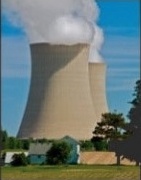
A nuclear power plant in Byron, Illinois. Taken by photographer Joseph Pobereskin (http://pobereskin.com).