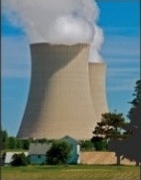
Scandinavian Radiation Spike Linked to Russian Nuclear Plant Malfunction via The Moscow Times

A slight increase in radioactivity over Scandinavia this month may have spread from the direction of western Russia, Dutch authorities said, but later stressed that they have not identified a country of origin.

The Associated Press cited the Netherlands National Institute for Public Health (RIVM) as saying Friday that the spike could be traced to Russia. Russian nuclear operators deny the claims, and Swedish, Norwegian and Finnish authorities did not speculate about the source of the radiation.

Radiation-monitoring sensors in northern Europe said last week that they recorded higher-than-normal amounts of radioactive isotopes that are harmless to humans and the environment.

[…]

“Radiation levels at both NPPs and surrounding areas remained unchanged in June, and no changes are also observed at present,” the state-run TASS news agency quoted an unnamed Rosenergoatom spokesperson as saying Saturday.

“No incidents related to release of radionuclide outside containment structures have been reported,” Rosenergoatom said, referring to the Leningrad plant near St. Petersburg and the Kola plant near the Arctic city of Murmansk.

Read more at Scandinavian Radiation Spike Linked to Russian Nuclear Plant Malfunction

Posted in *English | Tagged , , | Comments Off on Scandinavian Radiation Spike Linked to Russian Nuclear Plant Malfunction via The Moscow Times

フランス最古の原発、30日に閉鎖 依存低下計画で初の廃炉 8年越し実現 via 毎日新聞

フランス最古のフェッセンハイム原発が30日、運転を終える。国内の発電量の約7割を原子力に依存する原子力大国フランスで、原発依存度を2035年までに5割まで引き下げる国の計画に基づいた最初の廃炉となる。オランド前大統領が12年、同原発の廃炉を公約に掲げてから実現までに8年かかった。

仏北東部でドイツとスイスの国境付近に位置するフェッセンハイム原発は1977年に運転を開始し、出力90万キロワットの原子炉2基を備えた。1号機は2月22日にすでに停止された。11年の東京電力福島第1原発事故を受けて、オランド氏が12年の大統領選で老朽化した同原発の廃炉を公約。オランド氏は任期中に廃炉にするとしていたが実現しなかった。

オランド氏は任期中の15年、発電量に原発が占める割合を25年に50%まで引き下げる目標を掲げた。しかし、マクロン大統領は18年、「現実的ではない」として35年に先送りした。同原発の停止で、国内で稼働する原発は56基となる。

オランド氏の廃炉公約から8年越しの停止は、原子力大国フランスで「縮原発」を巡る合意形成の難しさを浮き彫りにした。原発業界や右派は、原発縮小が電気料金の上昇、ひいては仏産業の国際競争力低下につながるとして反発。左派の一部は雇用維持の観点から反対してきた。原発業界や右派は、仏北西部フラマンビルに07年から建設中の最新鋭原発「欧州加圧水型炉(EPR)」が完成する前にフェッセンハイムを閉鎖すれば「電力不足に陥る」との理屈を持ち出して抵抗した。

(略)

政府は環境対策として、原発依存の低下と再生可能エネルギーの拡大を柱に掲げている。35年までにさらに12基を廃炉にする計画だが、フェッセンハイム原発に続く廃炉計画は未定だ。 再エネの導入も遅れている。20年に再エネの割合を最終エネルギー消費の23%にする目標を掲げたが、18年は16・6%で6・4ポイントの開きがあり、欧州内ではオランダの6・6ポイントに次いで大きかった。マクロン氏は温室効果ガスの削減のためには、「原発こそ持続的に二酸化炭素(CO2)の排出を抑えられる」として今後も原発を活用する方針を打ち出しており、「縮原発」がどこまで進むかは見通せなくなっている。【パリ久野華代】

全文はフランス最古の原発、30日に閉鎖 依存低下計画で初の廃炉 8年越し実現

Posted in *日本語 | Tagged , , | 12 Comments

‘The Sizewell C plans are an insult to the people of Suffolk’ via East Anglian Daily Times

Chairman of Together Against Sizewell C, Pete Wilkinson, has described it is a “battle for the soul and integrity of East Suffolk”. Here he explains why he is opposing the nuclear project.

Anyone new to Suffolk, ignorant of EDF’s nuclear plans, would be forgiven for laughing out loud.

An untried reactor, labelled ‘technically complicated to construct’ by its own designers, a cost of £20billion-plus, taking at least 10 years to build, producing waste which is not only lethal to living tissue but which remains so for thousands of years and for which there is no agreed or proven disposal or management route, to be built in the middle of a community of 5,000, which will not produce electricity for at least 10 years by which time its output will be redundant to needs, built on an eroding coast? Yeah, sure: pull the other one.

You really couldn’t make it up.

Yet this is what residents up and down the East Suffolk are facing. They have been led to believe that the destruction of their environment on a massive scale, the compulsory purchases, the roads, the workers’ campuses, the borrow pits, the huge water demand in the driest county is inevitable – and to make the best of it.

When did anyone ask YOU, resident of East Suffolk, if you wanted your tranquil, culturally rich and peaceful rural environment urbanised and anonymised, requiring six new roundabouts on the A12 and up to 1,000 vehicle movements a day along our country roads to ferry the material required for our own white elephantine carbuncle on our heritage coast, light, noise and dust pollution 24 hours a day, seven days a week or a decade of accommodating 4,000 workers? Of course you were not asked. They knew the answer. The new nuclear policy has not been subjected to anything like forensic public or Parliamentary scrutiny.

Democratic deficit runs through all aspects of this programme like the letters in a stick of rock and is presented by its advocates as ‘inevitable’. The National Policy Statement process renders what government calls ‘national infrastructure projects of over-riding importance’ inviolate, untouchable and – yes – inevitable unless the planning authorities have the courage or unless the Secretary of State has the guts to do what they should – throw the EDF plans out as an insult to the people of Suffolk. Sizewell C is important to no-one other than EDF.

But just how ‘over-riding’ is the need for Sizewell C? The French-made film, ‘The Nuclear Trap’ makes it clear that Hinkley C in Somerset and Sizewell C are more critical to the survival of the French nuclear industry than they are to providing electricity to UK consumers.

There has been a huge reduction in electricity demand since 2013 – over 16% – making earlier predictions of an increase of 15% by 2020 an overestimation of more than 30%.

Renewables out-compete nuclear on every front – cost, waste, jobs, CO2 and time for deployment. If ever Sizewell was built, it would be at least a decade, probably more like 15 years given the history of cost and time over-runs of its flagship plant at Flamanville, before it turned one kilowatt hour of electricity.

[…]

Read more.

Posted in *English | Tagged , , | 11 Comments

Fukushima’s Olympic makeover: Will the ‘cursed’ area be safe from radioactivity in time for Games? via France24

By:Constantin SIMON

In a year’s time, the Olympic Games, dubbed the “reconstruction Olympics”, should allow Japan to move on from the Fukushima tragedy. The region, a symbol of the 2011 disaster, has officially been cleaned up but many problems remain, such as radioactivity and “forbidden cities”. Over the course of several months, our reporters followed the daily lives of the inhabitants of this “cursed” region.

[…]

Although the work undertaken over the past 10 years is colossal and the region is partly rebuilt, it’s still not free from radioactivity. The NGO Greenpeace has detected radioactive hotspots near the Olympic facilities. And at the Fukushima power plant, Tepco engineers continue to battle against radioactive leaks. They also face new issues such as contaminated water, which is accumulating at the site and poses a new-fangled problem for Japan. Our reporters were able to visit the notorious nuclear power plant.


Read more at Fukushima’s Olympic makeover: Will the ‘cursed’ area be safe from radioactivity in time for Games?

Posted in *English | Tagged , , , | Comments Off on Fukushima’s Olympic makeover: Will the ‘cursed’ area be safe from radioactivity in time for Games? via France24

福島ミエルカプロジェクト:福島の漁師たちー『汚染水』を放出しないで via FoE Japan

Posted in *日本語 | Tagged , , | Comments Off on 福島ミエルカプロジェクト:福島の漁師たちー『汚染水』を放出しないで via FoE Japan

電力大手9社、一斉に株主総会 原発不安、再稼働に理解広がらず via Kyodo (Yahoo! Japan)

東京電力ホールディングスなど原発を保有する大手電力9社は25日、東電福島第1原発事故後から10回目となる定時株主総会を一斉に開いた。事故で原発への不安が広がり、大手電力の再稼働方針に理解は広がっていない。脱原発を求める株主提案が全社で出されたが、全て否決された。  事前に提出された株主提案は9社で計75議案になった。原発再稼働の反対のほか、原発専業の卸電力会社である日本原子力発電(東京)への経営支援の中止を求めるものが目立った。  関西電力役員の金品受領問題に絡み、相談役や顧問の廃止を求める提案も増加するなど、企業統治にも厳しい目が向けられた。

原文

Posted in *日本語 | Tagged , | 5 Comments

原発処理水の放出、決定先送りを 国連報告者、コロナ一段落まで via 東京新聞

【ジュネーブ共同】国連のトゥンジャク特別報告者(有害廃棄物担当)らは9日、東京電力福島第1原発の処理水の海洋放出に関するいかなる決定も、新型コロナウイルスの感染拡大が一段落するまで控えるよう求める声明を発表した。 声明では、2022年夏ごろ満杯になると東電が試算している第1原発敷地内の処理水保管タンクの容量について「まだ余裕があり(放出を巡る)結論を急ぐ必要はない」と指摘。「有意義な協議の時間や機会がないまま、日本政府が放出のスケジュールを早めようとしているとの情報を深く懸念している」とした

原文

Posted in *日本語 | Tagged , | 6 Comments

Nine years on, Fukushima’s mental health fallout lingers via Wired

If it were not illegal, Ayumi Iida would love to test a dead body. Recently, she tested a wild boar’s heart. She’s also tested the contents of her vacuum cleaner and the filter of her car’s air conditioner. Her children are so used to her scanning the material contents of their life that when she cuts the grass, her son asks, “Are you going to test that too?”

Iida, who is 35, forbids her children from entering the sea or into forests. She agonises over which foods to buy. But no matter what she does, she can’t completely protect her children from radiation. It even lurks in their urine.

“Maybe he’s being exposed through the school lunch,” she says, puzzling over why her nine-year-old son’s urine showed two-and-a-half times the concentration of caesium that hers did, when she takes such care shopping. “Or maybe it’s from the soil outside where he plays. Or is it because children have a faster metabolism, so he flushes more out? We don’t know.”

Iida is a public relations officer at Tarachine, a citizens’ lab in Fukushima, Japan, that tests for radioactive contamination released from the 2011 accident at the Fukushima Daiichi nuclear plant. Agricultural produce grown in the area is subject to government and supermarket testing, but Tarachine wants to provide people with an option to test anything, from foraged mushrooms to dust from their home. Iida tests anything unknown before feeding it to her four children. Recently, she threw out some rice she received as a present after finding its level of contamination – although 80 times lower than the government limit – unacceptably high. “My husband considered eating it ourselves, but it’s too much to cook two batches of rice for every meal. In the end we fed it to some seagulls.”

[…]

Japanese government standards for radiation are some of the most stringent in the world: the upper limit of radioactive caesium in food such as meat and vegetables is 100 becquerels per kilogram, compared with 1,250 in the European Union and 1,200 in the US (the becquerel unit measures how much ionizing radiation is released due to radioactive decay). Many supermarkets adhere to a tighter limit, proudly advertising that their produce contains less than 40 becquerels, or as few as 10. Tarachine aims for just 1 becquerel.

“How I think about it is, how much radiation was there in local rice before the accident? It was about 0.01 becquerel. So that’s what I want the standard to be,” says Iida.

[…]

Read more.

Posted in *English | Tagged , , , , , | 6 Comments

Holtec Settles Legal Battle with Massachusetts Over $1B Nuclear Plant Cleanup via ENR

Massachusetts officials have dropped a lawsuit against Holtec International, now site owner and intended cleanup manager of the closed Pilgrim Nuclear Plant near Plymouth that allows the $1.13 billion-decontamination and decommissioning of the 670-MW site to move forward to be completed in 2027.

The state also dropped its challenge to the U.S. Nuclear Regulatory Commission’s transfer of the site operating license from Entergy Nuclear to Holtec.

Under the agreement reached June 16, Holtec will set aside $193 million of the plant’s decommission trust fund to pay for cost increases, project delays and possible hidden contamination.

Once cleanup is competed, $38.8 million will be set aside to cover the cost to transport spent nuclear fuel stored at the site to out-of-state storage.

“I’m pleased we were able to work with the Commonwealth of Massachusetts to find common ground that provides Holtec the certainty needed to safely complete decommissioning on the projected timeline,” Pam Cowan, CEO of Holtec Decommissioning International, said in a statement. Holtec also must comply under the agreement with state standards to clean up hazardous materials such as oil and polychlorinated biphenyl (PCBs).

The Massachusetts Dept. of Environmental Protection and Dept. of Public Health will oversee the cleanup.

“This agreement provides critical protections, includes compliance measures stricter than federal requirements,” Attorney General Maura Healey said in a statement. Deconstruction of buildings and structures outside the controlled area of the nuclear power station began immediately after Holtec completed acquisition of the plant’s assets last August. The plant ceased operating in May 2019.

A joint venture of Holtec and SNC-Lavalin Group will complete demolition and site cleanup. Used nuclear fuel now located in a spent fuel pool is being moved to an on-site dry storage system designed by Holtec. The process will be completed in less than three years.

Other contaminated parts of the reactor will be dismantled and transferred to high capacity transport packages, the company said.

Holtec will use the NRC’s DECON method of decommissioning the plant rather than Entergy’s planned SAFESTOR method, which will shave about 60 years off the cleanup.

All but 50 of the site’s 1,600 acres will be available for commercial or industrial development. Dry storage casks will be held on the 50 acres until they can be moved to an interim storage site.

Entergy has agreed to sell two other nuclear plants to Holtec for decommissioning—two nuclear units totaling 1,060 MW at the Indian Point site in New York state north of New York City and the single unit 805-MW Palisades nuclear plant in Covert, Mich. on Lake Michigan.

[…]

Read more.

Posted in *English | Tagged , , , | 6 Comments

【速報】原発避難者訴訟、国の責任認めず 福岡地裁判決 via 西日本新聞

東電に一部賠償命令
 東京電力福島第1原発事故で福島県などから福岡、佐賀など九州4県に避難した18世帯53人が、国と東電に計約3億円の損害賠償を求めた集団訴訟の判決が24日、福岡地裁であった。徳地淳裁判長は東電に対して一部原告への賠償を命じ、国への請求は棄却した。全国的な集団訴訟のうち、九州では初の判決。

全国約30の同種訴訟で地裁判決は16件目。国が被告に含まれた12件のうち、国の責任を認めなかったのは5件目となった。

(鶴善行)

続きは【速報】原発避難者訴訟、国の責任認めず 福岡地裁判決

Posted in *日本語 | Tagged , | 4 Comments