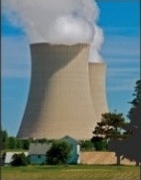
Poisoned Beauty:inside the former closed town next to one of Russia’s largest nuclear power plants via Russia Z

The Soviet Union’s quest to split the atom was ideology-intensive. In Moscow, dedicated “isotope shops” showcased a brave new tech-driven world to members of the public. Young, beautiful physicists carefully explained the benefits of atoms and isotopes in real life applications like growing potatoes, creating new vacuum cleaners, and measuring temperatures. The Soviet government needed to promote the atom to justify the huge resources that were invested in the programme.

But while peaceful atomic power was widely advertised among the public, thousands of scientists worked discreetly on something else: the atomic bomb. These specialists worked in pre-designed “closed towns” all over Russia — including Ozersk in the southern Urals, where the plutonium rod for the first Soviet atomic bomb was designed and produced. Under communism, these towns were generally not even shown on maps. Although residents were free to come and go, inhabitants lived encircled by a fence of barbed wire, and all visitors had to be pre-approved.

St Petersburg-based photographer Oleg Savunov was able to secure a pass to Ozersk, which still remains semi-closed, to document the near-unbearable stillness and tranquility of a town in the vicinity of one of the biggest nuclear plants in Russia.

[…]

Savunov walked around the seemingly perfect pre-fab town, dotted by fragrant apple trees in bloom, with neat houses and clean, graffiti-free streets. But his images do not forget the numerous incidents which took place nearby, including the 1957 Kyshtym disaster which exposed locals to up to 20 times the radiation suffered by the victims of the Chernobyl disaster victims. In terms of severity, the Kyshtym nuclear disaster has only been surpassed by Chernobyl in Ukraine and Fukushima in Japan. Many workers and engineers from Ozersk would later be sent to Chernobyl to help liquidate the catastrophe. They returned home highly damaged, with some forced to have both their hands and legs amputated to stop the high levels of radiation they had contracted from spreading further.

[…]

Savunov began photographing the damaged nature, such as mutant birches and lone fields, in an attempt to capture the terrible conflict caused by the humankind’s separation from the natural world, as part of his study of identity, self-identification, and its relation to the landscape in Russia. 

Ozersk remains a semi-restricted area, as the nearby nuclear power plant is still functioning as a reprocessing facility for spent nuclear fuel — including fuel from abroad. New control measures were introduced after eco-activists began to protest the site, although incidents still happen — as regularly as every three months, according to locals still working at the plant. You can listen to more insider, first-hand comments by the locals on Savunov’s website, in Russian. 

Read more at Poisoned Beauty:inside the former closed town next to one of Russia’s largest nuclear power plants


Posted in *English | Tagged , , , | Comments Off on Poisoned Beauty:inside the former closed town next to one of Russia’s largest nuclear power plants via Russia Z

福島原発・汚染水、県議会「安全確認できた」…不適切な測定方法か、測定不能な測定器使用か via Business Journal

文=菅谷仁/編集部

 東京電力福島第1原発のタンクに溜まり続けることで、問題となっているトリチウムなどを含む汚染処理水。政府は10月末にも関係閣僚会議を開き、汚染処理水の海洋放出を決める方針だったが、地元の漁業団体の反発などで先送りとなった。
 そんな渦中の11月10日、福島県議会避難地域復興・創生等対策特別委員会のメンバーが第1原発に訪問した。その際に、トリチウム水の線量を測定している風景を切り取った写真が物議を醸している。トリチウム水の線量を測定している風景を切り取った写真に関して複数の研究者から「これは誤った測定方法だ」「誤解を招く」との指摘が相次いでいる。
 写真で県議らは空間線量などのγ(ガンマ)線を測定する機器を使っている。だが、処理水に含まれるトリチウムはβ(ベータ)線核種であり、この測定器ではもともと放射線量は計測されないからだ。

(略)

「処理水の安全性について、その場にいた全県議が科学的に確認することが出来ました。写真は、処理水の安全性を確認した神山悦子県議(共産党)江花 圭司県議(自民党)です」(原文ママ、以下同)
「江花圭司県議が放射線数値を測る機器を持ち、渡部優生県議(県民連合)、瓜生信一郎県議(県民連合)が処理水ボトルを持っています」
「ちなみに、処理水ボトルの放射線量は、0.12マイクロシーベルト、対比する市販の家庭用ゲルマニウム温浴ボール1.38 マイクロシーベルトでした」
「ちなみに『処理水ボトルの水は飲めるのか?』と聞いたところ、東電の説明では『煮沸すれば飲める』とのことでした。煮沸の理由としては『元々は雨水や地下水であり、このまま飲むと雑菌でお腹を壊す』という説明を受けました。確かに、そりゃそうだ」

(略)

実際問題として、廃炉現場に携わる政府関係者や東電関係者からは「今のような遅々として進まない廃炉作業の現状下で、再び東日本大震災のような大規模災害が発生し、大津波が襲来した場合、前回の原発事故に並ぶ破滅的な結果を招く可能性がある」「タンク増設のリソースを、廃炉に回し事故の元凶である燃料デブリの取り出しに注力しなければ、根本的な二次災害の不安払しょくにはならない」などとの声も聞かれる。処理水をどうするのかは、まさに廃炉の最前線にとって喫緊の課題なのだ。
トリチウムはβ線核種

 そうはいっても福島第1原発に貯蔵されているトリチウム水は原子力規制委員会が規制する放射性物質であり、正確な測定と誤りのない情報発信は必要なはずだ。
 トリチウムはβ線核種だ。放射線にはα線、β線、γ線の3種類がある。一般的に電磁波であり極めて透過性の高いγ線は厚さ10センチの鉛板でなければ遮蔽するのが難しい。一方、α線は原子核なので紙1枚でも通過できない。β線は電子なのでプラスチック板で遮ることが可能だ。
 つまり水面の線量を図るのならまだしも、β線を発しているトリチウム水を、県議会が測定しようとしたようにペットボトルの外側から正確に測定することは難しいのだ。
 また、県議会メンバーが測定に利用しているアロカTCS-172シンチレーションサーベイメータは「高感度環境γ線測定器」でありβ線を測るのには適していない。

(略)

「測定器は当方が当日貸し出したものです。ご指摘のように、この測定器はトリチウムのβ線を計測するのは適していません。当方としては、ALPSでセシウムなどのγ線核種がしっかり除去できているということをご理解いただくために、機器を貸し出させていただきました。今回の測定の趣旨は、トリチウム水が周囲に高いγ線を発しているということはなく、周囲のバックグランドと同じ程度の線量であることを示すためのもので、トリチウム水自体の線量を測定するものではないと考えております」
 県議会、東電ともにトリチウム水の安全性を強調したかったのだろうが、このアピール方法では誤解や邪推を招く可能性が高いのではないだろうか。いずれにせよ科学的に正確な立証と誤解のない情報発信を重ねない限り、風評被害の払拭は難しいだろう。

全文は福島原発・汚染水、県議会「安全確認できた」…不適切な測定方法か、測定不能な測定器使用か

Posted in *日本語 | Tagged , , , | 6 Comments

65% of Fukushima evacuees have no intention of returning home: survey via Kyodo News

Sixty-five percent of the people who evacuated from Fukushima Prefecture after the March 2011 nuclear disaster have no intention of returning, according to a recent survey conducted by a Japanese university.

While the survey, conducted by a research facility at Kwansei Gakuin University, only received responses from 522 of 4,876 people to whom questionnaires were sent, it provided a rare insight into how former residents see the reconstruction of their former home.

[…]

Among the 522 respondents who resided in the prefecture at the time of the nuclear meltdowns at the Fukushima Daiichi power plant triggered by the massive quake and ensuing tsunamis, 341 people said they do not intend to return.

According to the survey conducted between July and September, 138 people said they plan to go back and 43 people did not answer or offer a valid response.

In response to a multiple-choice question asking why they have not returned to their homes, 46.1 percent said they still fear contamination of the environment, followed by 44.8 percent who said they have settled down in places they currently live.

Read more at 65% of Fukushima evacuees have no intention of returning home: survey

Posted in *English | Tagged | 8 Comments

「相談相手がほしい」福島原発の避難者アンケート via 日刊スポーツ

「相談相手がほしい」。関西学院大災害復興制度研究所が実施した東京電力福島第1原発事故の避難者アンケートの自由記述欄には、他者とのつながりを求める声が目立った。自主避難による別居が原因で、新型コロナウイルスの給付金を受け取っていないケースがあることもうかがえた。

自由記述欄には「精神科に通院している。元の場所へ帰りたい」「狭い部屋に住んでいるが、子どもが大きくなり、ますます手狭でストレスが大きい」といった切実な悩みが記されていた。

避難者全体を対象にした問いで、近所と「ほとんど付き合いがない」の回答は、事故前の5・9%から現在は21・6%に増加していた。

新型コロナの給付金を巡っては「世帯主が受け取っているので渡してもらえていない」「『反対を押し切って避難したのだから、給付金の権利はない』と言われた」との記載があった。

続きは「相談相手がほしい」福島原発の避難者アンケート

Posted in *日本語 | 6 Comments

Fukushima’s Radioactive Wastewater Dilemma via Hakai Magazine

What to do with hundreds of thousands of tonnes of contaminated water?

by  Amorina Kingdon

The word “Fukushima” has become known globally as shorthand for a nuclear disaster that happened at the Fukushima Daiichi Nuclear Power Plant on the coast of Japan in March 2011. The disaster at the plant—about three hours’ drive north of Tokyo on the shore of the Pacific Ocean—began with a Magnitude 9.0 earthquake and tsunami that flooded critical control equipment and triggered a meltdown. For nearly a decade, the plant’s workers have cooled the wreckage with water. Now the Tokyo Electric Power Company (TEPCO), the power plant’s owner, is facing a new problem: what to do with radioactive water piling up at the site.

Each reactor encloses rods of uranium pellets. Uranium is naturally radioactive and undergoes a process called fission—its atoms decay, or split, at a predictable rate, emitting neutrons and heat. In the reactor fuel, this natural ability is harnessed—neutrons collide with other uranium atoms and split them apart in a chain reaction. The resulting heat is used to boil water, which drives steam turbines and generates electricity. Nuclear reactors control fission rates by surrounding the fuel rods with “control rods” that absorb extra neutrons. To keep the fuel cooled and avoid overheating and meltdown, it is immersed in water. Before the quake, three of Fukushima’s six nuclear reactors were in use and operating smoothly to generate electricity.

[…]

We’ve unpacked this coastal conundrum with the help of marine chemist and oceanographer Jay Cullen at the University of Victoria, British Columbia.

[…]

How can the wastewater be treated or cleaned?

The collected wastewater is filtered through resin beads, which have an electrical charge that attracts radioactive isotopes, including cesium and strontium. The beads are then stored as standard radioactive waste.

Most of the water also goes through further processing, including an advanced liquid processing system (ALPS) that strips charged particles out of the water. ALPS doesn’t remove everything; it leaves an isotope of hydrogen called tritium in the water. Tritium is not known to be harmful to life, although the effects of large doses are untested.

[…]

What are the disposal options for this wastewater, and why is Japan considering the ocean?

Disposal options are very limited. Since dosage determines toxicity, any scheme must dilute the radioactive water as much as possible. An expert panel assembled to find solutions focused on two potential options: vaporizing the water and dispersing it into the atmosphere from a very tall stack, or dumping it in the ocean.

The expert panel advised the Japanese government in 2020 that ocean dumping was preferable. The International Atomic Energy Agency, the United Nations organization responsible for nuclear monitoring, agreed it was feasible. TEPCO says that if it receives approval, the water in the tanks would be released into the sea offshore Fukushima very slowly, over several decades. Cullen notes that there are risks to not dumping the water. “By storing on the site,” he says, “you risk potential uncontrolled release due to another natural disaster or human error.”

[…]

If the water is dumped in the ocean, could it impact human or marine life?

There’s no way to test the impacts of ocean dumping ahead of time. The only way to anticipate the impacts is to look at studies of previous releases of radioactive material into the ocean, as well as studies of the effects radioactive isotopes have on the body.

The isotopes cesium-137 and strontium-90 can be harmful because they enter cells through the same pathways as the nutrients potassium and calcium. An organism could easily incorporate radioactive cesium or strontium into its body, as if it were a nutrient. These isotopes alone aren’t toxic, but their decay is. “When they decay, they generate free radicals,” Cullen says, referring to certain harmful forms of oxygen. “And those can attack important molecules, like DNA inside your cells, and cause problems in replication, and cause illnesses like cancer.”

Cesium can also biomagnify—increase in concentration as it moves through the food chain—to build up in top predators. A study has linked carbon isotopes in seals off the coast of Scotland, for instance, to material released from a nuclear waste disposal site at Sellafield, England. Measurements off the coast of Japan in 2011 identified radioactive cesium from the Fukushima incident throughout the food web, with higher levels in organisms closer to shore. Since the second quarter of 2015, cesium levels in all organisms have been well below Japan’s safety limits for human consumption, but the isotope has persisted.

The effects of dumping the water remain unknown. “Determining what the risk would be to the public and to the environment,” Cullen says, “could only be done if we knew exactly what was in the tanks. And at this point, we don’t.”

Read more at Fukushima’s Radioactive Wastewater Dilemma

Posted in *English | Tagged , , | 7 Comments

米国、F-35で「戦術核爆弾」投下実験成功 via 中央日報

米核兵器開発研究所がF-35戦闘機内部の爆弾倉から戦術核爆弾を投下する実験に初めて成功したと、米政府系のボイス・オブ・アメリカ(VOA)が23日(現地時間)報じた。音速で飛行する戦闘機から戦術核爆弾を投下する実験は今回が初めて。

米国3大核兵器開発機関のサンディア国立研究所はこの日、報道資料を通じて「ステルス戦闘機F-35Aライトニング2に搭載したB61-12改良型低威力戦術核爆弾の最初の適合性試験に成功した」と明らかにした。

(略)

B61-12は米国が核兵器現代化計画の核心目標の一つとして量産中の武器で、最大50キロトンの爆発力があり、爆発強度を調節できると評価される。地下深くの目標物を打撃できるよう考案され、「核バンカーバスター」とも呼ばれると、VOAは説明した。

今回の実験は米ネバダ州トノパー試験場で8月25日に実施された。サンディア国立研究所は核弾頭を除去した模型B61-12を1万500フィート (約3.2キロ)上空から投下するのにかかった時間は約42秒だったと説明した。

また、今回の試験は完ぺきな武器性能認証のための最初の段階とし、新型コロナ感染拡大状況の中でも遅延なく適合性試験を進める方針と述べた。特にF-35A戦闘機のB61-12搭載は、米国と同盟の全体的抑止力にも非常に重要な役割をすると強調した。

(略)

VOAは、F-35戦闘機のステルス機能を利用して隠密な戦術核兵器投射能力を確保できると説明した。音速以上の速度で投下に成功したのは爆弾の安定性の検証に成功したという意味とも強調した。

米国の専門家らはB61-12が相対的に少ない放射能を放出しながら地下施設打撃に特化したという点に触れながら、北朝鮮も念頭に置いていると推定されると述べた。

全文は米国、F-35で「戦術核爆弾」投下実験成功

当サイト既出関連記事:Flight tests to show B61-12 will work on Air Force’s newest fighter jet via Sandia National Laboratories

Posted in *日本語 | Tagged , , | 7 Comments

40年超原発、再稼働手続き開始 高浜町議会が正式同意 via 日本経済新聞

運転開始から40年を超えた関西電力の高浜原子力発電所1、2号機について、立地する福井県高浜町の町議会は25日、全員協議会を開き、再稼働の同意を正式決定した。12日に臨時本会議を開き、再稼働を求める地元からの請願を採択していた。運転40年超の原発について地元議会が同意するのは全国初。再稼働に向けた一連の同意手続きの第1弾となった。

再稼働にはさらに町長、県議会、県知事の同意が必要で、先行きは不透明だ。福井県の杉本達治知事は国や関電に対し、使用済み核燃料の中間貯蔵施設の県外候補地を年内に示すこと、原子力発電の必要性を国民に発信することなどを同意の条件として挙げている。

(略)

関電は高浜1号機の再稼働を2021年3月、2号機を同5月に予定しており、日程は迫っている。関電が高浜原発1、2号機の再稼働を目指すのは、原発の発電コストが火力に比べて割安なため、業績の安定につながるからだ。高浜原発が稼働すれば、1基あたり月25億円程度の費用を圧縮できるとしている。

全文は40年超原発、再稼働手続き開始 高浜町議会が正式同意

Posted in *日本語 | Tagged , , | 7 Comments

除染完了、半数止まり 福島県内農業用ため池 冬場に作業集中業者確保できず via福島民報

東京電力福島第一原発事故に伴う農業用ため池の除染で、対象となる県内二十七市町村、九百九十三カ所のうち、除染が完了したのは九月末現在、十二市町村の五百十一カ所で半数程度にとどまる。除染は営農でため池の水が使われていない冬場に限られ、その間に作業を実施する建設業者を確保できないからだ。農林水産省が完了目標としてきた二〇二〇(令和二)年度の復興・創生期間内は困難な見通しで、市町村からは早急な対応を求める声が上がる。

 県によると、県内には九月末現在、五十六市町村に四千六十五カ所のため池がある。このうち、農水省のマニュアルに基づき、指定廃棄物に該当する一キロ当たり八〇〇〇ベクレル超の放射性セシウムがため池の底土で確認された箇所を対象に、市町村が除染を進めている。

 市町村は県の通知に基づき、対策が未実施なため池の水を農作業に使う際、表層からくみ上げるなどして安全性を確保している。

[…]

浜通りの市町村の担当者は「時間がかかっても、国や県が農繁期でも除染できる対策をしっかりと示してほしい」と訴える。

 国は復興・創生期間が終了する二〇二〇年度以降の除染について、引き続き福島再生加速化交付金を財源として充てる方針。

■営農再開が前提

 農水省のマニュアルでは、除染対象となっているため池のうち、作業着手には営農再開の計画策定が前提となる。ただ、原発事故の帰還困難区域を抱える市町村では、営農再開の見通しが立たず、ため池の除染対策が難航している。

双葉町では対策が必要な六十六カ所のため池のうち、大部分は帰還困難区域にある。町農業振興課は「ため池に限らず、水路など里山を一体的に除染しなければ、営農再開には結び付かない」と対策の長期化による住民の営農や帰還への影響を懸念する。

[…]

■大雨による被害

 昨年十月の台風19号と記録的大雨により、県内のため池は八カ所で堤防が決壊する被害が出た。このうち、南相馬市の一カ所では、堆積物が流出した。

 南相馬市によると、堆積物が流出した農地は作付けをしておらず、影響はなかったという。今後も水害によりため池に被害が及ぶ恐れがあるとして、市は「早急な対策が必要」としている。

全文

Posted in *日本語 | Tagged , | 8 Comments

Why we should oppose nuclear power via Campaign for Nuclear Disarmament

Last Wednesday, Boris Johnson announced £525 million support for new nuclear power. In the coming weeks, he is expected to decide whether to approve a major new nuclear power station at Sizewell in Suffolk. In this guest blog, CND Vice-President Dr Ian Fairlie explains why supporting nuclear power is the wrong decision.

[…]

The reality of the matter is that we are in the midst of a technological revolution that encompasses new forms of renewable energy, new ways of managing the Grid, new methods of energy storage, and new ways of energy conservation.

As a result, the cost of the renewables just keeps on falling, while nuclear becomes inexorably more expensive. To give just one example: offshore wind is already getting built at about £40/MWh, while the Hinkley C plant, were it ever completed, would deliver electricity at about £93/MWh.

The Prime Minister often repeats the myth that nuclear will curb carbon emissions. But the carbon footprint from nuclear’s fuel chain — including uranium mining, milling, U-235 enrichment, fuel fabrication, irradiation, radioactive waste conditioning, storage, packaging and final disposal — is astronomical. A recent study by Mark Jacobson, professor of civil environmental engineering at Stanford, estimates nuclear’s carbon footprint to be 10 to 18 times greater than those from renewable energy technologies.

Boris Johnson would do well to heed the views of the public. 46% of participants in the UK Climate Assembly, a group of British citizens convened by six Parliamentary Select Committees, strongly disagreed that nuclear could play a role in reaching net zero carbon emissions by 2050, with a further 18% undecided. Amongst the reasons for their scepticism were “cost, safety, and issues around waste storage and decommissioning.”

Johnson recites the common myth that the renewables will be unable to supply all our electricity needs. But over 100 academic studies indicate that this view is out-of-date and incorrect: the renewables can indeed supply all our electricity needs. There is simply no need for nuclear.

Beyond this, nuclear power cannot be separated from the problem of nuclear proliferation, as fissile materials for nuclear weapons originate from civil nuclear reactors and nuclear facilities. Countries like Pakistan, India and Israel obtained their nuclear weapons from civilian reactors.

This is merely one problem, albeit a serious one. Nuclear is also an extremely unsustainable energy source. This is partly due to uranium mining which creates mine and mill tailings resulting in pollution and despoilation problems. And although nuclear power has existed for about 70 years, not a single licensed facility exists to deal with these radioactive wastes which will remain dangerous for millennia. The one such facility currently under construction, in Finland, will costs more than the revenue generated by the nuclear fuel it will store.

Apart from the problems of proliferation and unsustainability, we must never forget the serious nuclear accidents at Windscale (now Sellafield) in 1957, Kyshtym in the former USSR also in 1957, Three Mile Island (US) in 1979, Chernobyl (USSR) in 1986, and Fukushima (Japan) in 2011.

[…]

Read more.

Posted in *English | Tagged , , , , , | 8 Comments

Victims of Nuclear Bomb Tests on U.S. Soil 75 Years Ago Continue to Seek Justice via Independent Media Institute/Portside

By Satya Vatti

“They thought the world was coming to an end,” Genoveva Peralta Purcella explains.

On July 16, 1945, the first-ever nuclear bomb was tested in New Mexico, in the Southwestern United States. The detonation was code-named “Trinity.” It is the day that would seal the fate of many Americans living in the surrounding areas for generations to come.

Seventy miles from what became known as ground zero—the Trinity test site—Genoveva’s family lived on a ranch just outside the village of Capitan in New Mexico. Genoveva was born the year after the blast. Now 74 years old, she solemnly recalls how her family remembers the day that would change their lives forever.

[…]

When the sky cleared, her father stepped outside the house and found himself being showered with a white powder. The powder was everywhere and covered everything around them. Nothing escaped it, not the cows the family had raised, or the vegetables in the garden, or the rainwater they stored in the absence of running water. Like other families who went through this experience, Genoveva’s family also dusted off the powder and consumed their vegetables and the stored water.

The blast produced so much energy that it incinerated everything it touched and formed a fireball that rose to more than 12 kilometers into the atmosphere. The fireball created ash that snowed over the communities surrounding the blast site. The people did not know it then, but this ash that covered thousands of square miles was the radioactive fallout from the explosion.

[…]

In the aftermath of the nuclear test, officials began to cement a false narrative into the consciousness of the nation; the region was remote and uninhabited. Tens of thousands of people, in fact, lived in the Tularosa Basin in 1945. For a long time, the people of the basin believed that the blast was an ammunition explosion. “We were lied to by the government,” said Pino.

It takes 24,000 years for half of the radioactive plutonium used in the Trinity bomb to decay. The people of the region have inhaled and ingested radioactive particles for 75 years because of environmental contamination. Those in power refuse to accept responsibility and take any corrective action. To this day, there have been no cleanup efforts.

Radiation exposure has caused high rates of aggressive cancers, thyroid disease, infant mortality, and other health abnormalities in generations of families in the Tularosa Basin region. The scale of the health impact cannot be determined accurately as long-term epidemiological studies have only been undertaken recently. The findings of the latest research studies by the National Cancer Institute were published in September 2020 in the journal Health Physics.

“There were 10 of us; now only one is surviving,” Genoveva says, speaking of herself. She has lost everyone in her family to cancer.

In a country without universal health care, debt from medical expenses has brought economic ruin to the communities near the Trinity site. “All the pain and suffering we have had to endure, and not a speck of help from the government,” Pino says. “Meanwhile, it has spent trillions on thousands of nuclear weapons.”

[…]

Read more.

Posted in *English | Tagged , , | 9 Comments