70 years after Hiroshima, scientists still don’t truly understand the health risks of radiation.
At 6:45 a.m. on March 1, 1954, the earth rumbled beneath 10-year-old Jalel John’s feet as she stood on Ailuk Atoll in the Marshall Islands. Above her, half the sky turned strange colors. She remembers, in particular, the reds—the uncanny shades of red.
Within six minutes, a mushroom cloud reached 130,000 feet overhead, pulling with it the pulverized coral of islands. Left behind was a crater that measured more than a mile wide and 250 feet deep, vast enough to be visible from space. Some 350 miles away from the blast, John experienced the largest thermonuclear explosion that the U.S. military would ever detonate, a test known as Castle Bravo. (It reached a yield of 15 megatons; in layman’s terms, that’s 1,000 times more powerful than the bomb dropped over Hiroshima.)
Then came the fallout.
At around noon, a white, powdery substance began to drift down from the sky—first onto Rongelap Atoll, some 100 miles east of the explosion, and then onto Utirik Atoll, 300 miles away from the blast. On Ailuk, where John lived, a fine fog filled the air, finally settling on the earth and the atoll’s enclosed lagoon.
The following day, U.S. military planes flew over these islands, measuring radiation levels in the atmosphere. In the evening, an Air Force seaplane landed on Rongelap. The two men who got out of the aircraft were there for no more than 20 minutes and didn’t speak to anyone. They recorded high levels of radiation: The islanders’ total dose was estimated to be between 110 roentgens—enough to induce vomiting and cause muscle aches—and 340 roentgens, which could kill a person. By the next morning, the USS Philip, a slim, gray destroyer, had arrived to evacuate all 65 people on Rongelap. Shortly after, the U.S. Navy moved 154 people off Utirik.
But John and some 400 other residents remained on Ailuk. The total dose of radiation they had received, estimated at a maximum of 20 roentgens, “would not be a medical problem,” an Air Force lieutenant colonel reported to command that week.
[…]
Over the past 17 years, the U.S. Energy Department has invested in more than 240 projects, at a cost of over $130 million, to discover the effects of low-dose radiation on humans and the environment, to no avail. This January, the House of Representatives passed a bill calling for a new road map for low-dose research to find a science-backed reason to end what are—in the words of House Science Committee Chairman Lamar Smith, a Texas Republican—“overly restrictive regulations” on nuclear industries. Although the bill appears on its face benign, calling for coordinated efforts by scientists to finally get to the bottom of low-dose exposure risks, its goal is to discredit the so-called “linear no-threshold” (LNT) model, which has formed the basis for radiation safety policy for decades. This model assumes that radiation at any dose is harmful—an approach used by regulatory bodies, both in the United States and internationally. While most scientists agree that the LNT model offers a reasonably conservative guide for establishing standards, they know it’s based on an estimate—and they understand that, eventually, studies will pinpoint the exact effects of radiation at low doses.
Clarifying uncertainty over a long period of time is normal and necessary in science, where consensus can come at a glacial pace, but in the hands of U.S. policymakers, scientific examination can quickly get amped up and politicized. The legislative calls for more research could be discounted as political minutiae, but not having the answer to the LNT puzzle could already be having tangible—even deadly—consequences.
Those, like Lamar Smith, who oppose the LNT model, believe there is a threshold of exposure below which harm is either nonexistent or of no consequence. But even as it stands, America’s occupational radiation dose limits are more than twice those of international standards and are notably high among nuclear countries’ safety regulations. To make matters worse, government officials have avoided setting strict standards for resettlement and compensation plans for victims of a nuclear attack or accident. Stunningly, children’s greater sensitivity to radiation is not even accounted for in nuclear safety regulations.
To put it simply: The new bill places scientific inquiry in the service of a deregulation agenda that could make people less safe—not more.
[…]
“I’d have people come in and meet with me and say, ‘We think the power plant is making our kids sick,’” says Jaczko, referring to the three years he headed the NRC. When he’d tell them that the commission hadn’t seen any worrisome health problems among workers in their area, the parents would always have a similar counterargument: Children may be more susceptible to radiation risks. Currently, the commission calculates doses to the public by modeling, primarily, how radiation affects an adult, not a child. When it updates its safety rules, according to a 2014 NRC report, the commission plans to include creating “a more realistic representation” of the public.
Although scientists know children are more vulnerable to radiation, they’re unsure exactly how much more. In 2013, the United Nations’ scientific committee on radiation effects said that children could be up to three times more sensitive “for some health effects but certainly not for all.” For a parent, however, doubling even a small risk to a child may well be unacceptable. And the health effects to which kids are clearly more susceptible are not to be understated: leukemia, as well as thyroid, skin, breast, and brain cancers.
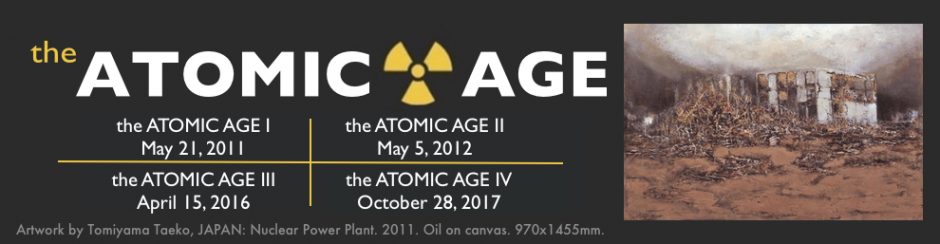
The 2011 nuclear accident that unfolded in Fukushima, Japan, illustrates how these dangers play out in real life. When a World Health Organization panel assessed the health risks to the people exposed to radiation during the accident, it found that, overall, the increased incidence of cancer was likely to “remain below detectable levels.” But the panel also found that infants were at the highest risk. (While they were exposed to external and internal radiation like everyone else, they also would have ingested their mothers’ breast milk, where radiation concentrates.)
In the worst-affected areas, where doses were estimated to be between 12 and 25 mSv in the first year after the accident, the lifetime risk for leukemia has increased 7 percent for male infants, according to the panel, while female infants have a 4 percent greater risk of all solid cancers and a 6 percent greater risk of breast cancer. Females exposed as infants, the panel also found, have a 70 percent greater lifetime risk of developing thyroid cancer. Recently, these statistics have begun to play out in reality. Researchers at the Fukushima Medical University have detected increased rates of thyroid cancer in children. This could be an artifact of stepped-up monitoring, as regular thyroid cancer screenings hadn’t been part of normal pediatric visits. But anti-nuclear activist Helen Caldicott says that argument, made by Japanese medical officials, is a thin excuse. Authorities, she says, “don’t want to admit Fukushima could cause any disease at all.”