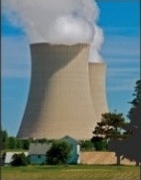
Agency could keep Three Mile Island nuclear debris in Idaho via Chicago Tribune

By KEITH RIDLER

The partially melted reactor core from the worst nuclear accident in U.S. history could remain in Idaho for another 20 years if regulators finalize a license extension sought by the U.S. Energy Department, officials said Monday. 

The core from Three Mile Island in Pennsylvania partially melted in 1979, an event that changed the way Americans view nuclear technology. 

The U.S. Nuclear Regulatory Commission has determined there would be no significant impact from extending the license to store the core at the 890-square-mile (2,305-square-kilometer) site that includes Idaho National Laboratory. 

[…]

The Energy Department site sits atop the Eastern Snake Plain Aquifer, a Lake Erie-size underground body of water that supplies cities and farms in the region with water. 

The new license would be good through 2039, four years past a deadline the Energy Department initially set with Idaho to remove the radioactive waste. 

State and federal officials say the waste could still be shipped out of Idaho ahead of the 2035 deadline and would not affect the 1995 agreement that contains penalties for missed deadlines. 

[…]

The U.S. Energy Information Administration says there’s some 77,000 tons (70,000 metric tons) of spent nuclear fuel stored at commercial nuclear sites around the country because there’s no place else to put it. 

The Department of Energy said no additional material would be added to the waste storage site in Idaho. 

The previous license expired in March. It said the maximum amount of Three Mile Island debris that could be stored at the Idaho site was 183,000 pounds (83,000 kilograms) of damaged nuclear fuel assemblies and 308,000 pounds (140,000 kilograms) of material removed from the reactor vessel. 

Read more at Agency could keep Three Mile Island nuclear debris in Idaho

Posted in *English | Tagged , | 1 Comment

Trial of Tepco Executives Over Japan’s Fukushima Disaster Heads to Conclusion via U.S. News

BY AARON SHELDRICK
TOKYO (Reuters) – A Tokyo court will hand down a verdict later this week on whether three Tokyo Electric Power executives are liable for the 2011 Fukushima disaster, the only criminal case to arise out of the world’s worst nuclear crisis since Chernobyl in 1986.

The trial, which started in June 2017, was conducted by state-appointed lawyers after prosecutors decided not to bring charges against the executives of the company known as Tepco.

Former Tepco Chairman Tsunehisa Katsumata and onetime executives Sakae Muto and Ichiro Takekuro apologized during the first hearing at the Tokyo District Court for causing trouble to the victims and society, but pleaded not guilty.

[…]

Lawyers acting as prosecutors said the three executives had access to data and studies anticipating the risk to the area from a tsunami exceeding 10 meters (33 feet) in height that could trigger power loss and cause a nuclear disaster.

Lawyers for the defendants, however, said the estimates were not well established, and even experts had divisive views on how the Fukushima reactors would be affected by a tsunami.

The three former Tepco executives are the first individuals to face criminal charges for the Fukushima nuclear disaster, but a high bar for proof may prevent a conviction. Prosecutors had declined to bring charges, citing insufficient evidence, but a civilian judiciary panel twice voted to indict the executives, overruling the determination not to go to trial.

[…]

Citizen judiciary panels, selected by lottery, are a rarely used feature of Japan’s legal system introduced after World War Two to curb bureaucratic overreach.

Indictments brought by the panels, however, have a low conviction rate. One review of eight of these cases by the Eiko Sogo Law Office found just one, equal to a 17 percent conviction rate, compared with an overall rate of 98 percent in Japan.

Read more at Trial of Tepco Executives Over Japan’s Fukushima Disaster Heads to Conclusion

Posted in *English | Tagged , , | 4 Comments

原発事故、津波の予見性焦点 東電旧経営陣に19日判決 via 日本経済新聞

福島第1原子力発電所事故を巡り、業務上過失致死傷罪で強制起訴された東京電力旧経営陣3人の判決が19日、東京地裁(永渕健一裁判長)で言い渡される。巨大津波を予見し、有効な対策を取ることができたかが争点。禁錮5年の求刑に対し、旧経営陣側は無罪を主張している。未曽有の原発事故の刑事責任が問われた裁判で、どのような判断が下されるのか。

強制起訴されているのは勝俣恒久元会長(79)、武黒一郎元副社長(73)、武藤栄元副社長(69)でいずれも「事故を予見するのは不可能だった」などと主張している。

2017年6月に始まった公判には、東電関係者や専門家ら20人超が証人として出廷した。太平洋側の日本海溝沿いで巨大地震が発生しうるとした政府の地震調査研究推進本部の長期評価(02年公表)や、津波の対策に関する社内での議論の経過について証言した。

(略)

指定弁護士は長期評価は科学的知見に基づき、高い信頼性があったと主張。08年6月、長期評価に基づく最大15.7メートルの巨大津波の試算を報告された武藤氏が対策検討を指示したが、その後方針を転換した点を挙げて「対策を先送りした」などと批判している。

指定弁護士は当時会長の勝俣氏らが出席した09年2月の会議でも担当幹部が14メートル程度の津波に言及しており、3人は巨大津波と原発事故を予見できたと指摘。「積極的に情報を集めて的確に対策を実行すれば事故は防げた」などと訴えている。

旧経営陣は「長期評価は信頼性がなく、対策を取る根拠としては不十分だった」などとして、巨大津波は予見できなかったと主張。実際に原発を襲った津波は試算を上回り、試算に基づく対策を取っていても事故は防げなかったとしている。

原発事故を巡り、東京地検は旧経営陣3人を嫌疑不十分で不起訴としたが、検察審査会が14年に「起訴相当」、15年に「起訴すべきだ」と議決し、指定弁護士が16年2月に強制起訴した。検察当局が起訴を見送った事件で有罪を立証するハードルは高いとされ、強制起訴に至った事件での有罪は2件にとどまる。

全文は原発事故、津波の予見性焦点 東電旧経営陣に19日判決

Posted in *日本語 | Tagged , | 1 Comment

小泉環境相「大阪市長の考え聞いてみたい」 福島原発処理水の受け入れ発言で via 産経新聞

 小泉進次郎環境相は17日、東京電力福島第1原発で増え続ける有害放射性物質除去後の処理水をめぐり、日本維新の会の松井一郎代表(大阪市長)が条件付きで大阪湾への放出を容認する考えを示したことについて「市長の考えもある。会う機会があれば考えを聞いてみたい」と語った。ただ、「軽々に所管外の者が発言することで福島の皆さんを傷つけることはあってはならない」とも述べた。福島県いわき市内で記者団に語った。

国際原子力機関(IAEA)年次総会で韓国政府代表が処理水に対する懸念を示したことについては「正式な発言は確認していない」と述べるにとどめた。

続きは小泉環境相「大阪市長の考え聞いてみたい」 福島原発処理水の受け入れ発言で

関連記事:原発処理水、大阪湾で受け入れ=科学的根拠あれば-松井大阪市長 via Jiji.com

Posted in *日本語 | Tagged , , | 1 Comment

The Logic of the Nuclear Age: The Insanity of Our Nuclear Weapons Policy via The Bulletin of Atomic Scientists

By E. Martin Schotz, MD/ peaceworker

Let us begin by examining two moments from the media in the past year.  The first occurred on Radio 360  during a segment exploring under what conditions the United States might launch nuclear weapons.  At one point the host exclaimed, “Well we wouldn’t want to blow up the world, if we didn’t have a good reason to do so.”  Put a check by that comment.  We will come back to it.  The second moment was a question a reporter put to Senator Bernie Sanders as to whether he would be willing to push the nuclear button.  The sense of the question was that to be qualified to be President of the United States you had to be willing to “push the button.”

How did we ever get into this situation, where we are planning to blow up the world and need to make sure we have a “good reason” to do so, and  in which in order to be considered competent to be President of the United States, you have to be willing to blow up the world.  This is literally the absurd criminal insanity in which we are living with nuclear weapons.  How has this come about?  By what means have we as otherwise sane human beings allowed ourselves to be put in such a situation?  How can political representatives and military officials who ordinarily appear sane participate in such a situation?

I want to suggest in this essay that one key to understanding this insanity rests on our failure to grasp the irrationality of the concept “nuclear deterrence.”  Albert Einstein at the dawn of the nuclear age famously warned that “the splitting of the atom has changed everything in the world except our mode of thinking, and thus we drift toward unparalleled  catastrophe.” 

[…]

Nuclear war does not begin with the weapons going off.  It ends with the weapons going off.  Thus the existence of nuclear weapons forces us to think of nuclear war as beginning prior to their being exploded.  Nuclear war must be seen as a process, a process in which the weapons are developed, tested and deployed.  A process in which war propaganda conditions the population to believe other countries are their enemies.  Looked at from this vantage point we must recognize that we are in a nuclear war right now. 

The idea that the US and Russia are separate, is not operative, when it comes to nuclear weapons.  Thus the age old moral adage – “Do unto others as you would have them do unto you” — this moral adage in the nuclear age has been turned into a practical necessity.  We cannot afford to see Russia as an enemy and Russia cannot afford to see us as an enemy.  We must see each other a partners in survival.  

Once the  US and Russia see each other as partners in survival, they would be in a position to work together to help other nations join in the process.  This is the way an international ban on nuclear weapons can eventually be achieved.

For those who find what has been written here unbelievable and say, “There is no way our officials could be so irresponsible”, an anecdote may be instructive.  Physicians for Social Responsibility, one of the leading organizations in the US for nuclear abolition, was begun in 1961, when a group of physicians decided to publish an article in The New England Journal of Medicine detailing what would be the result of a nuclear attack on Boston.  Following its publication the source of the largest number of requests for copies of the article came from the Pentagon.  It turned out that the Pentagon had developed and deployed a massive arsenal of nuclear weapons without taking the trouble to investigate what would happen if the arsenal was used.

Finally I want to quote the words of Four Star General Lee Butler who from 1991 to 1994 was commander of all US strategic nuclear forces.  Within two years of retiring from the Air Force he began traveling the world as an outspoken nuclear abolitionist.

[…]

… We cannot at once keep sacred the miracle of existence and hold sacrosanct the capacity to destroy it…..  We cannot sit in silent acquiescence to the faded homilies of the nuclear priesthood.  It is time to reassert the primacy of individual conscience, the voice of reason and the rightful interests of humanity.  (speech at the National Press Club, February 2, 1998)

Read more.
Posted in *English | Tagged | 2 Comments

Association between the detection rate of thyroid cancer and the external radiation dose-rate after the nuclear power plant accidents in Fukushima, Japan via Medicine

Yamamoto, Hidehiko MDa; Hayashi, Keiji MDb; Scherb, Hagen Dr rer nat Dipl-Mathc,*

A thyroid cancer ultrasonography screening for all residents 18 years old or younger living in the Fukushima prefecture started in October 2011 to investigate the possible effect of the radiological contamination after the Fukushima Daiichi Nuclear Power Plant accidents as of March 12 to 15, 2011. Thyroid cancer in 184 cases was reported by February 2017. The question arises to which extent those cancer cases are a biological consequence of the radiation exposure or an artefactual result of the intense screening of a large population.

Experiences with the Chernobyl accident suggest that the external dose may be considered a valid surrogate for the internal dose of the thyroid gland. We, therefore, calculated the average external effective dose-rate (μSv/h) for the 59 municipalities of the Fukushima prefecture based on published data of air and soil radiation. We further determined the municipality-specific absolute numbers of thyroid cancers found by each of the two screening rounds in the corresponding municipality-specific exposed person-time observed. A possible association between the radiation exposure and the thyroid cancer detection rate was analyzed with Poisson regression assuming Poisson distributed thyroid cancer cases in the exposed person-time observed per municipality.

The target populations consisted of 367,674 and 381,286 children and adolescents for the 1st and the 2nd screening rounds, respectively. In the 1st screening, 300,476 persons participated and 270,489 in the 2nd round. From October 2011 to March 2016, a total of 184 cancer cases were found in 1,079,786 person-years counted from the onset of the exposure to the corresponding examination periods in the municipalities. A significant association between the external effective dose-rate and the thyroid cancer detection rate exists: detection rate ratio (DRR) per μSv/h 1.065 (1.013, 1.119). Restricting the analysis to the 53 municipalities that received less than 2 μSv/h, and which represent 176 of the total 184 cancer cases, the association appears to be considerably stronger: DRR per μSv/h 1.555 (1.096, 2.206).

The average radiation dose-rates in the 59 municipalities of the Fukushima prefecture in June 2011 and the corresponding thyroid cancer detection rates in the period October 2011 to March 2016 show statistically significant relationships.

Read more.

Posted in *English | Tagged , | 2 Comments

イランと米、核合意で応酬=韓国、原発処理水で注意喚起-IAEA総会 via Jiji.com

【ウィーン時事】国際原子力機関(IAEA)の年次総会が16日、ウィーンの本部で開幕した。

(略)

イランのサレヒ原子力庁長官は、核合意での核開発制限を段階的に撤廃していることについて、米国の制裁に対抗するには「ほかに手段がない」と正当化。米国のペリー・エネルギー長官は「イランに最大限の圧力をかけ続ける」とのトランプ大統領の声明を紹介した。サウジアラビアの石油施設攻撃についても、イランの関与を主張し批判した。

福島原発の処理水の問題では、韓国は既にIAEAに環境への影響を懸念する書簡を送付して海洋への放出をけん制している。日本政府代表として参加した竹本直一・科学技術担当相は演説で、韓国の名指しは避けつつ、「科学的根拠がない批判」があると指摘。「公正で理性的な議論」を呼び掛けた。

全文はイランと米、核合意で応酬=韓国、原発処理水で注意喚起-IAEA総会

Posted in *日本語 | Tagged , , , | 1 Comment

Fukushima fishermen concerned for future over release of radioactive water via The Guardian

Eight years after the triple disaster, Japan’s local industry faces fresh crisis – the dumping of radioactive water from the power plant

[…]

Having spent the past eight years rebuilding, the Fukushima fishing fleet is now confronting yet another menace – the increasing likelihood that the nuclear plant’s operator, Tokyo Electric Power (Tepco), will dump huge quantities of radioactive water into the ocean.

“We strongly oppose any plans to discharge the water into the sea,” Nozaki, head of Fukushima prefecture’s federation of fisheries cooperatives, told the Guardian.

[…]

Currently, just over one million tonnes of contaminated water is held in almost 1,000 tanks at Fukushima Daiichi, but the utility has warned that it will run out of space by the summer of 2022.

Tepco has struggled to deal with the buildup of groundwater, which becomes contaminated when it mixes with water used to prevent the three damaged reactor cores from melting. Although the utility has drastically reduced the amount of wastewater, about 100 tonnes a day still flows into the reactor buildings.

Releasing it into the sea would also anger South Korea, adding to pressure on diplomatic ties already shaken by a trade dispute linked to the countries’ bitter wartime history.

Seoul, which has yet to lift an import ban on Fukushima seafood introduced in 2013, claimed last week that discharging the water would pose a “grave threat” to the marine environment – a charge rejected by Japan.

[…]

Confirming Maeda’s fears, almost a third of consumers outside Fukushima prefecture indicated in a survey that dumping the contaminated water into the sea would make them think twice about buying seafood from the region, compared with 20% who currently avoid the produce.

Tepco’s Advanced Liquid Processing System removes highly radioactive substances, such as strontium and caesium, from the water but the technology does not exist to filer out tritium, a radioactive isotope of hydrogen that coastal nuclear plants commonly dump along with water into the ocean. Tepco admitted last year, however, that the water in its tanks still contained contaminants beside tritium.

[…]

Supporters of the discharge option have pointed out that water containing high levels of tritium, which occurs in minute amounts in nature, would not be released until it has been diluted to meet safety standards.

But Shaun Burnie, a senior nuclear specialist with Greenpeace Germany who regularly visits Fukushima, said a proportion of radioactive tritium had the potential to deliver a concentrated dose to cell structures in plants, animals or humans. “Dilution does not avoid this problem,” he said.

Burnie believes the solution is to continue storing the water, possibly in areas outside the power plant site – a move that is likely to encounter opposition from nuclear evacuees whose abandoned villages already host millions of cubic metres of radioactive soil.

[…]

Critics say the government is reluctant to openly support the dumping option for fear of creating a fresh controversy over Fukushima during the Rugby World Cup, which starts this week, and the buildup to the 2020 Tokyo Olympics.

Read more at Fukushima fishermen concerned for future over release of radioactive water

Posted in *English | Tagged , | 1 Comment

A Dead Russian Submarine Armed with Nuclear Torpedoes was Never Recovered via The National Interest

A permanent watery grave.
by Robert Farley

Key point: She rests at a depth of 15,000 feet—too deep to make recovery practical.

The Bay of Biscay is one of the world’s great submarine graveyards. In late World War II, British and American aircraft sank nearly seventy German U-boats in the Bay, which joined a handful of Allied and German subs sunk in the region during World War I. On April 12, 1970, a Soviet submarine found the same resting place. Unlike the others, however, K-8 was propelled by two nuclear reactors, and carried four torpedoes tipped by nuclear warheads.

The Novembers (627):
The November (Type 627) class was the Soviet Union’s first effort at developing nuclear attack submarines. The 627s were rough contemporaries of the Skate and Skipjack class attack boats of the U.S. Navy (USN), although they were somewhat larger and generally less well-arranged. Displacing 4750 tons submerged, the thirteen 627s could make thirty knots and carry twenty torpedoes (launched from eight forward tubes). Visually, the 627s resembled a larger version of the Foxtrot class diesel-electric subs; the Soviets would not adopt a teardrop hull until the later Victor class. The Novembers were renowned in the submarine community for their noise; louder than any contemporary nuclear sub, and even preceding diesel-electric designs.

The Novembers were initially designed with a strategic purpose in mind. The Soviets worked on a long-range nuclear armed torpedo (dubbed T-15), which could strike NATO naval bases from ranges of up to 40km. The torpedo was so large that each submarine could only carry a single weapon. However, increasingly effective Western anti-submarine technology quickly scotched the first mission. The Novembers were too loud to plausibly find their way into close enough proximity to a NATO port to ever actually fire a nuclear torpedo in wartime conditions.

[…]

On April 8, K-8 suffered two fires, resulting in a shutdown of both nuclear reactors. The boat surfaced, and Captain Vsevolod Borisovich Bessonov ordered the crew to abandon ship. Eight crew members, trapped in compartments that were either flooded or burned out, died in the initial incident. Fortunately, a Soviet repair vessel arrived, and took K-8 under tow. However, bad weather made the recover operation a difficult prospect. Much of K-8’s crew reboarded the submarine, and for three days fought a life-and-death struggle to save the boat. Although details remain scarce, there apparently was no opportunity to safely remove the four nuclear torpedoes from K-8, and transfer them to the repair ship.

Unfortunately, the loss of power onboard and the difficult weather conditions were too much for the crew to overcome. On April 12, K-8 sank with some forty crew members aboard, coming to rest at a rough depth of 15,000 feet. The depth made any effort at recovering the submarine, and the nuclear torpedoes, impractical.

Read more at A Dead Russian Submarine Armed with Nuclear Torpedoes was Never Recovered

Posted in *English | Tagged , , | 1 Comment

「祈りと感謝を」バチカンのミサで福島からのメッセージ via 朝日新聞

ローマ・カトリック教会の総本山バチカンのサンピエトロ大聖堂で14日、東日本大震災の被災地福島県からのメッセージが「共同祈願文」として読み上げられた。ローマ法王代理の枢機卿が開いたミサで、同県からの参加者が「津波と原発事故風評被害で今なお苦しみつつも、桃が再び実を付け復興の希望となっている」と世界に訴えた。

メッセージを読み上げたのは、この日のミサに日本から参列した「イルミナート合唱団」のメンバーで、同県白河市の佐藤純子さん(67)。

(略)

ミサではイルミナート合唱団が、長崎・平戸の生月島のキリシタンが伝えてきた祈りの歌「オラショ」を披露。同合唱団の芸術監督指揮者の西本智実さんは、曽祖母が生月島出身で、「オラショの演奏を通じて、日本とバチカンの時空を超えたつながりを感じる」と語った。

フランシスコ法王は11月23~26日、日本を訪れる予定。東日本大震災の被災者や原発事故の避難者とも都内で面会するとみられる。(バチカン=河原田慎一)

全文は「祈りと感謝を」バチカンのミサで福島からのメッセージ

Posted in *日本語 | Tagged , , , | 3 Comments