ブラジルに移住した被爆者らでつくるブラジル被爆者平和協会が結成から30年を迎え、体験談をまとめた本を制作した。会は1984年に結成、現在110人の会員がいる。
続きと動画は在ブラジル被爆者の30年誌 完成 (広島県)
ブラジルに移住した被爆者らでつくるブラジル被爆者平和協会が結成から30年を迎え、体験談をまとめた本を制作した。会は1984年に結成、現在110人の会員がいる。
続きと動画は在ブラジル被爆者の30年誌 完成 (広島県)
原発事故発生時に加盟国が資金を出し合って損害賠償を可能にすることなどを定めた「原子力損害の補完的な補償に関する条約」(CSC)への加入をめぐって、宮本岳志衆院議員は5日の文部科学委員会で「CSCの狙いは米国との関係で、ともに原発輸出をすすめる国際的な枠組み作りを進めるものだ」と指摘しました。文科省の田中敏研究開発局長は「結果としてそういう環境(=輸出)が整えられる」とのべました。
日本共産党の宮本議員は「原発輸出は相手国、周辺国に回復不可能な人命と人権の侵害、環境破壊の危険をもたらすもので、断じて行うべきではない」と強調しました。
そのうえで、政府がいまなすべきことは、原発の稼働停止・廃炉、そして福島の人たちへの完全賠償だとのべました。この点に関して宮本氏は、福島県浪江町の集団申し立てで福島原子力損害賠償紛争解決センター(ADR)の和解案を拒否する東京電力の姿勢を厳しく批判。「東電に対して和解案を受け入れるよう政府として強く指導すべきだ」と迫り、完全賠償に全力を傾けるよう求めました。
もっと読む。
Traditional owners have reopened the case for siting Australia’s first nuclear waste dump at Muckaty Station in the Northern Territory, just months after a bitter seven-year dispute appeared to have ended.
In June the Northern Land Council abandoned its nomination to the federal government to store low and intermediate radioactive waste in the area north of Tennant Creek after a lengthy legal dispute launched by four clan groups reached the federal court. Local councils, unions and community groups opposed the dump.
But now the owners have put forward another parcel of land for the same purpose.
The original site had been nominated in 2007 after a South Australian proposal folded in the face of local opposition.
Other traditional owners had said the dumped waste would destroy their lands and environment, that the proposed area was near a sacred site, and claimed a lack of consultation during the process. The chief executive of the NLC, Joe Morrison, stood by the process leading to the nomination but said the proposal had been dropped to avoid further “division and argument” in the community.
[…]
The former prime minister Bob Hawke said at the Garma festival in August that opening up traditional lands to nuclear dump sites could end Indigenous disadvantage.The Northern Territory chief minister, Adam Giles, told Guardian Australia the location of any waste plant was a matter for landowners and the federal government to negotiate. “A number of Territory traditional owners have expressed an interest in potentially nominating their land as a new site for a nuclear waste repository,” he said.
Read more.
“Nuclear has potential and has opportunities for India. This government is considering all options… In nuclear, we are seized of the problem and we are already trying to see how we can address the nuclear liability restrictions,” Goyal said.
Goyal, who is the Minister of State for Power, Coal and Renewable Energy, was speaking at the India Economic Summit here.
In August, the government had said that it was addressing the concerns raised by domestic suppliers over certain provisions of the Civil Liability for Nuclear Damage (CLND) Act, 2010 and was working out a scheme to obtain appropriate insurance cover from domestic insurers.
Sounding cautious, Goyal said that the United States and many European nations have discontinued setting up of nuclear plants.
“This government would like to be cautious that we are not being saddled with something only under the garb of clean energy or alternate energy; something which the West has discarded and is sought to be brought to India,” he said.
According to him, there is no estimate yet on the life-cycle costs of nuclear power right till the de-commissioning stage.
“I hear that US and Europe are also not developing new nuclear power plants. We are cautious about it as we don?t want to be saddled with an old asset in the garb of alternate energy,” he added.
Read more.
VAUJOURS, France — On a walk through her garden on a recent afternoon, Lisa Leclerc ran a Geiger counter over her mushrooms.
“See, normal,” she said, looking at a reading showing ordinary background levels of radiation.
The reading may have been normal, but the situation perhaps was not. The garden was tidy, the hanging baskets well-tended. But the neat spot where Ms. Leclerc had set up her patio furniture was not a typical garden. It was a corner of a former nuclear weapons testing site.
Ms. Leclerc was tending her flowers in a 19th century fort about nine miles from central Paris, where for four decades scientists detonated hundreds of miniature bombs containing combinations of uranium and explosives.
Formerly top secret, Fort de Vaujours was a key site for France’s nuclear arms program, with core components of the country’s first atom bombs developed here in the 1960s. Scientists blew up more than half a ton of uranium in 2,000 explosions at the fort, often outdoors, just 14 miles from the Eiffel Tower.
There were no full nuclear detonations at Vaujours, but parts of the fort were coated in radioactive dust. The site was closed in 1997 and, after efforts at decontamination, sealed to the public.
[…]
They are not the only ones with designs on the fort. Placoplatre, a subsidiary of the French conglomerate, Saint-Gobain, wants to demolish it to make way for a quarry for gypsum, a key ingredient in plaster. The company would extend a quarry it already operates next door, which would make it the largest gypsum producer in Europe, worth hundreds of millions of dollars and creating roughly 3,500 jobs.But others are concerned about the safety of the site, and more than 90,000 people have signed a petition to block the project, amid fears that demolition and digging will spread any residual toxic dust.
The dispute has drawn in the French government. Government regulators had said the site could be considered sufficiently clean for redevelopment. But in February, independent researchers found contamination in bunkers, embarrassing the regulators who had repeatedly said they could find no evidence of it and reviving a long-running controversy over the site’s safety.
The environmental advocates who found the contamination have accused the Institute for Radioprotection and Nuclear Safety, a government agency, of either incompetence or a cover-up.
“It’s very bad,” said Bruno Chareyron, head of the Commission for Independent Research and Information on Radioactivity, an independent group campaigning for greater transparency around atomic sites and which found the contamination. In France, he said, the Institute for Radioprotection and Nuclear Safety “is the reference for monitoring radiation.”
Read more.
『知ろうとすること。』/『いちから聞きたい放射線のほんとう』・『やっかいな放射線と向き合って暮らしていくための基礎知識』
(略)
『いちから聞きたい放射線のほんとう』(菊池誠・小峰公子著、筑摩書房刊)と、『やっかいな放射線と向き合って暮らしていくための基礎知識』(田 崎晴明著、朝日出版社刊)は、いずれも物理学の専門家が、科学的なアプローチで放射線とは何かを、基礎知識のまったく無い読者を前提に語ってくれる良書で す。
前者は対談形式で、大阪大学の菊池誠先生が、生徒役をつとめる郡山市出身のミュージシャン・小峰公子さんに放射線の基礎知識を教えるもの。「知ろ うとすること。」でも取りあげられた、冷戦時の核実験競争によって行われた大気圏内核実験の話題に関連して、いまも全国いたるところから当時のプルトニウ ムが検出される、という話には驚きました。
組成や半減期から、いつの実験で放出された放射線であるか特定出来るわけで、これもひとつの事実として冷静に受け止めておきたい内容と思いまし た。原子や波長をイラスト化したおかざき真理さんのわかりやすい図とシュールな挿絵も楽しい、知りたい気持ちに応えてくれる本です。
怒りを底に、静かに、分かりやすく
もう一冊の、田崎さんの本も「中学生以上なら読みこなせるように書いた」、とされているように、専門用語の説明から始まり、過去の事故と福島の事 象との比較、セシウムが摂取されてから体外に排出されていくプロセスを時間を追って示すなど、放射線の「特性」を無理なく理解できるよう工夫がこらされて います。同じ内容のファイルをネットで無償公開している、という点にも著者(そして出版社)の願いと高い志が示されていると思います(こちら)
どちらの本も事故に対する怒りを心に静かに秘めながら、放射線について冷静に知ることの大切さについて教えてくれます。
福井県敦賀市は5日までに、日本原子力発電から2012~13年度に市道建設のためとして約15億4千万円の寄付を受けたことを市議会に報告していなかったと明らかにした。河瀬一治市長は「寄付者の意向を尊重した」と話している。
市などによると、原電は敦賀原発3、4号機増設に伴い、市街地方面と結ぶ市道建設費として09~13年度に計約19億8千万円を寄付。市は11年度まで市議に文書で、原電からの寄付として金額とともに説明していた。
チェコ共和国で、2つの原子炉が冷却システムのトラブルにより、稼動を停止しました。
イルナー通信が、ロシアのニュース専門局・ロシア・トゥデイの報道として伝えたところによりますと、チェコ南部にあるドュコヴァニー原発の3号機と4号機が、冷却システムのトラブルのため、稼動を停止したということです。
チェコの政府関係者によりますと、3日月曜に判明した技術トラブルは、この原発の30年間の稼動期間において初めての深刻な技術トラブルだということです。
この原発では現在、ほかに2つの原子炉が稼動を継続しています。
続きはチェコで、原子炉2基が稼動停止
当サイト既出関連記事;
The Dukovany nuclear power plant in the southern Czech Republic has halted operations of two of its reactors after a pipe in the facility’s cooling system started to leak.
The Wednesday shutdown was necessary as the repair was likely to take more than three days, which is allowed under safety regulations, the plant’s operator, Czech electricity company CEZ said.
The leaking in the technical water system, which is used for cooling the important technical and safety devices at the plant, was discovered Monday, the company said.
[…]
The leak is the first serious malfunction in nearly three decades of Dukovany’s operations.
The plant, which supplies one-fifth of the country’s electricity consumption, was built jointly by Czechoslovakia and the USSR in 1985-87.
Read more at Czech nuclear plant shuts down 2 reactors after cooling system leak
A series of mysterious drone flights over French nuclear reactors recently is exposing a security threat that has authorities scrambling.
There have been more than a dozen sightings so far, including one this week, of small unmanned aircraft. They haven’t inflicted damage nor has anyone publicly claimed responsibility, according to atomic operators and French ministers. In spite of government assurances that a probe is underway, the flights have been going on for more than a month.
“Drones can undermine the defenses used to protect nuclear plants from sabotage,” Dave Lochbaum, director of the nuclear safety project at the Union of Concerned Scientists, a Cambridge, Massachusetts-based advocacy group, said by e-mail. “They can aid an attack by damaging power supplies and communications networks that shorten the list of damage that ground attackers must complete.”
Electricite de France SA (EDF) operates the 58 nuclear reactors that dot the countryside across France, making the nation the most reliant in the world on atomic power. Following the 2011 meltdown at Fukushima, the French nuclear regulator organized so-called stress tests to gauge how resilient installations were to a serious accident. Security issues such as threats from terrorism and airplane crashes were left out of the exercise.
While Lochbaum doesn’t consider drones in themselves a “clear and present danger” to the plants, he says they are an “emerging technology and need to be factored as expeditiously as possible into security measures to protect nuclear plants.”
Read more.
Related article:



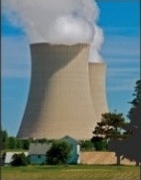
A nuclear power plant in Byron, Illinois. Taken by photographer Joseph Pobereskin (http://pobereskin.com).